
Portsmouth, United Kingdom2 min read
Portsmouth Cathedral, Portsmouth
Portsmouth Cathedral on Google Maps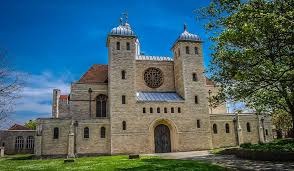
Portsmouth Cathedral is the Cathedral Church of St Thomas of Canterbury, an Anglican Church of England cathedral founded in 1180. Jean de Gisors, a wealthy Norman merchant regarded as the founder of Portsmouth, established the medieval church and dedicated it to St Thomas of Canterbury, who was murdered by Henry II in 1170.
What is Portsmouth Cathedral?
Portsmouth Cathedral began as a medieval church founded by Jean de Gisors. Its dedication links it to St Thomas of Canterbury, whose shrine at Canterbury subsequently became the most important in England. Churches dedicated to the saint were established elsewhere, including this one in Portsmouth.
The building's religious status changed in 1927, when it became the cathedral of the Diocese of Portsmouth. That later role is part of what makes Portsmouth Cathedral more than a surviving medieval foundation: it is also the seat of a modern diocese.
Why does Portsmouth Cathedral look different from other English cathedrals?
Portsmouth Cathedral has a distinctive appearance because the church was completely rebuilt at different times and for several different reasons. Its present form is therefore the result of repeated disruption rather than one uninterrupted building campaign.
The original church was damaged during the French/Genoese raids of 1337. In 1449, Adam Moleyns, Bishop of Chichester, was murdered in the church, which did not reopen until 1508. During the 17th-century Civil War under Oliver Cromwell, the church was completely destroyed. It was rebuilt after the Restoration of Charles II.
The rebuilding continued into the modern era. After Portsmouth Cathedral became the cathedral of the Diocese of Portsmouth in 1927, Charles Nicholson reconstructed it. The church was damaged again during the Second World War, and Nicholson's design—smaller than originally envisioned—was finally completed in 1991.
What historical moments should you notice at Portsmouth Cathedral?
Notice the sequence: a medieval foundation in 1180, destruction and repair during conflict, a royal visit, and a later reconstruction that was completed only in 1991. Elizabeth I worshiped at the church in 1591, adding a specific royal moment to its long history.
Its dedication is another important detail. St Thomas of Canterbury was murdered by Henry II in 1170, and the importance of his shrine at Canterbury helps explain why churches around the nation were dedicated to him. Portsmouth Cathedral preserves that connection while also carrying the marks of its own local history.
The cathedral's story is set out as one stop in the RULE PORTSMOUTH! self-guided route, which records it as stop 8 of 13. The route provides a place-specific way to follow the sequence of foundation, destruction, reconstruction and cathedral status without treating any one rebuilding as the whole story.
The tour that visits Portsmouth Cathedral
Each one is a self-guided route you can start whenever you like.

Portsmouth · 2h 55m
RULE PORTSMOUTH!
Embark on a historic journey with Portsmouth History tour! Explore iconic ships like HMS Victory, HMS Warrior, and The Mary Rose. Discover connections to notable figures from Henry VIII to Sherlock Holmes. Master Portsmouth's legacy and celebrate with a fine ale at the end! Victory is yours!
- places
- Portsmouth
- Portsmouth Cathedral
- English cathedrals
- Church of England
- history