
Toruń, Poland2 min read
Ratusz Staromiejski Toruń: The Hall That Ran a City and Its Trade
Ratusz Staromiejski on Google Maps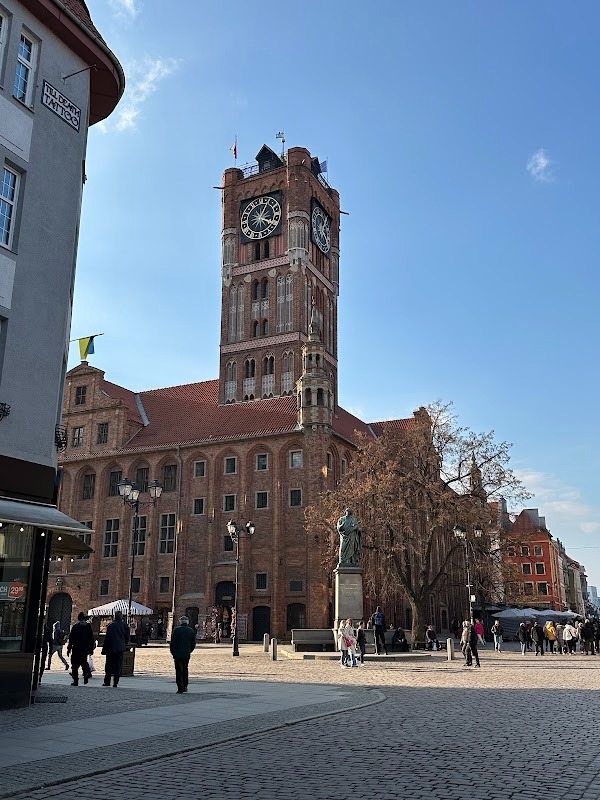
Ratusz Staromiejski Toruń is Toruń's Old Town Hall, the building that served as the city's administrative and judicial centre. Its unusual importance comes from the way one hall brought civic government together with weighing scales, cloth trading, official gatherings and secure storage.
Toruń stands on the Vistula River in north-central Poland and is a UNESCO World Heritage Site. Within that historic city, Ratusz Staromiejski represents the practical machinery of urban power rather than a single decorative landmark.
What is the history of Ratusz Staromiejski Toruń?
The Old Town Hall was completed in its Gothic form around 1393 and became the physical seat of Toruń's City Council. The council governed more than municipal administration: it regulated the local economy and controlled trade privileges.
For the Copernicus family, the hall was where civic status was recognised and where legal disputes over trade contracts were settled. That connection makes Ratusz Staromiejski a particularly useful place for understanding the civic setting of the young Copernicus. It is also the subject of stop 2 of 7 in Torun of young Copernicus, a 15th-Century Chronicle.
What did the Old Town Hall contain?
Ratusz Staromiejski contained the working facilities that allowed the council to supervise commerce as well as public business. The building integrated municipal weighing scales and a cloth hall for fabric trade.
Centralising those services supported accurate tax collection and quality control for exports and imports. The interior courtyard provided a secure, controlled setting for official proclamations and major guild gatherings, while the vaulted cellars were used for secure storage connected to the city's wine and beer monopolies.
What architectural features should you look for?
The Old Town Hall followed Flemish and German town hall models, a choice that reflected Toruń's alignment with Western European mercantile standards. Its architecture therefore expresses the city's commercial connections as well as its local civic identity.
Look for the building's different functions in the relationship between its spaces. The tower served as a functional lookout for fires and military incursions. The courtyard accommodated controlled public activity, and the vaulted cellars supported secure storage. Together, these features show why Ratusz Staromiejski was designed as an operating centre for a city, not simply as a seat of ceremony.
How can you notice Ratusz Staromiejski in the context of Toruń's history?
Read Ratusz Staromiejski through the jobs it performed: law, trade regulation, taxation, guild life, surveillance and storage. Those roles give the building a more precise historical identity than its Gothic appearance alone, linking its architecture to the systems that organised urban life in Toruń.
For a historically themed way to encounter that setting, the Torun of young Copernicus, a 15th-Century Chronicle route includes Ratusz Staromiejski as stop 2 of 7. The building remains the point of reference: a place where the city's authority, commercial rules and public business were made tangible.
The tour that visits Ratusz Staromiejski
Each one is a self-guided route you can start whenever you like.
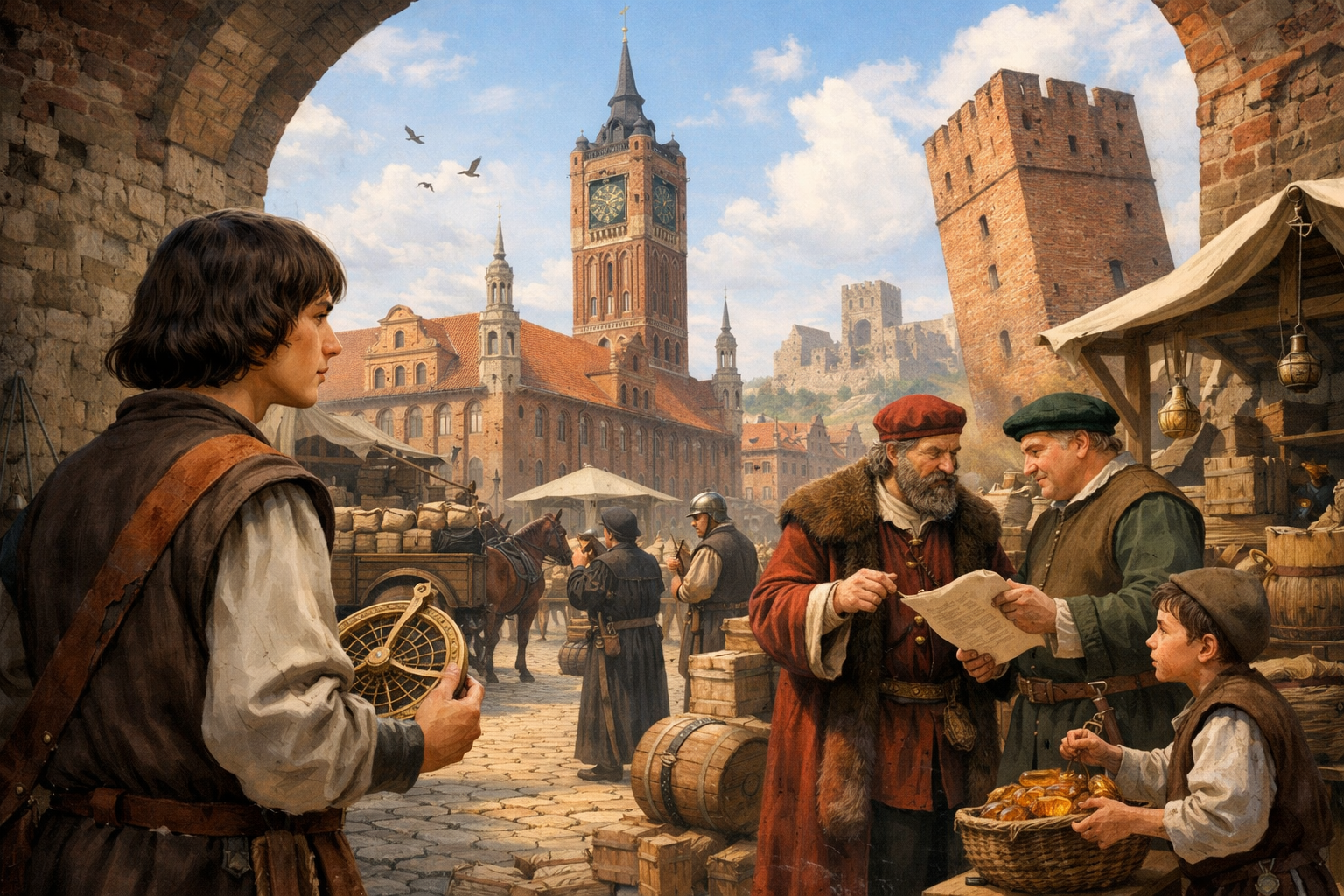
Toruń · 1h 10m
Torun of young Copernicus, a 15th-Century Chronicle
Embark on a self-guided adventure through medieval Toruń as young Nicolaus Copernicus! Discover Gothic granary-houses, bustling market squares, and the secrets of Hanseatic trade. Climb towers, explore ruins, and uncover the city's vertical marvels that shaped a future astronomer.
- places
- Toruń
- Ratusz Staromiejski
- Old Town Hall
- Poland
- architecture
- history