
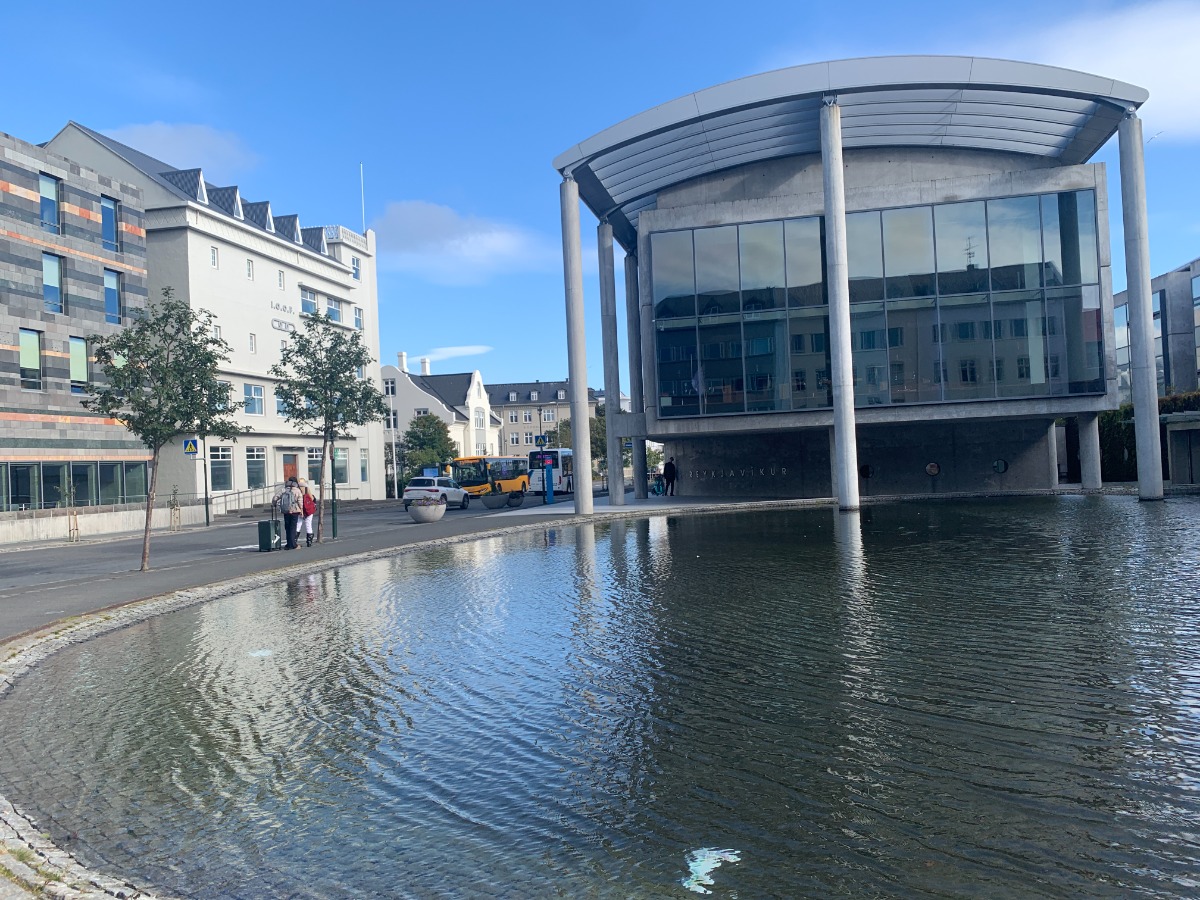
Reykjavík City Hall is the city building where Reykjavík’s civic business happens, opened in 1992 beside the waters of Tjörnin. Its sleek modernist lines, glass walls and colossal three-dimensional relief map of Iceland make it easy to spot as a meeting point between the capital’s present and the landscapes beyond it.
Reykjavík is Iceland’s capital and largest city, on the southern shore of Faxaflói bay in the southwest of the country. At City Hall, that broad setting becomes part of the building’s identity in a very physical way: the water of Tjörnin sits alongside the civic building, while the country’s geography is represented inside it.
What is Reykjavík City Hall?
It is Reykjavík’s municipal building, and its opening date gives the structure a clear place in the city’s recent history: 1992. Rather than hiding its civic function behind a traditional exterior, the building presents it through modernist design, sleek lines and glass walls.
That combination makes the building worth noticing as more than an administrative address. The exterior belongs to modern Reykjavík; the details inside point toward the country’s older stories and volcanic terrain.
What can you see inside Reykjavík City Hall?
The first detail to look for is the colossal three-dimensional relief map of Iceland in the atrium. It gives you a view of the whole country from inside the municipal building, turning Iceland’s volcanic landscape into a physical centrepiece.
Rune stones appear throughout the atrium and public spaces. Look for them as you move through the building, but leave their individual stories to the place itself and the experience built around it. If you are exploring with a companion, the relief map and the rune stones make a simple checklist: find the map, then see how many of the stones you can spot.
Why does Reykjavík City Hall connect modern Reykjavík with Iceland’s past?
The contrast is visible rather than abstract. Glass walls and modernist lines frame a civic building opened in 1992, while the relief map brings Iceland’s geography indoors and the rune stones reference the Viking era.
The city’s name adds another specific historical thread. “Reykjavík” means “Smoky Bay”; according to the source, Ingólfur Arnarson gave it that name in 874 AD after seeing steam rising from hot springs. Even Tjörnin can intrude on the formal civic setting: ducks from the water may appear in the building’s public spaces.
How can you notice Reykjavík City Hall on a city walk?
Pause beside the building and start with three details: its modernist lines, its glass walls and its relationship with Tjörnin. Then go inside to look for the relief map and the rune stones. The Reykjavík: In the Footsteps of the Vikings route includes this building as stop 3 of 8, giving you a sourced way to place it within a wider exploration of the capital.
The tour that visits Reykjavík City Hall
Each one is a self-guided route you can start whenever you like.
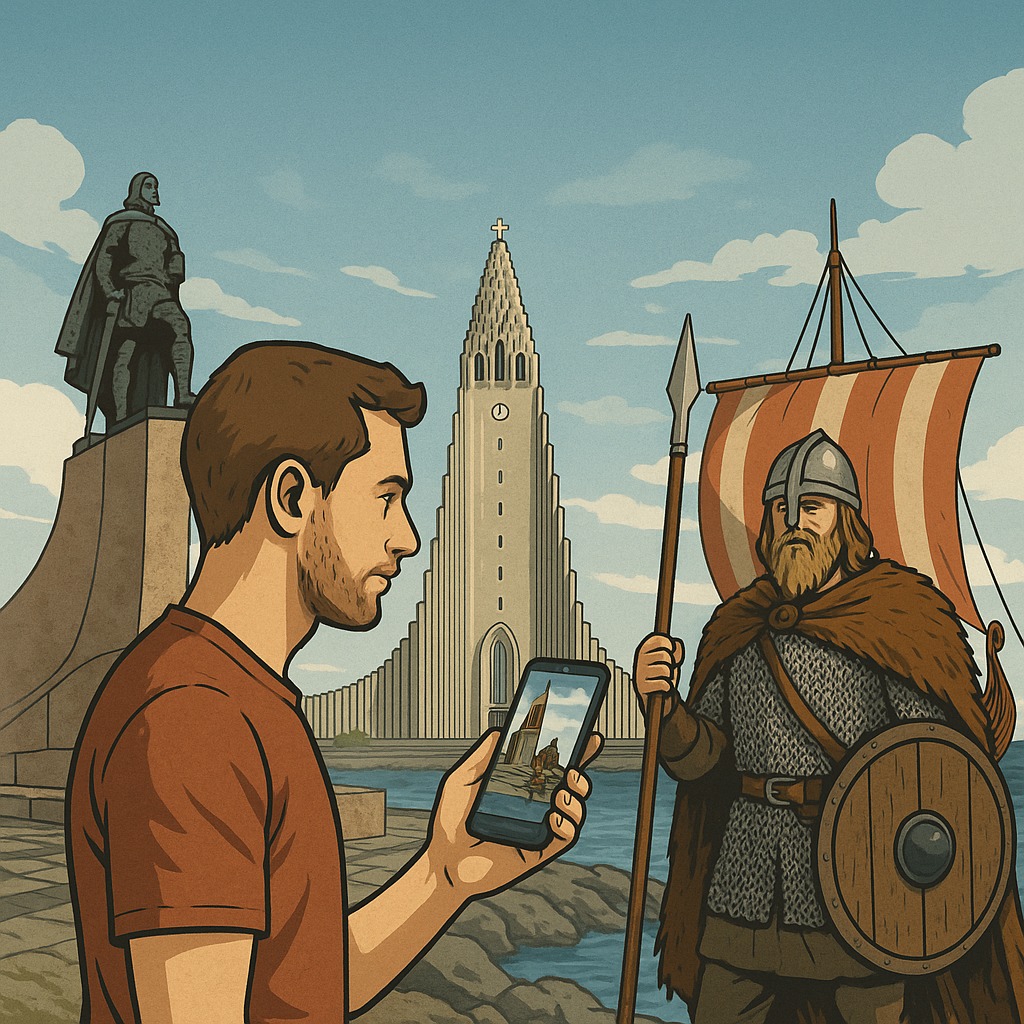
Reykjavík · 1h 45m
Reykjavík: In the Footsteps of the Vikings
Follow in the footsteps of the Vikings on this immersive self-guided tour through Reykjavík! Explore legendary sites from Ingólfur Arnarson's landing to the dazzling Harpa Concert Hall. Discover Viking longhouses, epic sagas, and breathtaking modern landmarks, blending history, mythology, and Icelandic culture. Perfect for history buffs, families, and curious adventurers.
- places
- Reykjavík
- Iceland
- City Hall
- Tjörnin
- Modernist architecture