
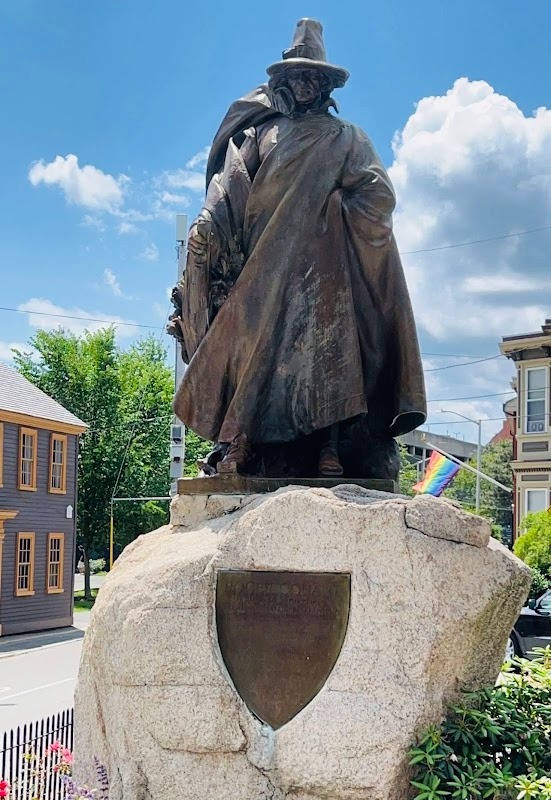
The Roger Conant Statue in Salem, Massachusetts represents Roger Conant, who helped establish the English settlement at Naumkeag in 1626. Naumkeag later became known as Salem, making the statue a marker of the city's early English settlement rather than a monument to the witch trials.
Who does the Roger Conant Statue represent?
Roger Conant helped establish the English settlement at Naumkeag in 1626, placing him in Salem's origin story decades before the events of 1692. He died in 1679, and the community he helped establish later became known as Salem.
The statue therefore represents an early figure in the city's development. Salem is a historic coastal city in Essex County on the North Shore of Greater Boston, and European settlement there began continuously in 1626 with English colonists. The statue gives that earlier history a specific name and person.
Why is the statue mistaken for a witch-trial figure?
The statue's dramatic cloak and hat can make it look connected to Salem's witch trials, but Roger Conant died thirteen years before the panic began. Its appearance may suggest the familiar imagery of 17th-century Salem, while its subject belongs to a much earlier chapter.
That distinction matters: the Roger Conant Statue represents Salem's early settlement history, not a figure from the 1692 trials. Its visual drama can lead to confusion, but the date of Conant's death places him firmly before the witch-trial period.
What does Roger Conant's statue reveal about Salem's history?
The statue points to a Salem that existed before the trials: a Puritan community concerned with order, religious discipline, and communal reputation. Salem also developed as a significant seaport for trading commodities in early American history, adding an economic dimension to the community represented by the monument.
By 1692, the world around that earlier foundation contained serious tensions. Merchant Salem Town and farming Salem Village were divided, while disputes over church leadership and taxes, memories of frontier war, and belief in Satan's influence through ordinary neighbors shaped the crisis. The statue is useful precisely because it keeps Salem's pre-trials foundation visible instead of reducing the city's history to the witch-trial period.
How can you place the statue in a Salem walk?
The Roger Conant Statue is stop 1 of 8 on Witches of Salem: Historical Trials & Memory Walk. The route uses the statue as its starting point for understanding Salem before the trials, making it a natural first marker for the city's documented history.
Begin with Conant's role in Naumkeag, then follow the route as it examines the tensions that later surrounded Salem in 1692. The statue's significance comes from that contrast: it belongs to the settlement story that came first.
The tour that visits Roger Conant Statue
Each one is a self-guided route you can start whenever you like.
Salem, MA · 1h 45m
Witches of Salem: Historical Trials & Memory Walk
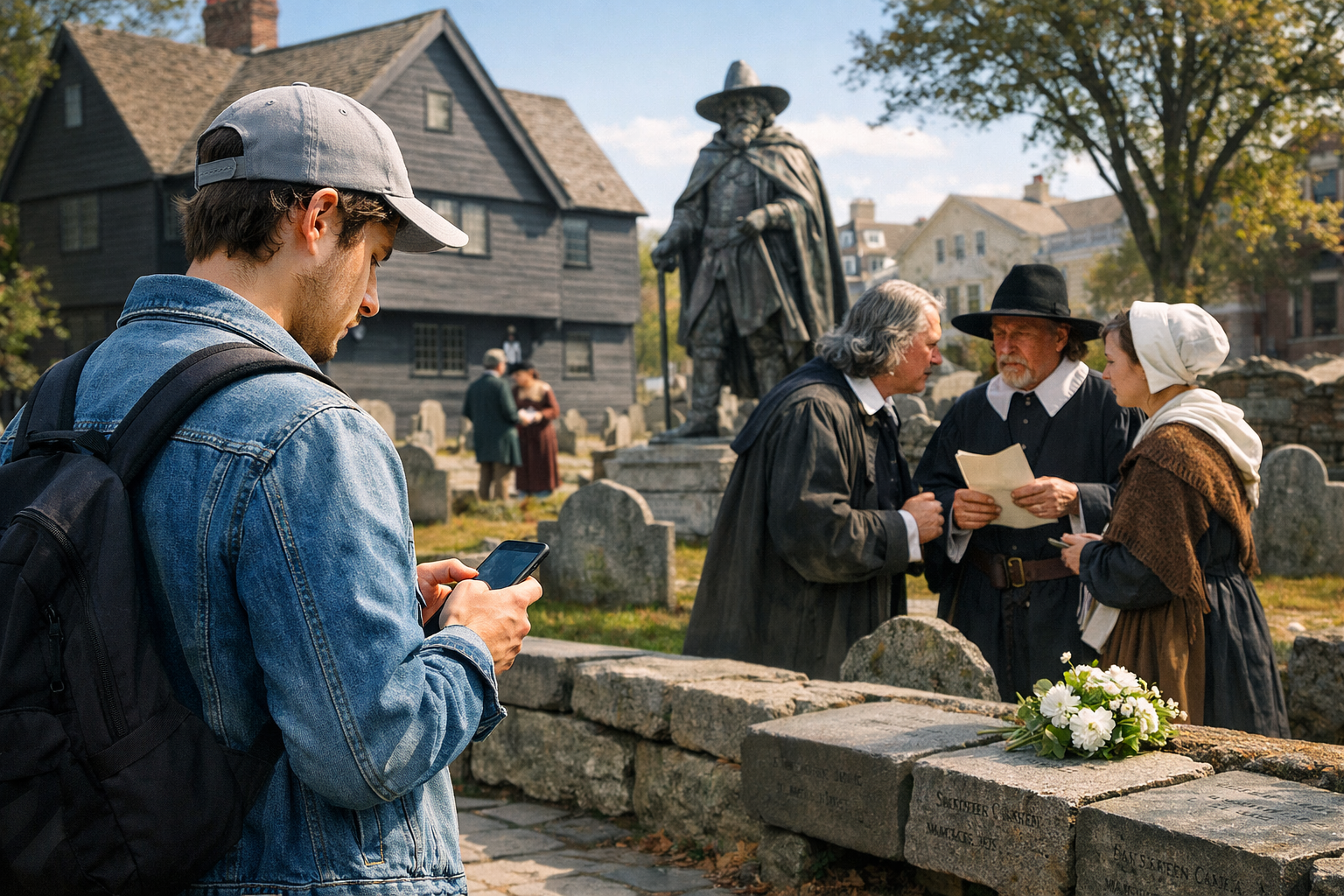
A walkable historical Salem tour that connects the 1692 witch trials into one clear story: Puritan beginnings, social tension, accusations, spectral evidence, legal failure, punishment, remembrance, and modern tourism. Includes the Witch House, Old Town House Site, Charter Street Cemetery, Witch Trials Memorial, Bewitched statue, and Proctor’s Ledge.
- places
- Salem, MA
- Roger Conant Statue
- Salem MA
- Salem history
- Salem witch trials
- self-guided walking tours