
Salem, MA, United States3 min read
Salem Witch Trials Memorial Salem, MA
Salem Witch Trials Memorial on Google Maps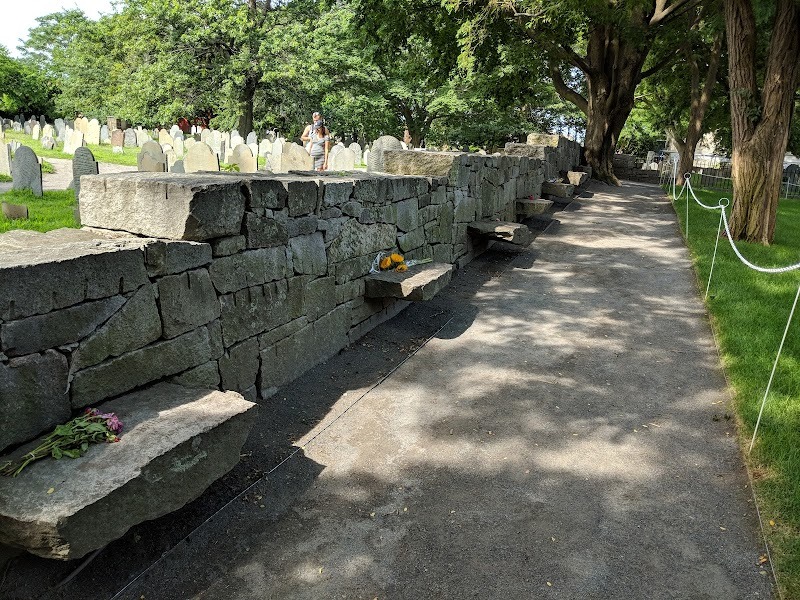
The Salem Witch Trials Memorial in Salem, MA commemorates the people condemned during the Salem witch trials, a series of hearings and prosecutions of people accused of witchcraft in colonial Massachusetts between February 1692 and May 1693. Dedicated in 1992, the memorial restores their names and uses granite, stone walls and words taken from trial records to make the historical crisis physically present.
What is the Salem Witch Trials Memorial in Salem, MA?
The memorial restores the names of people condemned during the Salem witch trials. More than 200 people were accused, 30 were found guilty, and 19 were executed by hanging. Giles Corey died under torture for refusing to enter a plea, while at least five people died in disease-ridden jails without trial.
Its dedication in 1992 came long after the trials themselves. The memorial therefore does more than mark a historical episode: it names the people caught up in the prosecutions and records the different ways the crisis ended their lives. The Witches of Salem: Historical Trials & Memory Walk draws on this same memorial as a specific historical stop.
What should you notice at the Salem Witch Trials Memorial?
The memorial's granite benches identify the victims and mark the dates and means of death. It honors 20 people executed during the crisis: 19 by hanging and Giles Corey by pressing.
The benches project from low stone walls, giving the names a deliberately physical form rather than presenting them only as a list. Words from the accused appear on the threshold, taken from trial records. These inscriptions connect the memorial's architecture directly to the surviving historical record.
The design also controls the order of attention. It places visitors among the graves of Salem's elite before directing attention to the people whose voices were ignored by the court. That contrast is central to what the Salem Witch Trials Memorial communicates: the victims are not an abstract symbol, but named people whose treatment is set against the authority and status surrounding them.
Why does the memorial matter beyond 1692?
The Salem Witch Trials Memorial matters because the aftermath took generations. In 1711, Massachusetts reversed many convictions and granted compensation to several families, but not every victim was included at first.
Full public remembrance came much later, making the modern memorial an essential historical stop rather than only a symbolic one. Its benches, dates, means of death and trial-record words preserve the parts of the crisis that a general account can leave unnamed.
How can you encounter the memorial as part of a walk?
The Salem Witch Trials Memorial appears as stop 2 of 8 on the Witches of Salem: Historical Trials & Memory Walk. That route offers one way to encounter the memorial within a historical walk while keeping the place itself at the centre.
When you visit, pay attention to the names, dates, means of death, projecting benches, low walls and the words on the threshold. Together, those details explain why the Salem Witch Trials Memorial in Salem, MA is more than a symbolic monument.
The tour that visits Salem Witch Trials Memorial
Each one is a self-guided route you can start whenever you like.
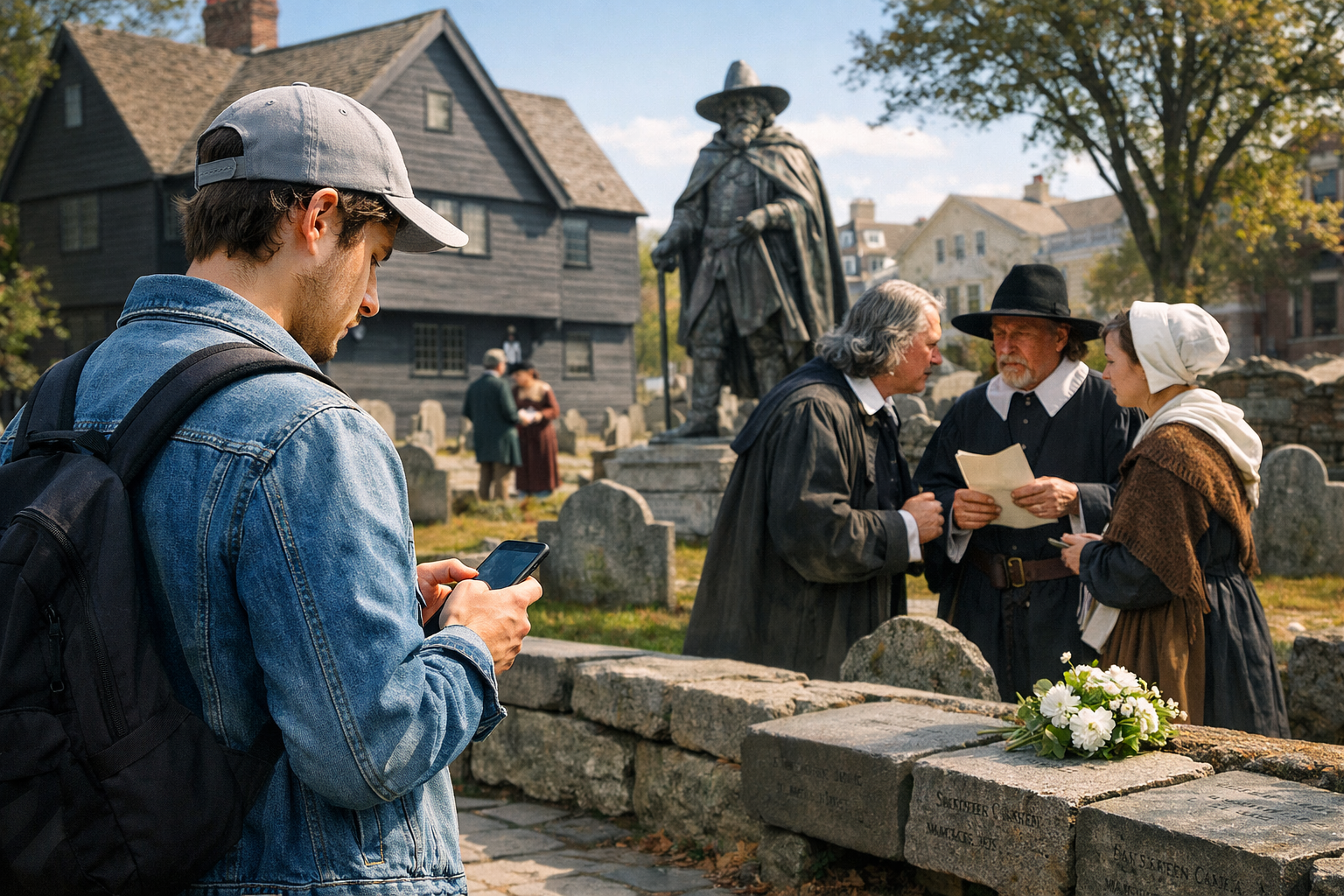
Salem, MA · 1h 45m
Witches of Salem: Historical Trials & Memory Walk
A walkable historical Salem tour that connects the 1692 witch trials into one clear story: Puritan beginnings, social tension, accusations, spectral evidence, legal failure, punishment, remembrance, and modern tourism. Includes the Witch House, Old Town House Site, Charter Street Cemetery, Witch Trials Memorial, Bewitched statue, and Proctor’s Ledge.
- places
- Salem, MA
- Salem Witch Trials
- Salem MA
- historical memorials
- Salem history