
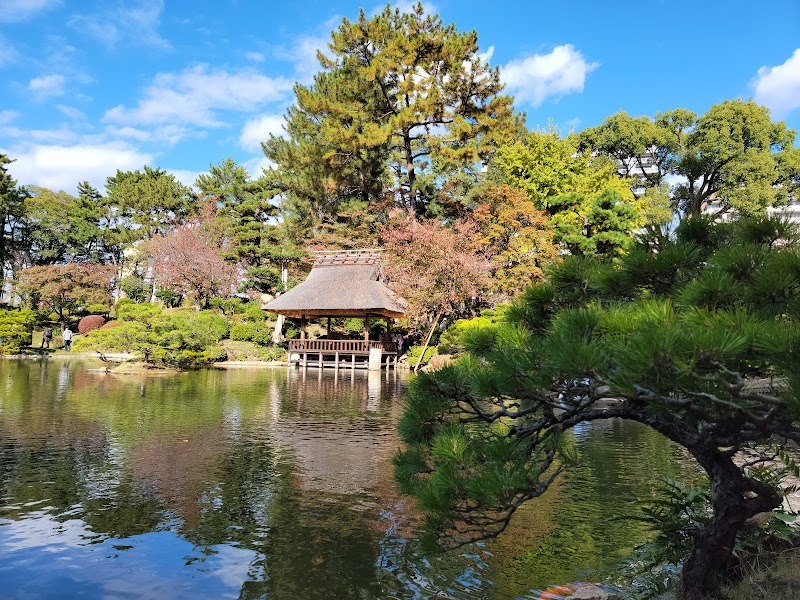
Shukkeien Garden, also written Shukkei-en, is a historic Japanese garden in Hiroshima, Japan. Established in 1620 by Ueda Soko, the tea master to feudal lord Asano Nagaakira, it brings mountains, valleys, forests, and rivers together as a carefully composed miniature landscape. The Hiroshima Prefectural Art Museum is located adjacent to the garden.
What is Shukkeien Garden?
Shukkeien Garden was created during the Edo period as a designed landscape where large natural forms are represented within one garden. Its defining idea is not simply greenery, but compression: mountains, valleys, forests, and rivers are woven together in harmony across a single setting.
That origin gives Shukkeien its distinctive historical character. Ueda Soko, a tea master serving feudal lord Asano Nagaakira, established the garden in 1620. Its paths and composed views belong to a tradition of quiet observation associated with Edo-period samurai and aristocratic culture.
What makes Shukkeien Garden distinctive?
Shukkeien is distinctive because its paths and ponds are part of one miniature landscape rather than separate attractions. The water helps connect the garden's represented valleys, forests, mountains, and rivers, giving the design a sense of harmony within a compact space.
Koko Bridge arches over the water as one of the garden's recognisable features. In the ponds, koi move through the water while turtles bask on sunlit rocks. These details sit within a landscape whose changing seasons and quiet surroundings are part of its designed character.
What happened to Shukkeien Garden in 1945?
On August 6, 1945, Shukkeien Garden witnessed the devastation of the atomic bomb. Its trees were scorched, and its ponds filled with survivors seeking refuge.
The garden was later restored and came to represent resilience and hope. That history gives the Edo-period landscape another layer: Shukkeien is not only an example of feudal-era garden design, but also a place marked by wartime destruction and renewal.
What should you notice at Shukkeien Garden?
Notice the relationship between the miniature landscape and the water before treating any individual feature as an isolated attraction. Koko Bridge, the ponds, koi, and turtles show how the garden's physical details work within its wider composition.
Shukkeien's Edo-period origins, wartime endurance, and restored landscape belong to this garden's specific history, even though they do not provide a complete account of Hiroshima's past. The Hiroshima war-and-peace route includes Shukkeien Garden as stop 8 of 8, and its account places the garden within that documented history. To explore the place alongside the route's wider historical context, follow the Leplace Hiroshima history tour.
Walk through Shukkeien Garden and observe how one landscape holds together elegance, devastation, and renewal.
The tour that visits Shukkeien Garden
Each one is a self-guided route you can start whenever you like.

Hiroshima · 1h 50m
Hiroshima - War & Peace - Memorial, History, and Cultural tour
Walk through Hiroshima's living history on this immersive one-day tour. Explore the Peace Memorial Museum, poignant memorials, and the iconic Atomic Bomb Dome. Take in sweeping city views from Orizuru Tower, find serenity at Gokoku Shrine and Hiroshima Castle, and reflect in the tranquil Shukkeien Gardens. Experience stories of tragedy, resilience, and hope at every step.
- places
- Hiroshima
- Shukkeien Garden
- Japanese gardens
- Hiroshima history