
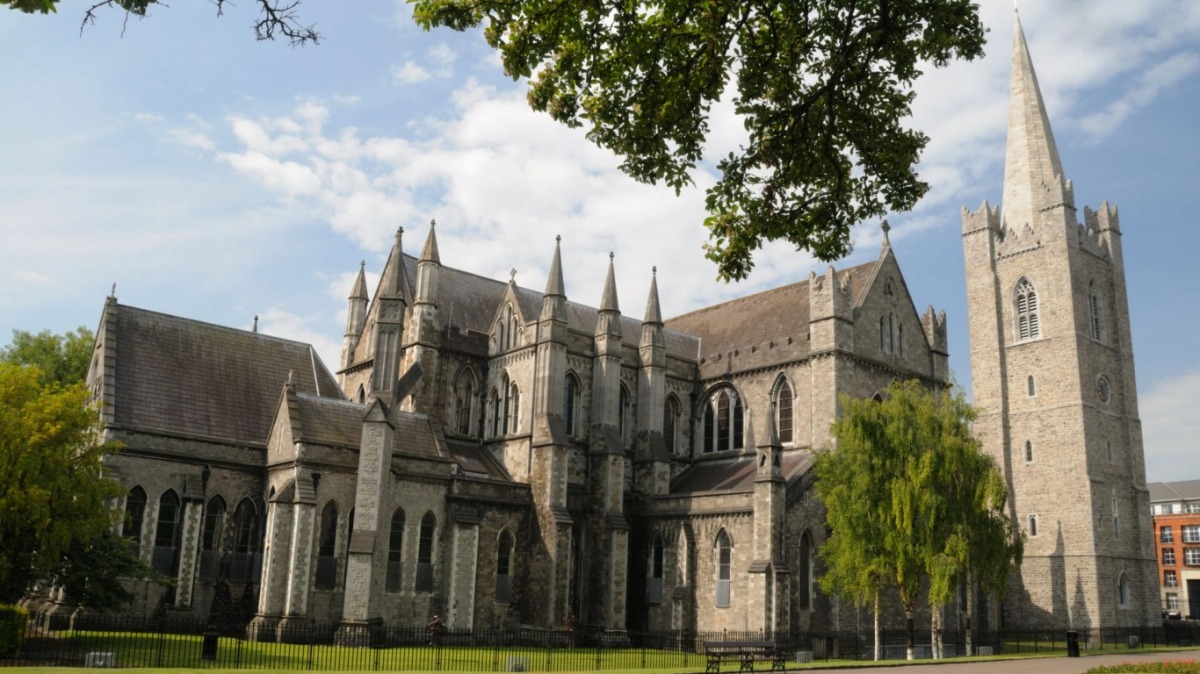
St Patrick's Cathedral in Dublin, Ireland is the national cathedral of the Church of Ireland. Its distinctive story begins with a small holy well where St Patrick allegedly baptised much of Ireland's population, and the cathedral that developed on the site dates back to the 14th century.
It is not the same as Christ Church Cathedral. Both are Church of Ireland cathedrals in Dublin, but Christ Church is designated as the local cathedral of the Diocese of Dublin and Glendalough, while St Patrick's is the national cathedral.
What is St Patrick's Cathedral in Dublin?
St Patrick's Cathedral is a 14th-century cathedral built on a site associated with St Patrick's baptisms. The small holy well that once stood here gives the building an origin tied directly to the saint's traditional connection with Ireland.
That origin helps explain why the cathedral occupies such a distinctive place in Dublin: it is not simply an old church, but the national cathedral of the Church of Ireland, with a site story reaching back to an alleged act of baptism central to Irish religious tradition.
Why is St Patrick's Cathedral famous?
St Patrick's Cathedral is famous for its serious 1800s renovation, funded by the Guinness family, as well as for its musical and decorative details. The restoration included the cathedral floor, where some tiles carry the Guinness family crest: a boar.
Some of the tiles were deliberately made imperfect. The idea behind this detail is that even in the house of God, only God himself is perfect. It is a small feature with a clear connection to the cathedral's restoration and to the meaning attached to its decoration.
The cathedral's choir is another defining part of its identity. Young boys attending St Patrick's Choir School, a private Anglican school, must attend choir in the cathedral as part of their curriculum and receive pay for it. The choir performs throughout the year.
What can you find in the gardens and around St Patrick's Cathedral?
The Guinness family's contribution extended beyond the cathedral itself: they opened the cathedral gardens. In the early 1900s, the surrounding area was affected by slums, poverty and disease, so the gardens were intended to provide a safe, clean place for people to socialise and for children to play.
The cathedral also has an important literary connection. Former Dean Jonathan Swift, author of Gulliver's Travels, is buried inside St Patrick's Cathedral next to his beloved friend and alleged secret wife, Estella Johnson.
In the gardens, look for the memorial to Irish authors and writers, including Ireland's three Nobel Prize winners for literature. Its exact significance is left as an open challenge rather than something to solve from the page.
How can you experience St Patrick's Cathedral as part of a Dublin walk?
St Patrick's Cathedral is stop 10 of 10 on Hidden Dublin: Main Attractions and Hidden Stories. The interactive route visits the cathedral and keeps the gardens' literary memorial as an open challenge, giving you a place-specific reason to look closely rather than simply pass through.
If you want to explore the cathedral as part of a self-guided experience, start with the route and see how Leplace works before you go.
The tour that visits St Patrick's Cathedral
Each one is a self-guided route you can start whenever you like.
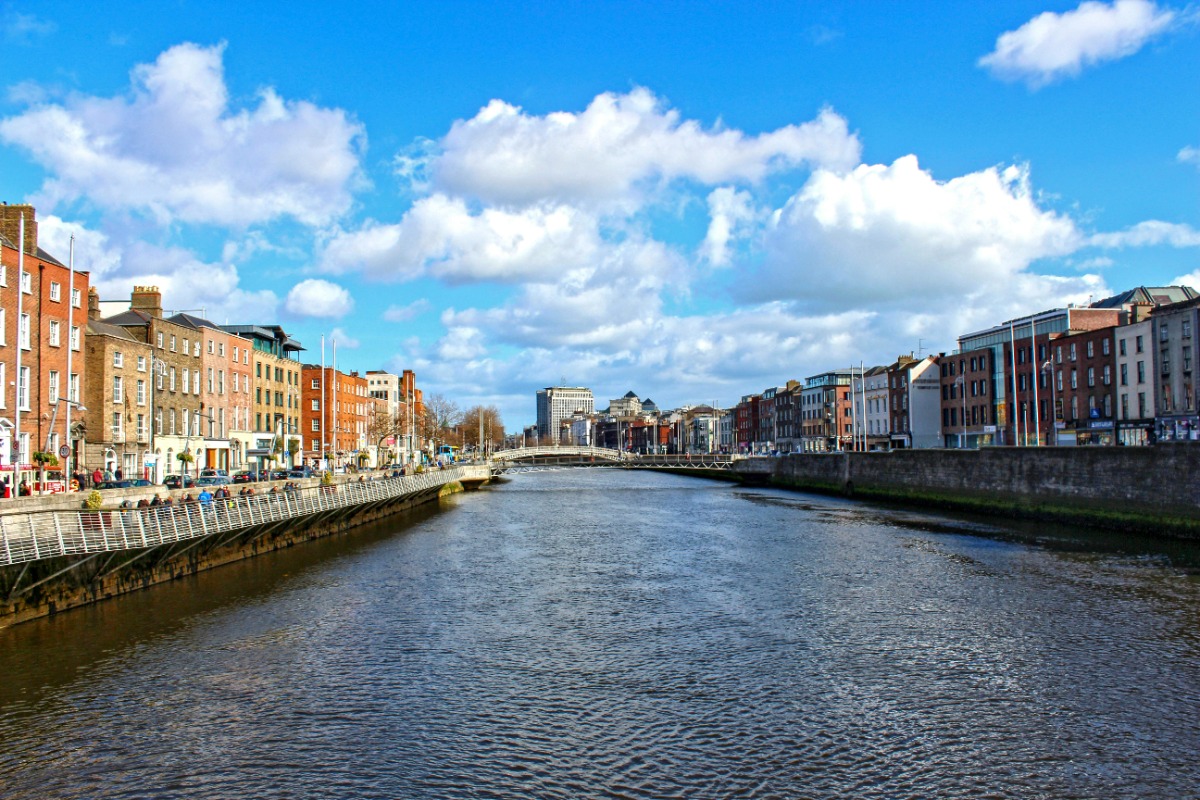
Dublin · 2h 20m
Hidden Dublin: Main Attractions and Hidden Stories
Embark on a captivating stroll through Dublin City with our guided tour. Uncover hidden stories of the Republic of Ireland's capital as we visit iconic sites often overlooked. Explore the past and beauty of the Fair City like never before!
- places
- Dublin
- St Patrick's Cathedral
- Irish history
- literary landmarks
- self-guided tours