
Washington, D.C., United States2 min read
Supreme Court of the United States Washington, D.C.
Supreme Court of the United States on Google Maps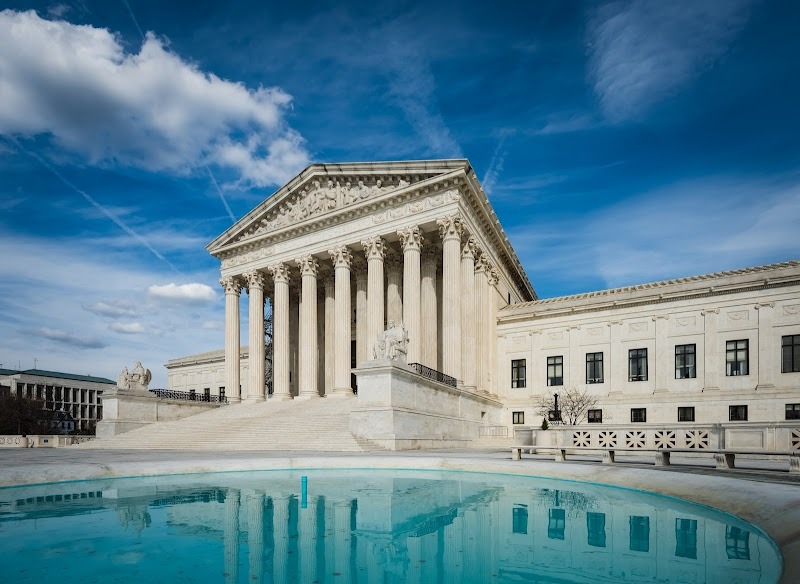
Search for Supreme Court of the United States Washington, D.C., and you are looking for the country’s highest-ranking judicial body, housed behind a marble façade, monumental staircases, and Corinthian columns. The building’s entrance bears the inscription Equal Justice Under Law, a concise statement of the Court’s symbolic role as the ultimate interpreter of constitutional principles.
What is the Supreme Court of the United States?
The Supreme Court of the United States is the highest-ranking judicial body in the United States. Its membership consists of the chief justice of the United States and eight associate justices, and any six justices constitute a quorum.
The president nominates justices with the advice and consent of the United States Senate. Justices have life tenure, giving the institution a continuity that is also expressed by its permanent home in Washington, D.C.
Why did the Supreme Court get its own building?
The Court was established in 1789 but did not occupy a dedicated building until 1935. Before 1935, the justices met in temporary chambers inside the Capitol building.
That earlier arrangement reflected the judiciary’s initially modest position within the federal system. The current Supreme Court building was designed to communicate authority, permanence, and legal continuity: its dedicated setting gives the Court a distinct institutional presence rather than placing it inside another branch’s building.
What should you look for at the Supreme Court building?
Start with the building’s neoclassical design. The marble façade, monumental staircases, and Corinthian columns draw inspiration from classical temples associated with law and civic order. These are not incidental decorative details; together, they give the Supreme Court a visual language of authority and permanence.
Look above the entrance for the inscription Equal Justice Under Law. At this particular building, the words express the Court’s symbolic role as the ultimate interpreter of constitutional principles within American society.
The building’s significance is also tied to the landmark decisions issued by the Court. Brown v. Board of Education, Miranda v. Arizona, Roe v. Wade, and Obergefell v. Hodges are identified with debates surrounding civil rights, criminal procedure, privacy, and equality. You do not need a long case summary to understand the site’s importance: the building represents a place where conflicts over race, federal authority, individual liberty, and social change were contested through constitutional interpretation rather than elections alone.
For a place-focused way to explore the Supreme Court alongside Washington’s other power institutions, take the Washington DC: Power & Institutions Tour. When you stand before the building, share the practical landmark to look for with your travel companion: find the inscription above the entrance, then take in the stairs, marble, and Corinthian columns as one deliberately composed statement about the Court.
To explore this Washington, D.C. landmark through the route, take the Washington DC: Power & Institutions Tour.
The tour that visits Supreme Court of the United States
Each one is a self-guided route you can start whenever you like.

Washington, D.C. · 2h 15m
Washington DC: Power & Institutions Tour
Explore the iconic heart of Washington DC on this immersive self-guided tour. Walk through the power corridors of Congress, the White House, the Supreme Court, and more. Uncover the secrets, history, and drama behind America's most influential institutions—perfect for history buffs, curious travelers, and anyone fascinated by the machinery of democracy.
- places
- Washington, D.C.
- Supreme Court
- landmarks
- self-guided tours