
Arromanches-les-Bains, France3 min read
Table d'Orientation in Arromanches-les-Bains
Table d'Orientation on Google Maps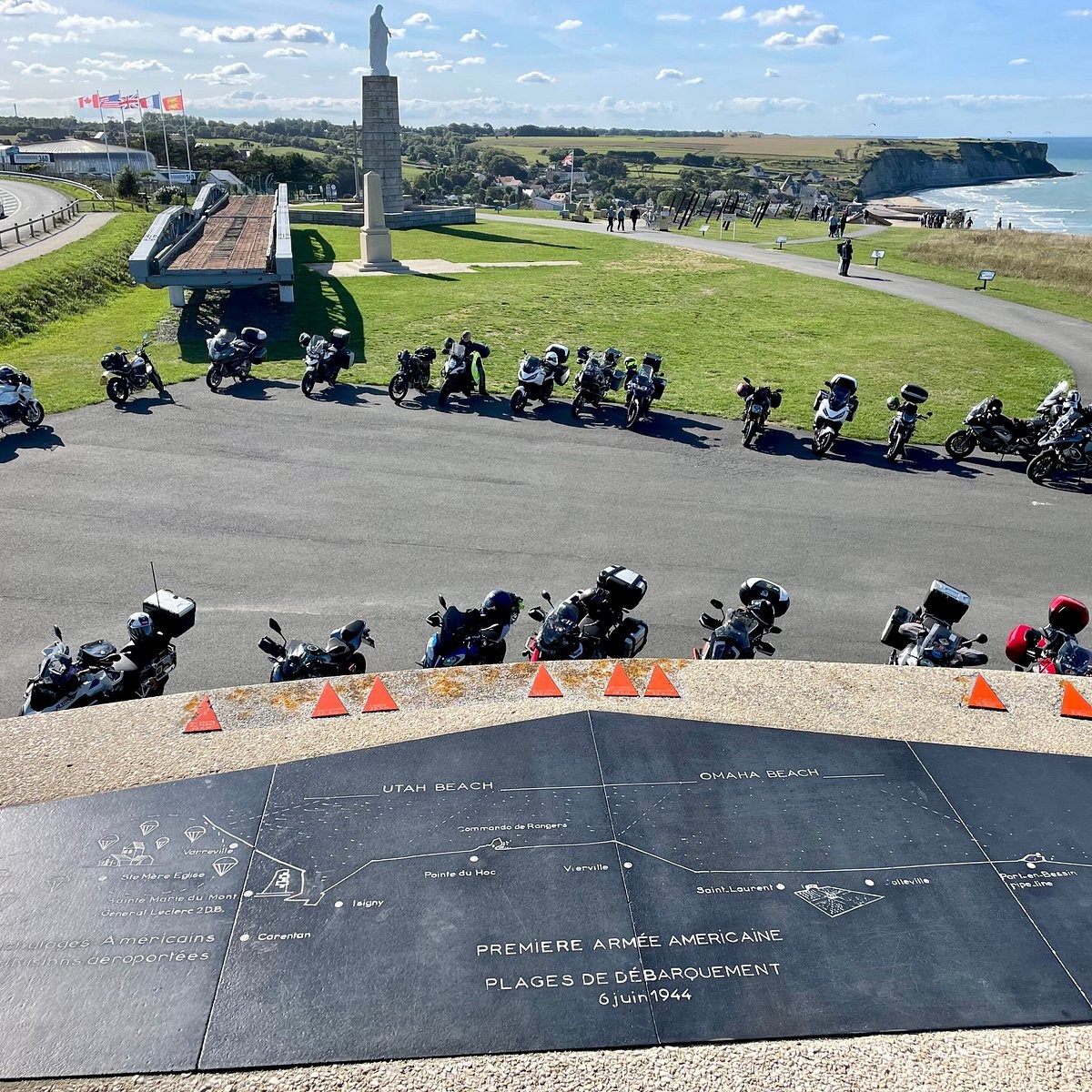
The Table d'Orientation in Arromanches-les-Bains is a bronze orientation table overlooking the remains of Mulberry B, the artificial harbour built by the Allies after D-Day. It gives the coastline and harbour layout as they were in June 1944, turning the surviving concrete structures into a readable plan of the wartime site.
What is the Table d'Orientation in Arromanches-les-Bains?
The Table d'Orientation is a bronze marker installed at Arromanches-les-Bains to help interpret Mulberry B. Its setting is important: the table overlooks the remains of the harbour itself, so its topographic information connects the markings on the bronze surface with the harbour sections positioned offshore and along the shore.
The table presents the layout as it existed in June 1944 rather than treating the harbour as an abstract historical idea. From its information, you can understand how the artificial harbour occupied the coastline and how its different components related to the nearby beach sectors, including Gold Beach. The Allied Landing at Arromanches route visits the table as stop 6 of 8.
What does the Table d'Orientation show?
The Table d'Orientation identifies the main engineered parts of Mulberry B and shows where they were deployed. It marks the Phoenix caissons, large concrete blocks sunk to form breakwaters; the floating roadways known as Whale bridges; and the pierheads where ships unloaded cargo.
These markings explain the harbour as a connected working system. The Phoenix caissons indicate the protective breakwaters, the Whale bridges identify the floating roadways, and the pierheads show where cargo moved from ships towards the shore. The table also indicates how sections of the harbour related to one another and to the nearby coastline, including Gold Beach.
Its directional information extends beyond the harbour itself. The table indicates the direction and distance to other D-Day sites, giving Arromanches a geographical context that is difficult to read from isolated remains alone. That combination of harbour markings and wider references is why the table remains useful as an interpretation point rather than simply a labelled viewpoint.
Why is the harbour visible from here important?
The harbour visible from the Table d'Orientation matters because Mulberry B at Arromanches was the only harbour to survive the storms of June 1944. It continued operating for over three months, making the remains connected to a sustained operation rather than only to the first day of the landings.
Arromanches became a central logistical hub once Mulberry B was assembled. The harbour enabled sustained supply and inland movement during the critical first weeks of the Normandy campaign. The orientation table was installed to help explain that structure, and guides use it to show how the harbour supported Allied logistics during the early stages of the campaign.
How does the Table d'Orientation place Arromanches within the D-Day coastline?
The Table d'Orientation places Arromanches between the five landing sectors used on June 6, 1944. Utah and Omaha were the U.S. sectors, Gold and Sword were the British sectors, and Juno was the Canadian sector. Sword and Juno lay east of Arromanches, while Omaha and Utah lay to the west.
That position helps explain why the table's directions matter. Arromanches sat between the sectors, and the assembled Mulberry B harbour turned the location into a logistical hub. The landings were coordinated through naval bombardments, air support, and tide schedules; the table's beach references and harbour markings make the relationship between those landing areas and the supply operation legible from one place.
To connect the table's markings with the wider harbour operation, follow The Allied Landing at Arromanches.
The tour that visits Table d'Orientation
Each one is a self-guided route you can start whenever you like.
Arromanches-les-Bains · 1h 20m
The Allied Landing at Arromanches
Step into the boots of a British logistics officer at Arromanches-les-Bains and relive the race to build Mulberry B, the Allies' miracle harbour of D-Day. Make decisions under fire, uncover hidden stories, and explore iconic sites—from massive caissons on the beach to the bustling D-Day Museum. This immersive self-guided adventure reveals how engineers, soldiers, and civilians together forged the unsung backbone of victory. Experience WWII history not just as a visitor, but as a vital part of the story.
- places
- Arromanches-les-Bains
- Table d'Orientation
- Mulberry B
- D-Day
- Normandy