
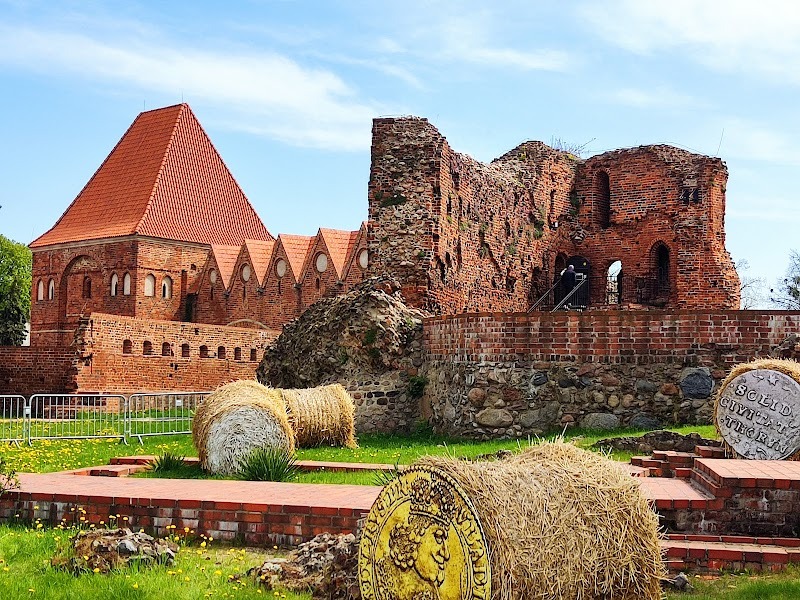
The Teutonic Castle ruins in Toruń, Poland, are the remains of a 13th- or 14th-century castle built by the Teutonic Order. Established in the mid-13th century, it was the Order's first major stronghold on the right bank of the Vistula, serving as the seat of its commander, the Komtur, and as an administrative and military headquarters for the surrounding region.
The castle forms part of the Medieval Town of Toruń, which is listed among Poland's World Heritage Sites and Historic Monuments of Poland. Its importance is therefore not only architectural: the ruins also mark a major change in Toruń's political order, from Teutonic administration to civic self-government under Royal Prussia.
What are the Teutonic Castle ruins in Toruń?
The ruins are the remains of the Teutonic Order's regional centre in medieval Toruń. For nearly two centuries, the castle concentrated military authority and administration in the hands of the Order's Komtur. Its position on the right bank of the Vistula made it the first major Teutonic stronghold in that part of the river landscape.
Unlike a later castle whose identity is often reduced to walls and defensive architecture, Toruń Castle also represented the Order's control over the surrounding region. That role explains why the site became so important during the city's revolt in 1454: dismantling it meant removing an active centre of authority, not simply damaging an old building.
What made Toruń Castle different from later Teutonic fortresses?
Toruń Castle used a horseshoe-shaped plan, unlike the later rectangular fortresses of the Teutonic Order. The form followed the natural topography of the riverbank, making the castle's layout closely connected to the ground on which it was built.
That horseshoe shape is the key feature to understand in the ruins. It reflects a stronghold adapted to its riverbank setting while also supporting the castle's wider function as a regional administrative centre. The plan was not an isolated design choice: it joined the site's strategic position with the practical needs of Teutonic rule.
Why were the Teutonic Castle ruins dismantled?
The castle was intentionally dismantled after Toruń's citizens captured it during an uprising in February 1454. Organized under the Prussian Confederation and the Society of the Lizard, the townspeople rebelled against Teutonic rule amid economic tensions caused by restrictive trade policies and heavy taxation on the city's merchants.
The capture helped begin the Thirteen Years' War. During the conflict, Toruń and other major Prussian cities changed allegiance from the Teutonic Order to the Polish Crown. The townspeople then systematically dismantled the castle so it could not again operate as a military outpost dominating the city.
This was a deliberate urban and political act. Leveling the fortifications removed a visible symbol of monastic authority and helped unite Toruń's Old and New Towns under a single autonomous jurisdiction. The area was later repurposed for municipal functions as Toruń moved towards self-government under Royal Prussia.
The castle's history is explored as stop 4 of 7 in Torun of young Copernicus, a 15th-Century Chronicle, where the ruins connect the city's medieval power structure with the civic transformation that followed the 1454 uprising.
The tour that visits Teutonic Castle ruins
Each one is a self-guided route you can start whenever you like.
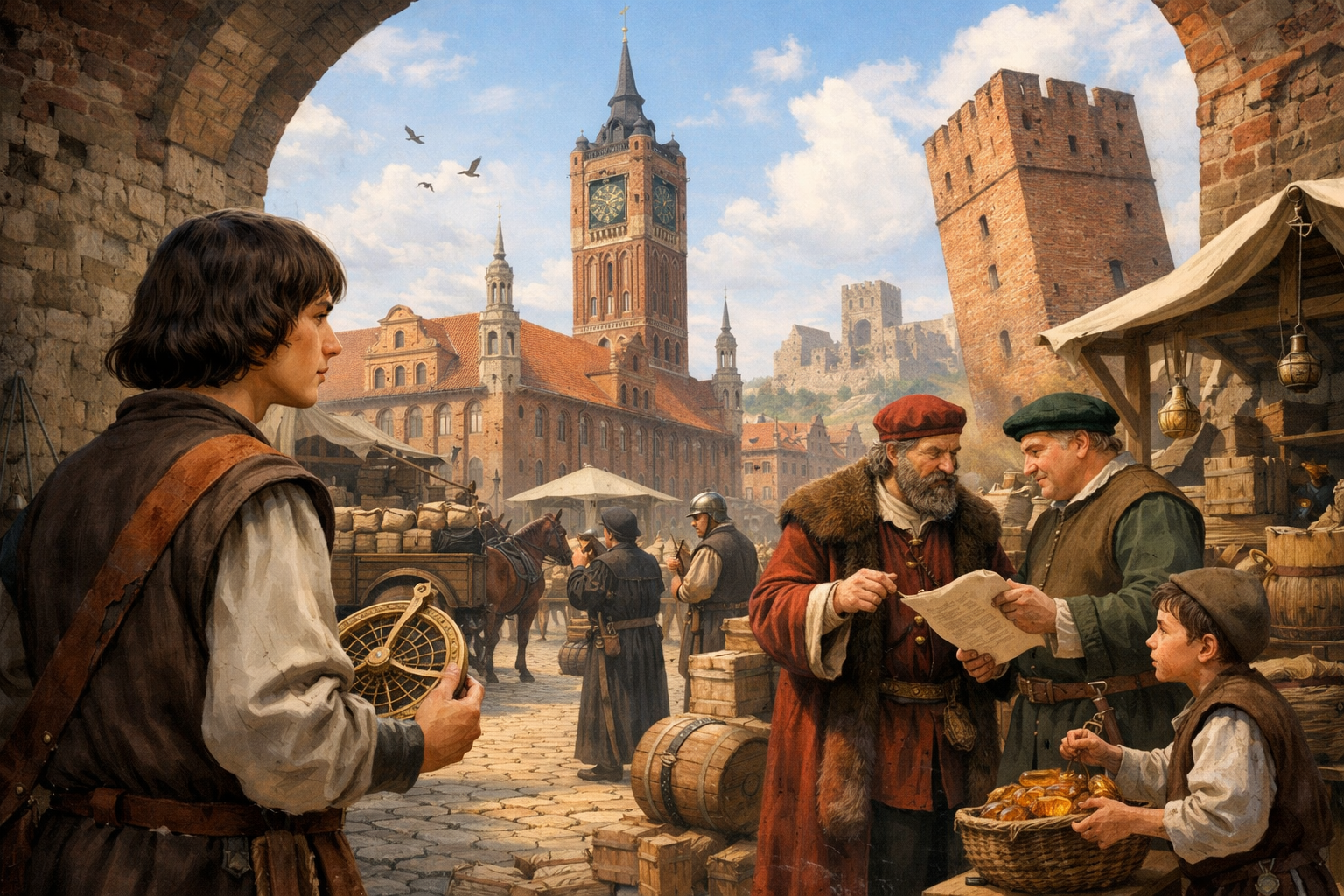
Toruń · 1h 10m
Torun of young Copernicus, a 15th-Century Chronicle
Embark on a self-guided adventure through medieval Toruń as young Nicolaus Copernicus! Discover Gothic granary-houses, bustling market squares, and the secrets of Hanseatic trade. Climb towers, explore ruins, and uncover the city's vertical marvels that shaped a future astronomer.
- places
- Toruń
- Teutonic Castle
- medieval history
- Poland
- historic ruins