
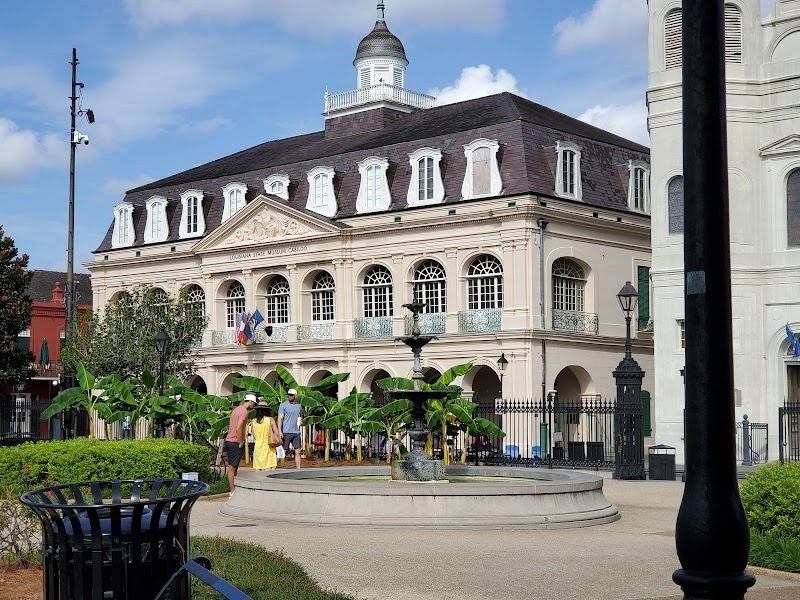
The Cabildo is a historical building in New Orleans, Louisiana. Originally called Casa Capitular, it was the seat of Spanish colonial city hall and now forms part of the Louisiana State Museum.
Its importance comes from the layers held in one building: Spanish colonial government, the transfer of Louisiana to the United States, and the changing rights and restrictions experienced by the people who lived under those systems.
What is The Cabildo in New Orleans?
The Cabildo was originally the seat of Spanish colonial city hall. Its original name, Casa Capitular, reflects that civic role, while its present connection to the Louisiana State Museum gives the building a continuing place in the interpretation of Louisiana history.
The building's story is tied to political change rather than to a single period. It survived the Great New Orleans Fire of 1788, was completed in 1799, and soon became the setting for a ceremony that marked a major transfer of authority over Louisiana.
Where is The Cabildo?
The Cabildo stands along Jackson Square, adjacent to St. Louis Cathedral. That position makes its relationship with the square and cathedral part of the building's defining setting, rather than a detail separate from its history.
Look for the features that mark its Spanish colonial character: grand arches and iron-laced balconies. These architectural details are among the clearest physical clues to the building's original civic context. The New Orleans French Quarters Tour includes The Cabildo as stop 3 of 9.
Why is The Cabildo historically important?
The Cabildo was completed in 1799 after rising from the Great New Orleans Fire of 1788. On December 20, 1803, it hosted the Louisiana Purchase transfer ceremony, during which French, Spanish, and American flags changed as political control shifted.
That ceremony is only one part of what makes The Cabildo historically important. Under Spanish rule, free people of color could own property, petition courts, and hold positions of influence. Spanish legal codes were not equal, but they created some legal protections within a complex social hierarchy.
When the Americans took authority, stricter racial boundaries and harsher slave codes reduced freedoms and disrupted the lives of enslaved people and free people of color. The Cabildo therefore connects a formal change in political control with the consequences that change had for people navigating the city's legal and social systems.
Standing beside its grand arches and iron-laced balconies, you are looking at a building shaped by fire, colonial government, and political transition. Its history is also the history of people defending rights, seeking freedom, and living through rules that changed inside the building's wider civic world.
The tour that visits The Cabildo
Each one is a self-guided route you can start whenever you like.

New Orleans, LA · 1h 45m
New Orleans French Quarters Tour
Experience New Orleans like never before on this immersive walking tour through the French Quarter. Journey from the soulful Congo Square to the historic French Market, uncovering the city's complex history of slavery, Creole culture, and resilience. Explore iconic landmarks, hidden slave quarters, and vibrant marketplaces, all while hearing stories of struggle, survival, and celebration. Perfect for history buffs and curious travelers alike!
- places
- New Orleans, LA
- The Cabildo
- New Orleans
- Jackson Square
- Louisiana history
- Spanish colonial architecture