
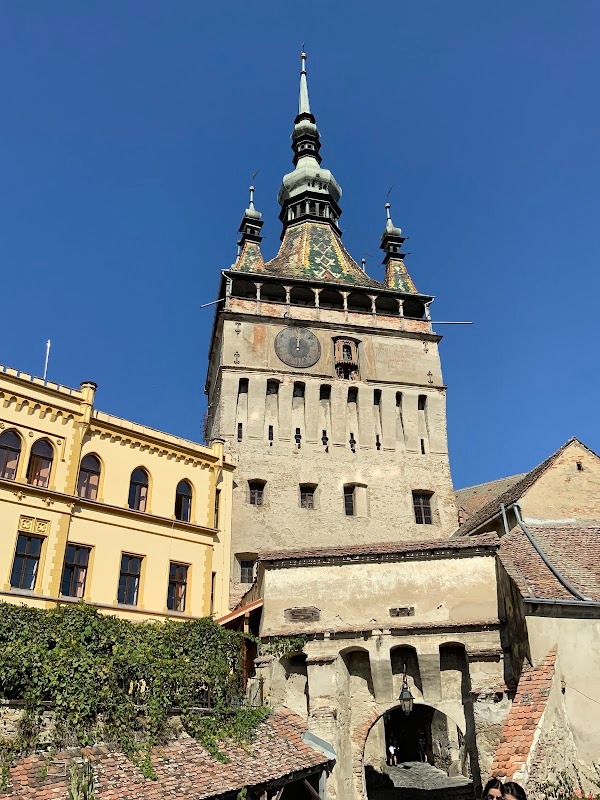
The Clock Tower Sighișoara is the main entrance to the walled upper city in Mureș County, Transylvania, Romania. Built in the 14th century, it was simultaneously the town’s defensive gate, its town hall until 1656 and a high observation point over the approaches to the Saxon citadel.
What is The Clock Tower Sighișoara?
The tower stands opposite the Tailors’ Tower and rises 64 metres above Sighișoara. Its height makes it visible from almost every corner of the city, while its position marks the controlled passage into the fortified upper town. The Clock Tower is included in the UNESCO World Heritage List entry for the Historic Centre of Sighişoara.
Its name reflects a later feature rather than the whole history of the structure. The famous mechanical clock was installed in 1648, after the tower had already served for centuries as the political and defensive centre of the medieval Saxon citadel.
Why was Sighișoara’s Clock Tower important?
The tower’s original purpose was to defend the main gate of the upper city. It was also the administrative heart of medieval Sighișoara: until 1656, the town hall operated here, and the city council supervised matters connected with trade, security and the defence of the walls.
The gate beneath the tower was part of the citadel’s working defensive system. Guild militias passed through it when taking their watch on the walls and towers. If danger threatened, the gates could be sealed quickly, turning the upper town into a protected stronghold against raiders or enemy forces approaching from the surrounding countryside.
Height and position gave the tower another practical role. Watchmen monitored the roads leading toward the valley below and kept lookout over the approaches to the city. If hostile troops or suspicious travellers appeared on the roads, they could signal an alarm. The tower therefore connected daily administration with the physical business of protecting the citadel.
What should you notice at The Clock Tower?
Start with the tower’s height, then look at what that height was for. From this position above the gateway, watchmen had a strategic view over roads toward the valley. The structure was not simply a place where a clock was later installed; it was built to guard the principal entrance and observe the approaches to the fortified town.
Next, notice the relationship between the gate and the streets beyond it. The passage beneath the tower controlled entry into the upper city, while the citadel’s streets narrowed after that point. That contrast explains why the entrance mattered: the tower was the point at which movement into the defended town could be watched and, during danger, stopped.
The date of the clock adds another layer to the landmark. Installed in 1648, it belongs to a later phase than the 1450–1600 period covered by the Defenders of the Saxon Citadel tour. By then, the tower already had a long history as the Saxon citadel’s political and defensive centre.
Save this page as a short pre-walk checklist: identify the Tailors’ Tower opposite, look up to the 64-metre structure, and read the entrance as a defended gate rather than only a clock tower. If you want to explore that wider defensive setting with your travel companion, save or share the Sighișoara citadel route before walking through the gate.
The tour that visits The Clock Tower
Each one is a self-guided route you can start whenever you like.
Sighișoara · 1h 30m
Defenders of the Saxon Citadel: Sighișoara 1450–1600
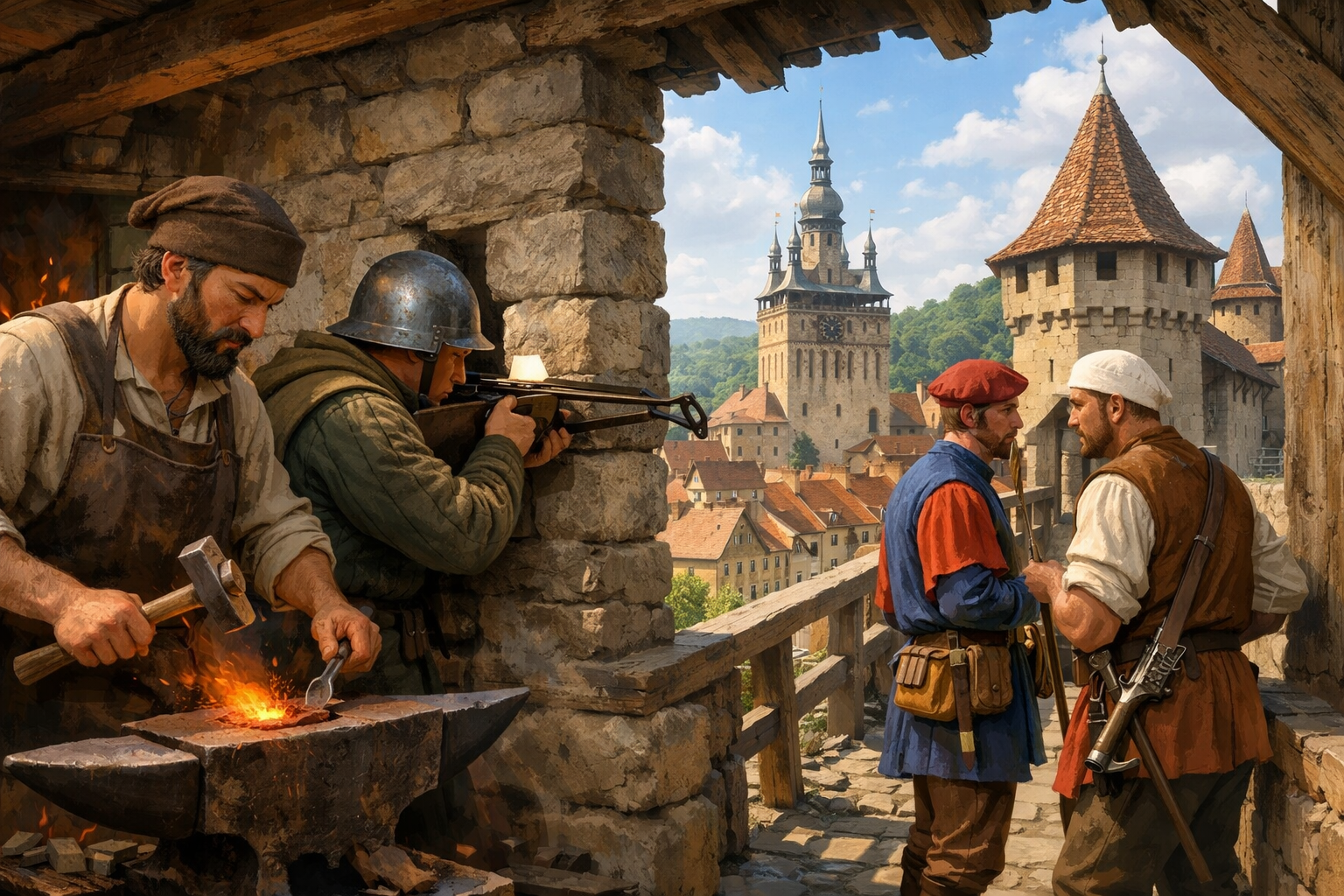
Uncover the secrets of Sighișoara's medieval fortifications on this immersive self-guided tour! Walk in the footsteps of Saxon guild militias—tailors, butchers, and blacksmiths—who defended the citadel's towers, gates, and walls from 1450 to 1600. Explore patrol routes, discover how early firearms and crossbows were wielded, and experience the unity that protected this vital Transylvanian trade center. Perfect for history buffs and curious adventurers alike!
- places
- Sighișoara
- The Clock Tower Sighișoara
- Transylvania
- Romania
- medieval citadel
- landmarks