
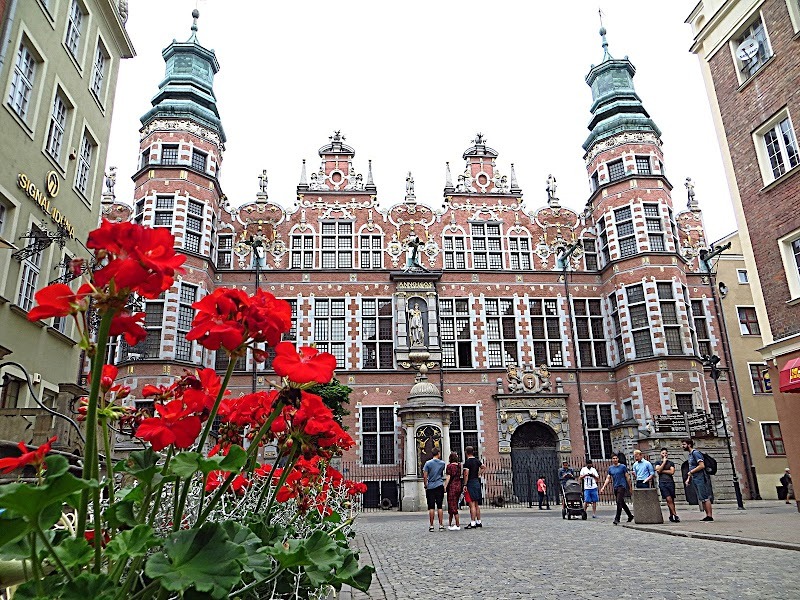
The Great Armoury in Gdańsk, also known as Wielka Zbrojownia, is a 17th-century former arsenal beside Targ Węglowy in Gdańsk, Poland. Today it houses the Academy of Fine Arts, stands on the regional heritage list, and is considered the greatest example of Mannerist architecture in Gdańsk.
Its importance comes from the contrast built into the structure: this was a serious military warehouse, yet its exterior presents defence through an elaborate, prosperous architectural language.
What is the Great Armoury in Gdańsk?
The Great Armoury is a former arsenal designed to support Gdańsk's defensive system while making a powerful architectural statement. Its location beside Targ Węglowy placed a building with a practical military role within the city's commercial and urban fabric. The building's present use by the Academy of Fine Arts gives the former arsenal a different function, but its architectural importance remains visible in its Mannerist design.
The Great Armoury is also protected as part of the region's heritage. Its status reflects the unusual combination of civic infrastructure and highly decorative architecture that defines the building.
Why was the Great Armoury built?
The Great Armoury was constructed between 1602 and 1605 by the Flemish architect Antoni van Obberghen. It was built during a period of increased regional tension as a dedicated storage facility for heavy artillery, muskets, and gunpowder.
The building was arranged according to the needs of its arsenal function. The ground floor stored cannons and wagons, while the upper floors held lighter weaponry. Its layout allowed weapons to be deployed rapidly to the city's defensive walls, making the Great Armoury an important piece of urban defence rather than simply a storage building.
What should you notice about the Great Armoury façade?
The façade uses military motifs as decorative elements, turning the subject of warfare into part of the building's visual identity. A statue of Minerva appears on the façade. She represents military strength guided by wisdom and trade interests, rather than simple conquest.
Look also at the decision to use vibrant colours and gilding on a military warehouse. This decorative treatment expressed Gdańsk's commercialised approach to defence: even the tools of war could advertise the city's prosperity. The façade therefore communicates more than military readiness. It presents defence as something funded, organised, and shaped by the interests of a wealthy trading city.
What does the Great Armoury reveal about Gdańsk's Golden Age?
The Great Armoury demonstrated that the Merchant Republic had the financial resources to maintain a sophisticated independent military force. Its construction marked Gdańsk's transition into one of the most fortified and technologically advanced cities in the Polish-Lithuanian Commonwealth.
The building's historical meaning lies in the tension between its arsenal function and its elaborate appearance. Its weapons storage, defensive layout, Mannerist architecture, Minerva figure, colours, and gilding all belong to the same statement: Gdańsk could invest in advanced defence without separating military power from commercial identity. The building is stop 8 of 8 on The Merchant Republic – Gdańsk's Golden Age (1550-1650) tour, which places the Great Armoury within that specific period of the city's development.
The tour that visits The Great Armoury
Each one is a self-guided route you can start whenever you like.
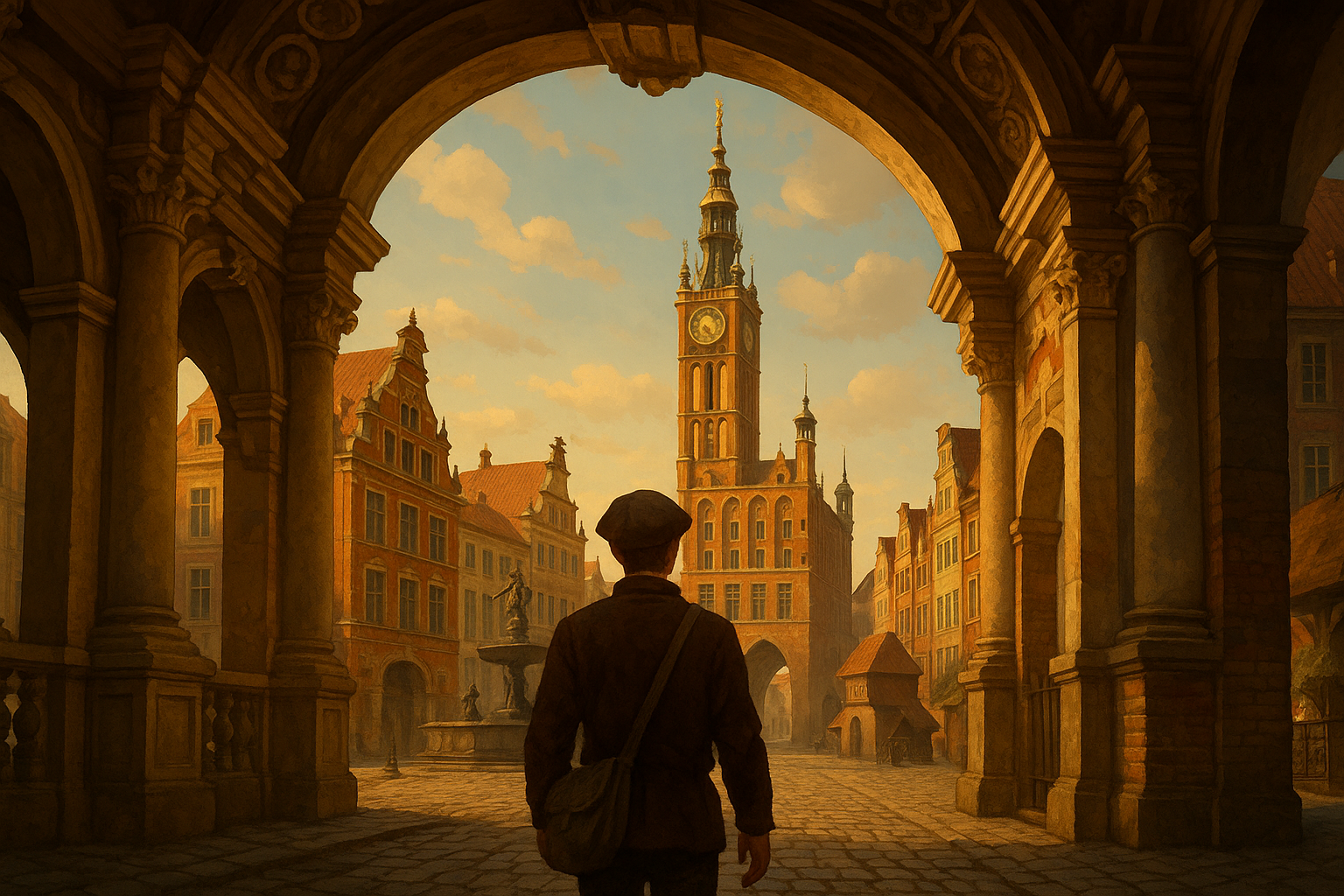
Gdańsk · 1h 20m
The Merchant Republic — Gdańsk’s Golden Age (1550–1650)
Discover Gdańsk's Golden Age on this immersive walking tour through the Main Town. Explore stunning Flemish Mannerist architecture, legendary merchant halls, and iconic landmarks like the Golden Gate, Artus Court, Neptune's Fountain, and the mighty Crane. Step into the world of 16th–17th century trade, culture, and opulence.
- places
- Gdańsk
- Great Armoury
- Wielka Zbrojownia
- Mannerist architecture
- Gdańsk history