
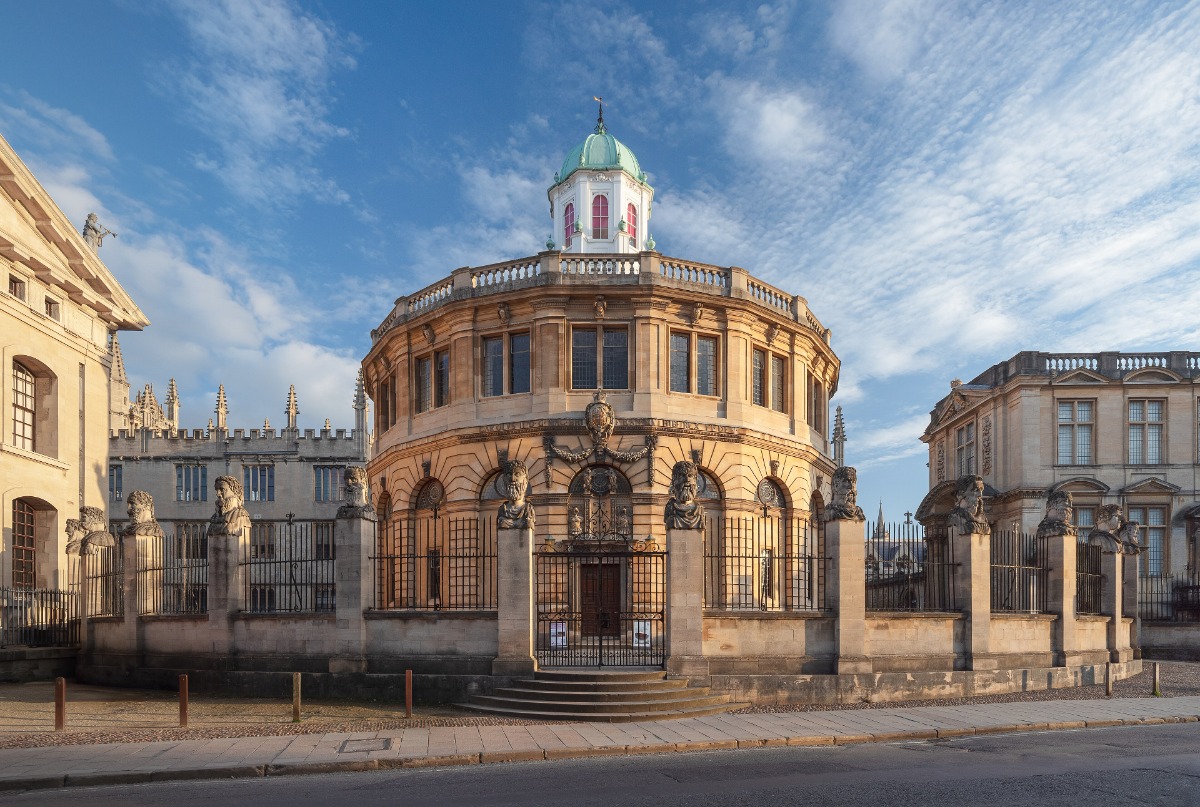
The Sheldonian Theatre is a Baroque university building in the centre of Oxford, England, designed by Christopher Wren and built from 1664 to 1669. It was created for the University of Oxford and remains the principal venue for Oxford's graduation ceremonies, as well as a venue for music concerts, lectures and other university ceremonies.
Its unusual appearance comes from a deliberate break with Oxford's more familiar Gothic character. The building's design, history and continuing ceremonial role make the Sheldonian Theatre a distinctive Oxford landmark to understand before you visit.
What is the Sheldonian Theatre in Oxford?
The Sheldonian Theatre is a university venue built for Oxford's ceremonies and designed by Christopher Wren. Construction took place between 1664 and 1669, making it one of Wren's early major works and a building created specifically for the University of Oxford.
The theatre is used for music concerts, lectures and university ceremonies. It is also the principal venue for Oxford's graduation ceremonies, giving the building a continuing role in the formal life of the university rather than serving only as a historic monument.
Why was the Sheldonian Theatre built?
The Sheldonian Theatre was built because Oxford needed a dedicated venue for university ceremonies. Before it existed, those ceremonies were held at the University Church of St Mary the Virgin, Oxford's principal church.
The supplied account explains why that arrangement was considered unsuitable. A graduation ceremony involved a sacrifice made equally to God and Apollo, so a church was not regarded as the appropriate setting. There were also concerns about the less-than-scholarly reputations of jubilant Oxford graduates. A project for a new venue had begun, but the 17th-century Civil War stalled it. It progressed after the Restoration of the Monarchy and the firmer standing of the Church of England.
What makes the Sheldonian Theatre’s design unusual?
The Sheldonian Theatre is unusual because its Baroque design does not strongly resemble the Gothic appearance associated with many Oxford buildings or with much architecture of its time. Its difference is intentional rather than accidental.
Wren based the design on the 1st-century Theatre of Marcellus in Ancient Rome. That Roman model did not have a roof, but the Oxford building required one. Wren gave the Sheldonian Theatre a flat roof instead of a Gothic roof, a choice described in the supplied account as radical for its time.
Who is the Sheldonian Theatre named after?
The Sheldonian Theatre is named after Gilbert Sheldon, who was Warden of All Souls College and later chancellor of the university. He was also identified in the Oxford account as Archbishop of Canterbury.
Sheldon was the project's main financial backer, so his name connects the building not only to Oxford's university leadership but also to the funding that helped bring the dedicated ceremony venue into existence.
What happens at the Sheldonian Theatre?
The Sheldonian Theatre continues to serve as a venue for music concerts, lectures and university ceremonies, including Oxford's graduation ceremonies. Its use for drama came much later: it was not used for drama until 2015, when the Christ Church Dramatic Society staged Arthur Miller's The Crucible.
The building is stop 4 of 10 on The Oxford Exam, a self-guided Oxford route that includes the Sheldonian Theatre among its landmark stops. That makes the theatre a specific place to encounter as part of an Oxford exploration, while its Wren design and ceremonial purpose explain why it stands apart from the city's more Gothic-looking buildings.
The tour that visits The Sheldonian Theatre
Each one is a self-guided route you can start whenever you like.

Oxford · 2h
The Oxford Exam
Explore Oxford’s iconic sights, uncover rich history, and embark on the ultimate academic adventure! Perfect for exam takers and curious travelers alike - celebrate your success and start your journey here. The world awaits!
- places
- Oxford
- Sheldonian Theatre
- Christopher Wren
- Oxford landmarks
- University of Oxford