
Washington, D.C., United States2 min read
The White House in Washington, D.C.
The White House on Google Maps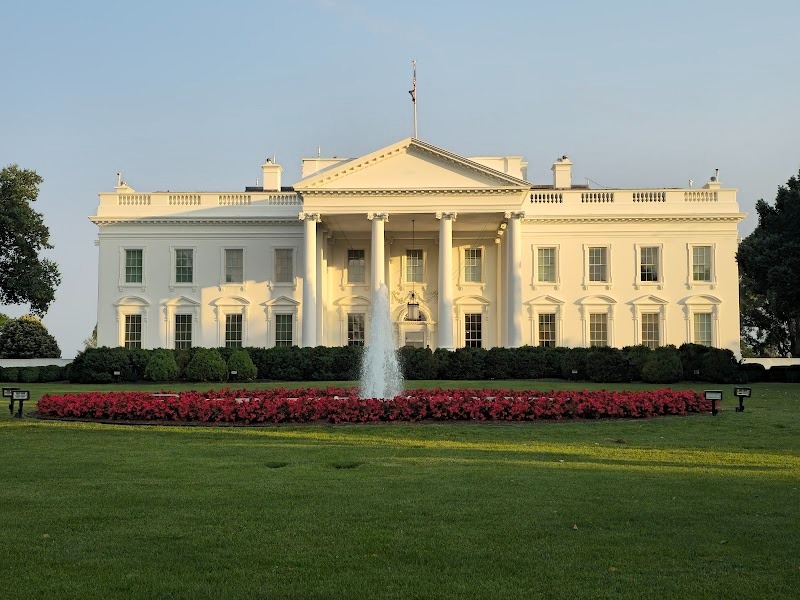
The White House in Washington, D.C., has served as both the residence and operational headquarters of the president of the United States since 1800. John Adams was the first president to occupy the building, which James Hoban, an Irish-born architect, designed in a neoclassical style to reflect republican ideals while projecting dignity and executive authority.
What is The White House in Washington, D.C.?
The White House is the building where the U.S. president lives and works. Since 1800, its role has combined domestic residence with the practical headquarters of the presidency, giving the building both a personal and institutional place in American government.
James Hoban’s neoclassical design was intended to express republican ideals without giving up the visual authority expected of an executive seat. That balance remains central to The White House: it is a presidential home, but also a building designed to represent the authority of the office.
How did The White House become a symbol of presidential power?
The White House evolved from a relatively modest executive residence into one of the world’s most recognizable political symbols. It became a center of executive decision-making during wars, economic crises, diplomatic negotiations, and political transformations.
From offices and meeting rooms within The White House, presidents directed the Civil War, the New Deal, World War II, Cold War strategy, civil rights legislation, and modern military operations. The building adapted to the growing power of the presidency through the West Wing, East Wing, Situation Room, and nearby Eisenhower Executive Office infrastructure.
What happened to The White House during the Burning of Washington?
During the Burning of Washington, also known as the Capture of Washington, British soldiers and sailors set fire to the Presidential Mansion—the building now known as The White House—on August 24, 1814. The attack followed the defeat of American forces at the Battle of Bladensburg, after which a British army led by Major-General Robert Ross marched on Washington, D.C.
The Burning of Washington was a successful British amphibious attack conducted by Rear Admiral George Cockburn during Admiral John Warren’s Chesapeake campaign. Multiple public buildings were set alight, including the Presidential Mansion, the United States Capitol, and Washington Navy Yard. It was the only time since the American Revolutionary War that a foreign power had captured and occupied a United States capital.
Why is The White House still a public symbol?
The White House functions as a political and cultural stage through public ceremonies, state dinners, press briefings, protests, and televised presidential addresses. These events have made it a global stage where political authority and media spectacle meet.
Security around The White House expanded after assassinations, terrorist threats, and political unrest, reflecting how executive power became increasingly tied to national security concerns. To explore the building within Washington’s wider network of political institutions, follow the Washington DC: Power & Institutions Tour. It places The White House in the context of the city’s concentration of executive power; you can explore that Washington, D.C. route through Leplace.
The tour that visits The White House
Each one is a self-guided route you can start whenever you like.

Washington, D.C. · 2h 15m
Washington DC: Power & Institutions Tour
Explore the iconic heart of Washington DC on this immersive self-guided tour. Walk through the power corridors of Congress, the White House, the Supreme Court, and more. Uncover the secrets, history, and drama behind America's most influential institutions—perfect for history buffs, curious travelers, and anyone fascinated by the machinery of democracy.
- places
- Washington, D.C.
- Washington DC
- The White House
- U.S. history
- Presidential history
- Burning of Washington