
Prague, Czech Republic3 min read
Thunovská Prague: History and What to Notice
Thunovská on Google Maps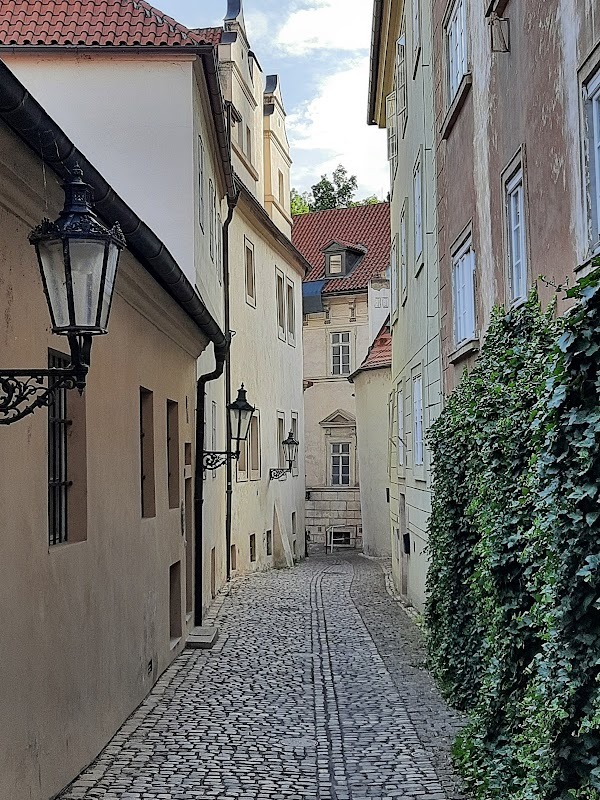
Thunovská is a historic street in Prague's Malá Strana district, closely connected with Thun Palace and the British Embassy. Thun Palace is a historic building in the heart of Malá Strana and houses the British Embassy in Prague, the United Kingdom's chief diplomatic mission in the Czech Republic.
The street also carries a more turbulent history. Its winding lanes, decorated facades, ornate portals, family crests and secluded passageways are tied to the Protestant resistance that followed the Defenestration of Prague and helped ignite the Thirty Years' War.
What is Thunovská in Prague?
Thunovská is a street in Prague's historic Malá Strana district. Its best-known association is Thun Palace, the historic building that contains the British Embassy in Prague.
The street is also a stop on Prague & the Thirty Years' War, where Thunovská appears as stop 2 of 7. That connection places the street within a route focused on the political and religious conflicts that reshaped Central Europe in the seventeenth century.
Why is Thunovská Street historically important?
Thunovská became a centre of clandestine activity after the Defenestration of Prague on May 23, 1618. Protestant nobles threw two Catholic officials from a window at Prague Castle, an event that marked the beginning of the Bohemian Revolt.
In the tense aftermath, Protestant families including the Thuns, Smiřickýs and Kolowrats met in hidden courtyards and behind the ornate doors of baroque townhouses along Thunovská. These were organised efforts to resist Habsburg rule and Catholic repression, rather than isolated acts of defiance.
The meetings contributed to the formation of the Protestant Union and to the drafting of strategies that escalated into open conflict. The Bohemian Revolt became the spark for the Thirty Years' War, fought from 1618 to 1648. Thunovská therefore matters not only as a Malá Strana street, but as a place associated with the concealed political work behind a much larger European conflict.
What should you notice along Thunovská?
Look first at the street's winding form and the way its richly decorated facades conceal secluded passageways. The physical details matter because the Protestant families who met here used the street's buildings and narrow lanes as part of a world of privacy and concealment.
Pay attention to the ornate portals and family crests. They reveal the presence and status of noble families, while the heavy doors and enclosed courtyards suggest how public displays of rank could exist alongside private religious and political resistance.
Hidden courtyards, ornate doors and narrow lanes are the details that connect present-day Thunovská with its history. The street's architecture served both as a symbol of noble status and as a practical shield for people risking their lives in pursuit of religious and political freedom.
How can you explore Thunovská in context?
Encounter Thunovská as one stop in the Prague & the Thirty Years' War route. It connects the street's architectural details and hidden spaces with the wider events of the Bohemian Revolt and the Thirty Years' War, without reducing Thunovská to a backdrop: its portals, courtyards and narrow lanes are the specific places where that history is rooted.
The tour that visits Thunovská
Each one is a self-guided route you can start whenever you like.

Prague · 1h 40m
Prague & the Thirty Years’ War
Relive the drama of the Thirty Years' War on this immersive outdoor tour of Prague. Walk from the infamous Defenestration window at Prague Castle through secretive Malá Strana streets, across the iconic Charles Bridge, and into the heart of Old Town Square. Uncover tales of rebellion, religious strife, and cultural suppression at each landmark, with plaques, hidden markers, and stunning architecture bringing 17th-century Prague to life. Perfect for history lovers and curious explorers.
- places
- Prague
- Malá Strana
- Thunovská
- Thirty Years' War
- Prague history