
Paris, France2 min read
Tour Saint-Jacques: The Medieval Tower Turned Shot Factory
Tour Saint-Jacques on Google Maps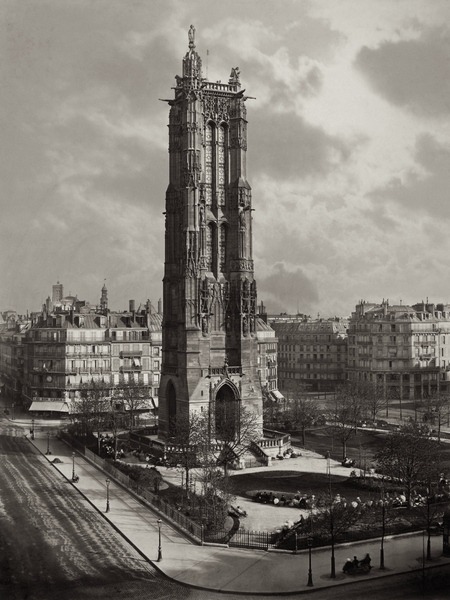
Tour Saint-Jacques is a 52-metre Flamboyant Gothic monument in Paris's 4th arrondissement. It stands on the Rive Droite, at the intersection of Rue de Rivoli and Rue Nicolas-Flamel, as the only remaining part of the former medieval Church of Saint-Jacques-de-la-Boucherie.
The tower is one of the stops on Leplace's 1789 French Revolution Grand Tour, where its unusual transformation connects a surviving medieval landmark with the material demands of revolutionary France.
What is Tour Saint-Jacques?
It is the 52-metre tower that survived the destruction of Saint-Jacques-de-la-Boucherie, a medieval church that was partially rebuilt in the 16th century. The Flamboyant Gothic structure now stands alone at the Rue de Rivoli and Rue Nicolas-Flamel intersection, separated from the church whose medieval presence it once marked.
That separation is the key to understanding the monument. The tower is not the complete church preserved in place: it is the remaining fragment of a larger religious building, with the nave and choir gone.
What happened to the church around Tour Saint-Jacques?
The church was sold as national property in 1797 during the French Revolution and then dismantled. Its nave and choir were razed, while the tower was preserved for a very different purpose.
The old church was treated as a quarry, with materials extracted for the state. Stone was taken from the structure, and lead was recovered from ecclesiastical elements including the church's roofing and funeral vaults. The dismantling therefore affected more than the building's appearance: its materials were redirected into the revolutionary state's military effort.
Why was the tower preserved during the French Revolution?
The tower's height made it suitable for conversion into a tour à plomb, or shot tower. Its vertical drop provided the space needed to turn molten lead into ammunition, so the structure was preserved while much of the church around it was dismantled.
Workers installed a furnace at the summit to melt lead, including lead taken from the church's roofing and funeral vaults. The molten metal was poured through a perforated sieve, forming droplets that fell through the tower.
As the droplets descended, surface tension and aerodynamic drag shaped them into spheres. They solidified during the fall before landing in a water vat at the base. The former religious tower thus became a vertical factory for producing musket balls for the revolutionary infantry, using the building's height as part of the manufacturing process.
How can you plan a visit to Tour Saint-Jacques?
Save the 1789 French Revolution Grand Tour to place this stop in a self-guided historical route through Paris. The tower's address at Rue de Rivoli and Rue Nicolas-Flamel gives you the fixed point; its story supplies the contrast to remember: a surviving fragment of a demolished medieval church, later repurposed for revolutionary ammunition production.
The tour that visits Tour Saint-Jacques
Each one is a self-guided route you can start whenever you like.
Paris · 2h 55m
1789 French Revolution Grand Tour
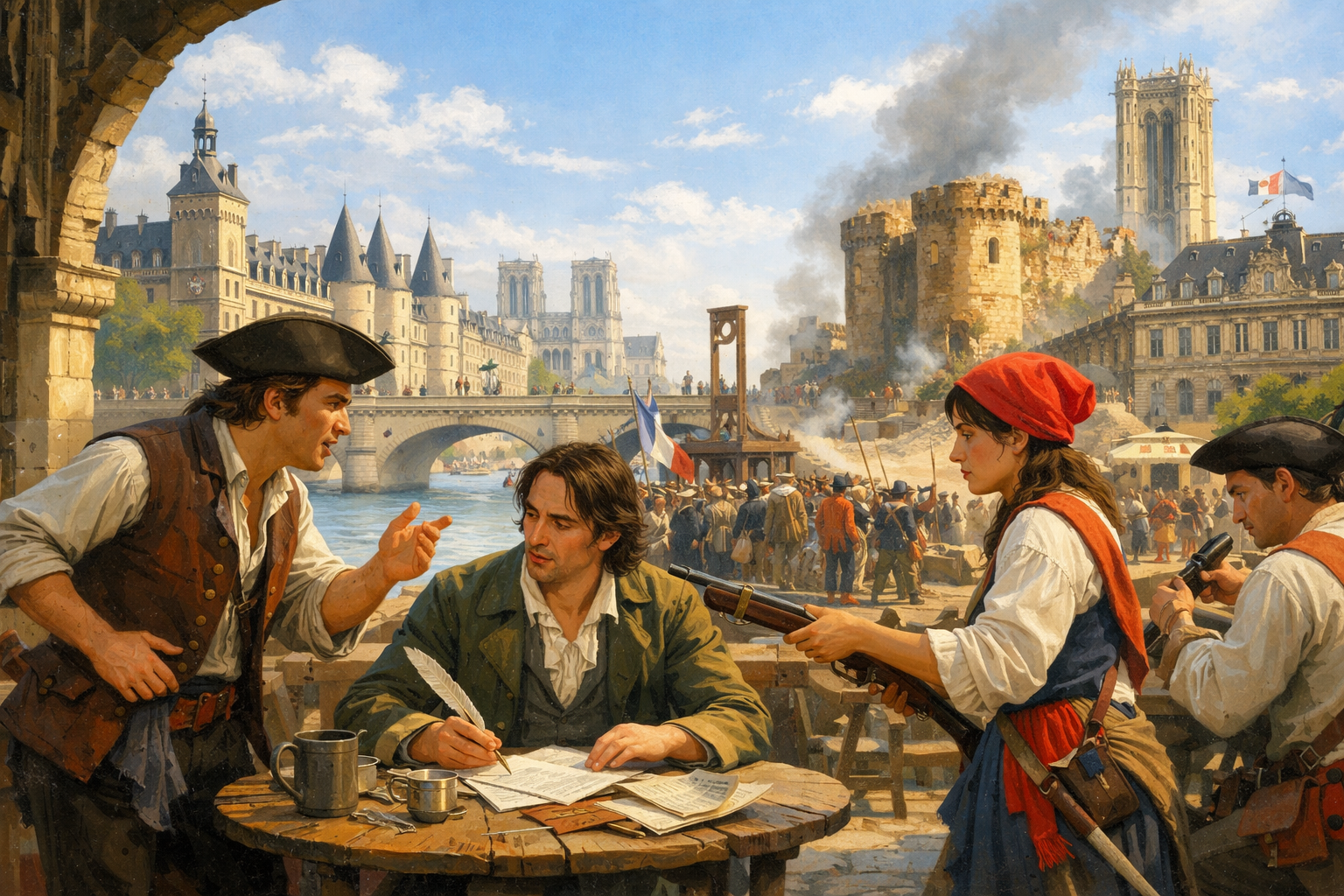
Trace the radical pulse of Paris from the first sparks of 1789's revolution. Hunt ground markings and relics of revolution as you cross bridges, palaces, and prisons. Discover how Paris's architecture became both witness and weapon in the making of modern liberty.
- places
- Paris
- Tour Saint-Jacques
- French Revolution
- medieval architecture
- self-guided tours