
Jerusalem, Israel3 min read
Tower of David Jerusalem: What to Know Before You Visit
Tower of David on Google Maps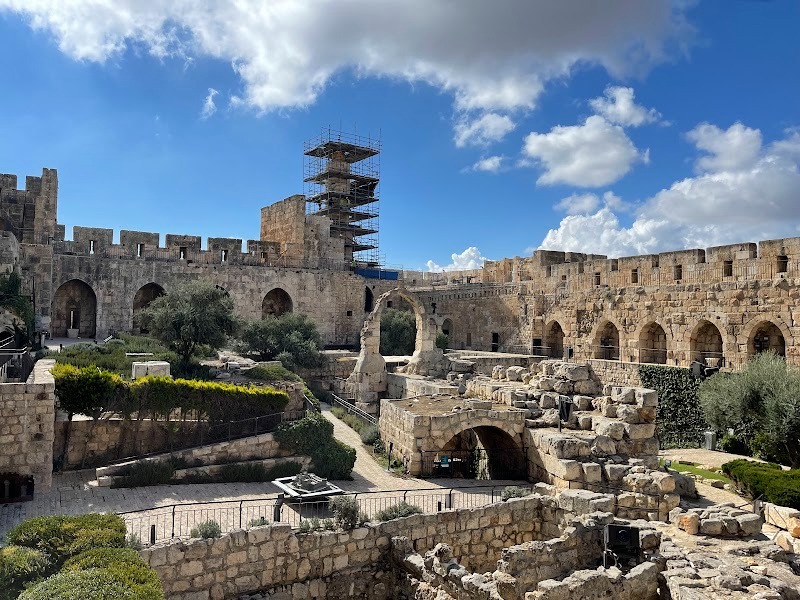
The Tower of David in Jerusalem, also known as the Citadel, is an ancient citadel and contemporary museum near the Jaffa Gate entrance to the Old City. The Jerusalem Citadel stands on a site connected to Herod the Great's palace complex, the Roman siege of Jerusalem in 70 AD, and centuries of Byzantine, Crusader and Ottoman rule.
What is the Tower of David in Jerusalem?
The Tower of David is the name commonly used for the citadel beside the Jaffa Gate, while the Tower of David Museum is its present-day cultural identity. The landmark is therefore both a fortified historic site and a contemporary museum, occupying a strategic position at one of the Old City's principal entrances.
That distinction matters: the visible citadel is not a building that stood in its current form during the Roman siege. Its importance comes from the site's earlier role in Jerusalem's western defenses and from the layers of history that later shaped the Jerusalem Citadel.
Why was the Tower of David site important during the siege of Jerusalem?
The structure in its current form was not present during the Roman siege of 70 AD. Instead, the site occupied the location of Herod the Great's palace complex, which included massive towers named Phasael, Hippicus and Mariamne.
During the siege, the western citadel area became a key zone of resistance. Jewish defenders used the elevated fortifications to launch stones, arrows and boiling oil at Roman attackers. The position near Herod's towers gave the defenders strong fortifications from which to resist the assault.
Roman forces under Titus responded with ballistae, battering rams and siege towers. They also used embankments and tunnelling to weaken and breach the walls. The heaviest fighting focused around the Temple Mount and Antonia Fortress, but battles also took place near Herod's towers. After the city's fall, Titus deliberately spared some of the towers to display the strength of the fortifications and the scale of the Roman victory.
The Siege of Jerusalem 70AD tour places this citadel site within that wider siege context. The Tower of David stop is one part of the route, not the whole walk, and its historical question is left for the experience itself.
How did the Jerusalem Citadel become the Tower of David Museum?
The site passed through Byzantine, Crusader and Ottoman hands over the centuries. Each period added another layer to a location already shaped by Jerusalem's turbulent past.
That layered history is central to the Tower of David Museum's identity. The stones and fortifications connect the contemporary museum with the earlier palace complex, the defenses involved in the siege of 70 AD, and the later periods that reshaped the site. The present landmark is not identical to Herod's fortifications, but it occupies the same historically significant location.
What should you understand when you stand near the Tower of David?
The Tower of David's position beside the Jaffa Gate places the citadel directly at the entrance to Jerusalem's Old City. Its role as a landmark comes from more than its appearance: the site links the remains and memory of Herod's palace complex with the siege of 70 AD and the Byzantine, Crusader and Ottoman layers that followed.
Read the Tower of David as a place with a long defensive history, not as the unchanged fortress of the Roman siege. To explore that connection in context, follow the Siege of Jerusalem 70AD route.
The tour that visits Tower of David
Each one is a self-guided route you can start whenever you like.
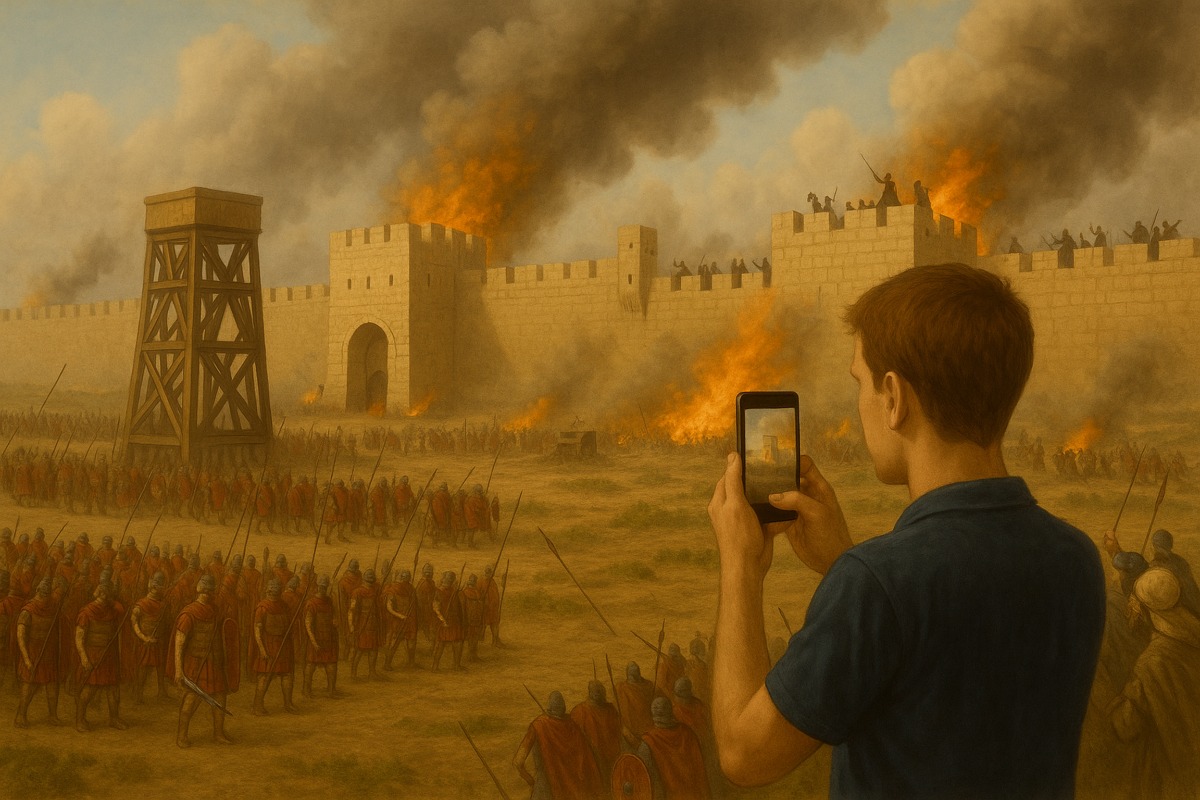
Jerusalem · 1h 30m
Siege of Jerusalem 70AD
Relive the dramatic Siege of Jerusalem in 70 AD through the eyes of a Roman Praetorian. This immersive self-guided tour traces the Roman assault from Jaffa Gate to the Temple Mount's destruction, exploring ramparts, breached walls, and the final aftermath atop the Mount of Olives. Discover pivotal moments, historical sites, and the strategies that shaped one of history's most consequential sieges.
- places
- Jerusalem
- Tower of David
- Old City of Jerusalem
- Jerusalem Citadel
- Tower of David Museum
- Roman siege of Jerusalem