
Paris, France2 min read
Tuileries Garden: History, Location and What Makes It Distinctive
Tuileries Garden on Google Maps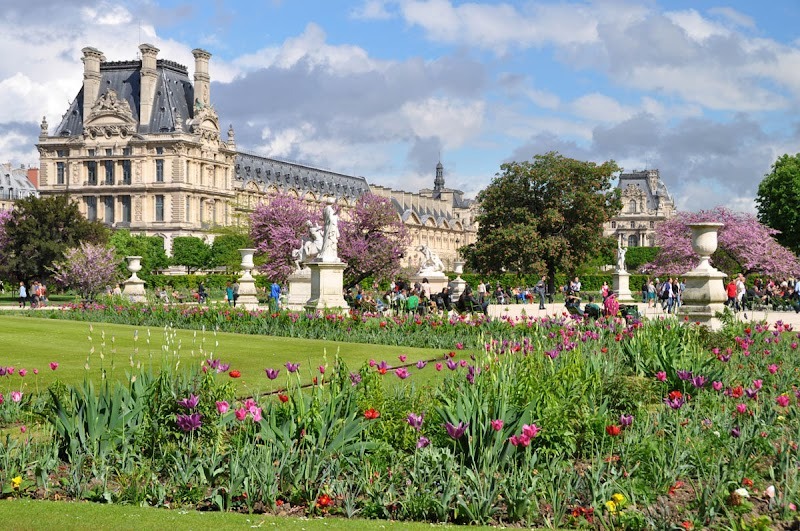
Tuileries Garden, also known as Jardin des Tuileries, is a public garden in Paris's 1st arrondissement, between the Louvre and Place de la Concorde. Covering 25.5 hectares, it is one of Paris's iconic parks, known for its manicured paths and its connection to the vanished Tuileries Palace and the collapse of the French monarchy.
Since the 19th century, Tuileries Garden has been a place for Parisians to celebrate, meet, stroll and relax. Its scale makes it a defining open space in central Paris, while its position places it directly between the Louvre and Place de la Concorde.
What is Tuileries Garden?
Tuileries Garden is a 25.5-hectare public garden occupying the historic grounds of the Tuileries Palace. The palace is gone, but the garden remains, with its manicured paths marking out a space that has served both everyday public life and major historical events.
The garden's location is its clearest orientation point: leave the Louvre behind and continue towards Place de la Concorde, or approach from the square towards the museum. Since the 19th century, Parisians have used Tuileries Garden to celebrate, meet, stroll and relax.
How did Tuileries Garden become a public park?
Tuileries Garden began as a royal garden, created by Catherine de' Medici in 1564 for the Tuileries Palace. It opened to the public in 1667, changing the garden from a private royal setting into a space accessible to the wider public.
After the French Revolution, it became a public park. That change gave the garden a new civic role, even as the palace and monarchy associated with its earlier history disappeared.
What happened at the Tuileries during the French Revolution?
During the French Revolution, the Tuileries Palace stood as a fragile barrier between the Bourbon dynasty and the revolutionary streets of Paris. Louis XVI and Marie Antoinette were forcibly relocated there, effectively becoming high-profile prisoners in their own ancestral home.
On August 10, 1792, sans-culottes and federated troops stormed the residence. The insurrection led to the massacre of the Swiss Guard and Louis XVI's desperate flight to the nearby Legislative Assembly for protection. The palace was looted, and the royal family was later moved from the Tuileries to the Temple Prison. The event marked the death knell for the monarchy.
What should you notice when you walk through Tuileries Garden?
Notice the contrast between the garden's manicured paths and the absence of the palace that once stood there. Between the Louvre and Place de la Concorde, the garden preserves the physical setting while the royal building that made it a seat of power has vanished.
Tuileries Garden also hosted the Olympic and Paralympic cauldron during the 2024 Summer Olympics and Paralympics, adding a recent public event to its long civic history. To connect the garden's surviving paths with the revolutionary events associated with the palace, follow the 1789 French Revolution Grand Tour.
The tour that visits Tuileries Garden
Each one is a self-guided route you can start whenever you like.

Paris · 2h 55m
1789 French Revolution Grand Tour
Trace the radical pulse of Paris from the first sparks of 1789's revolution. Hunt ground markings and relics of revolution as you cross bridges, palaces, and prisons. Discover how Paris's architecture became both witness and weapon in the making of modern liberty.
- places
- Paris
- Tuileries Garden
- French Revolution
- Paris history
- Jardin des Tuileries