
Winchester, United Kingdom3 min read
Wolvesey Castle (Old Bishop's Palace), Winchester
Wolvesey Castle (Old Bishop's Palace) on Google Maps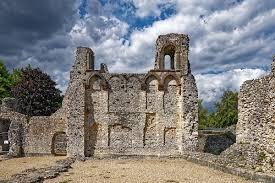
Wolvesey Castle (Old Bishop's Palace) is the medieval main residence of the Bishop of Winchester, in Winchester, Hampshire, England. Mostly built by Henry of Blois in the 12th century, it is now largely a ruin, although its fifteenth-century chapel forms part of the bishop's current residence, Wolvesey Palace.
What is Wolvesey Castle (Old Bishop's Palace)?
Although it is called a castle, Wolvesey Castle was primarily a palace: the principal medieval residence of the Bishop of Winchester. Its name reflects the later way the site is understood, but its original role was as an episcopal residence rather than a royal fortress. Henry of Blois built most of the complex in the 12th century.
The surviving site is therefore not a complete medieval castle. Most of Wolvesey Castle is ruined, while the fifteenth-century chapel remains part of the bishop's current residence, Wolvesey Palace. Keeping those names distinct matters: Wolvesey Castle (Old Bishop's Palace) refers to the historic ruins, while Wolvesey Palace is the current residence associated with the surviving chapel.
Why was Wolvesey Palace fortified?
Henry of Blois fortified the palace because of the Anarchy, the 19-year struggle between Stephen and Matilda over the rightful heir to the English crown. Henry was the 12th-century Bishop of Winchester, but he was also closely connected to both sides: he was the grandson of William the Conqueror, the brother of King Stephen and the cousin of Empress Matilda.
That family position placed Henry in the middle of a political conflict over the English succession. In the account used by Journey Through Winchester's Past, the bishop had to rebuild his palace into a castle. The fortification was therefore a response to the Anarchy's political pressures, not evidence that the residence had originally been designed chiefly as a military stronghold.
What does Wolvesey Castle reveal about medieval Winchester?
Wolvesey Castle is presented as evidence of a period when Winchester was more important than Canterbury. The same historical account describes Winchester as a 144-acre walled city with more than one castle, a distinction it shares, according to the tour material, only with York and London.
The two-castle detail is the useful clue here. It points to the unusual historical status of Winchester without, by itself, proving a broader claim about whether the city was England's capital. Wolvesey Castle's fortified character belongs to that specific setting: an important walled city containing more than one castle during a contested succession.
What should you notice about the place name?
The name Wolvesey has two possibilities in the tour material: the site may once have been home to wolves, or the name may have come from a man called Wolf. Neither possibility is presented there as a resolved etymology, so Wolvesey Castle's name retains both explanations.
For clarity, use the full name Wolvesey Castle (Old Bishop's Palace) for the medieval ruins. The fifteenth-century chapel is now part of Wolvesey Palace, the bishop's current residence, while the castle itself is mostly ruined. That distinction separates the historic palace-castle from the present residence without treating them as two unrelated places.
The tour that visits Wolvesey Castle (Old Bishop's Palace)
Each one is a self-guided route you can start whenever you like.
Winchester · 3h 10m
Journey Through Winchester's Past
Journey Through Winchester’s Past! Meet all the Historical Characters of England’s history. And the Literary Characters who left their mark on the world. See the sights of England’s Old Capital. Let …
- places
- Winchester
- Wolvesey Castle
- Old Bishop's Palace
- medieval history
- English heritage