
Jun 1, 20267 min readLeplace
Best Self Guided Audio Tour Alternative
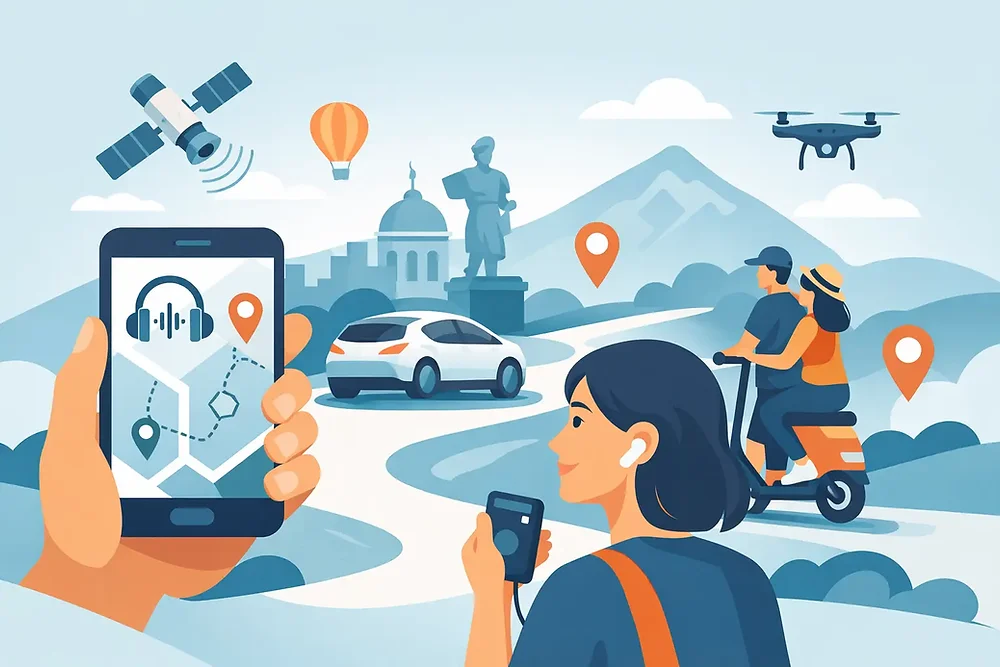
You tap play, put your phone in your pocket, and start walking. Ten minutes later, the city is talking at you, not with you. That is the real reason so many travelers start searching for a self guided audio tour alternative - not because audio tours are useless, but because passive listening rarely matches the energy of being in a living city.
For some trips, a classic audio guide still works. If you want a quiet museum companion or a low-effort walk between landmarks, it can do the job. But when people want discovery, surprise, movement, and a sense that they are part of the place instead of just passing through it, the format starts to feel dated fast.
The better alternative is not simply a prettier app with nicer narration. It is a different kind of experience. One that responds to where you are, asks you to notice details, turns streets into stages, and gives local stories a role in what you do next.
What makes a self guided audio tour alternative better?
A strong self guided audio tour alternative changes the traveler from listener to participant. That shift matters more than it sounds. When exploration becomes interactive, people remember more, stay engaged longer, and feel a stronger connection to the destination.
Audio-only formats are built around one-way delivery. The app tells, you receive. That can be efficient, but it is not always immersive. Cities are not linear. They are layered, messy, visual, social, and full of small discoveries that do not fit neatly into a continuous voice track.
An interactive alternative can use prompts, challenges, missions, maps, visual clues, GPS triggers, and game logic to make the route feel alive. Instead of hearing that a square was once a market, you might be asked to find the symbol carved into a nearby building that reveals what was traded there. Instead of listening to a long explanation about a district, you might unlock the next story only after reaching a hidden spot or solving a clue tied to the neighborhood.
That difference creates momentum. People keep moving because they want to know what happens next.
Why passive tours lose attention in active places
The problem with many audio tours is not quality. Some are brilliantly written and well produced. The problem is format friction. Travelers are usually juggling navigation, traffic, photos, weather, time pressure, and whoever they are traveling with. In that environment, long stretches of passive listening can feel like homework.
There is also a mismatch between how mobile users behave and how traditional audio guides are designed. Most people already use their phones as a real-time travel tool. They expect quick feedback, flexible pacing, visual cues, and interaction. If an experience asks them to stand still and listen for three minutes every block, that rhythm can start to feel slow.
This is why a self guided audio tour alternative often wins with younger travelers, couples, friend groups, and solo explorers who want freedom without losing structure. They do not necessarily want a human guide. They want a smarter format.
The rise of interactive city exploration
The most compelling alternatives combine storytelling with action. Think walking tour meets exploration game. Think local history mixed with scavenger hunt logic. Think cultural discovery built for the smartphone habits people already have.
This model works because it turns attention into part of the product. You are not just consuming information. You are using it. That could mean collecting virtual items, following a GPS path, completing neighborhood challenges, decoding clues, or making route choices that shape the experience.
For travelers, that creates more agency. For creators and tourism organizations, it creates more room to design memorable moments instead of recording one long script and hoping people stay engaged.
A good interactive tour also handles different energy levels better than a standard audio product. Some users want a relaxed story walk. Others want a challenge. Some want date-night fun. Others want family-friendly discovery. Game mechanics make it easier to tune the experience without losing the self-guided format.
A better self guided audio tour alternative for modern travelers
Modern travelers do not just want convenience. They want participation. The most effective self guided audio tour alternative delivers that in a way that still feels easy to use.
The sweet spot is mobile-first and location-aware. Your phone already knows where you are. That means content can appear when it matters instead of all at once. A story can trigger at the exact building, mural, alley, or plaza where it makes sense. A challenge can nudge you to look up, turn around, or step off the obvious path.
That changes the emotional rhythm of the experience. Instead of a flat stream of narration, you get moments of anticipation and reward. You notice more. You remember more. And you are more likely to keep going because curiosity is driving the route.
There is also a social advantage. Audio tours can isolate people, especially in groups where everyone is listening on their own device. Interactive formats are easier to share. One person can read a clue out loud. Another can spot the answer. A couple can solve the route together. That turns sightseeing into something closer to play.
What travelers should look for instead of audio alone
Not every alternative is automatically better. Some apps swap narration for clutter and call it innovation. The strongest experiences tend to have a few things in common.
First, they are built around place, not just content. The city itself should feel like the interface. Streets, landmarks, signs, architecture, and local details should matter to the flow.
Second, they create progression. People enjoy knowing there is a next step, a hidden reveal, or a challenge to complete. Without that, a digital tour can still feel flat.
Third, they respect flexibility. Travelers want autonomy. They do not want to be rushed, but they also do not want to feel lost. The best products balance freedom with smart structure.
Finally, they give local storytelling a more active role. Information lands differently when it is attached to something you just discovered yourself.
Why this shift matters for tour creators and destinations
This is not only a traveler trend. It is a product shift for the tourism industry.
For guides, operators, and destination brands, relying only on traditional self-guided audio products can limit both engagement and monetization. Audio is easy to understand, but it is also easy to commoditize. If every offer is just a map and a voice track, the experience becomes harder to differentiate.
Interactive formats open more commercial possibilities. A city route can become a themed game, an event activation, a branded cultural trail, a seasonal quest, or a family-friendly challenge. Museums, tourism boards, local businesses, and creative organizations can package stories in ways that feel current and repeatable.
This is where platforms built for interactive exploration have a clear edge. Instead of forcing creators to act like audio publishers, they let them design mobile experiences that match how people actually move through cities now. Leplace sits directly in that category, turning local knowledge into playable, story-driven discovery that works for both explorers and partners.
There is a practical upside too. Interactivity can increase completion rates, social sharing, and perceived value. People are more likely to talk about an experience when they felt involved in it.
When audio still makes sense
There are trade-offs, and they are worth saying out loud. Audio tours still have value in lower-energy contexts. If someone wants a calm solo walk, has accessibility needs that make screen interaction less appealing, or prefers a more reflective experience, audio may be the better choice.
Interactive alternatives also need thoughtful design. Too many tasks can make the experience feel gimmicky. Poor GPS logic can break immersion. Weak storytelling can turn a game into busywork. The goal is not to add friction for the sake of novelty. The goal is to make discovery feel more alive.
That is why the best alternatives do not abandon audio completely. They use it selectively, alongside visuals, prompts, missions, and route-based interaction.
The future is not just guided - it is playable
Travelers are not asking for more information. They are asking for better experiences. That is the real force behind the search for a self guided audio tour alternative.
The next generation of city discovery is not passive, linear, or stuck in the old guide format. It is interactive, location-based, and designed for curiosity. It lets people explore on their own terms while still feeling pulled into a bigger story.
If a city has character, its tours should too. The best travel experiences do not just tell you where to look. They give you a reason to keep exploring.
Enjoyed this post?
Comments
Be the first to comment.