
Jun 12, 20267 min read
How Gamified Walking Routes Work
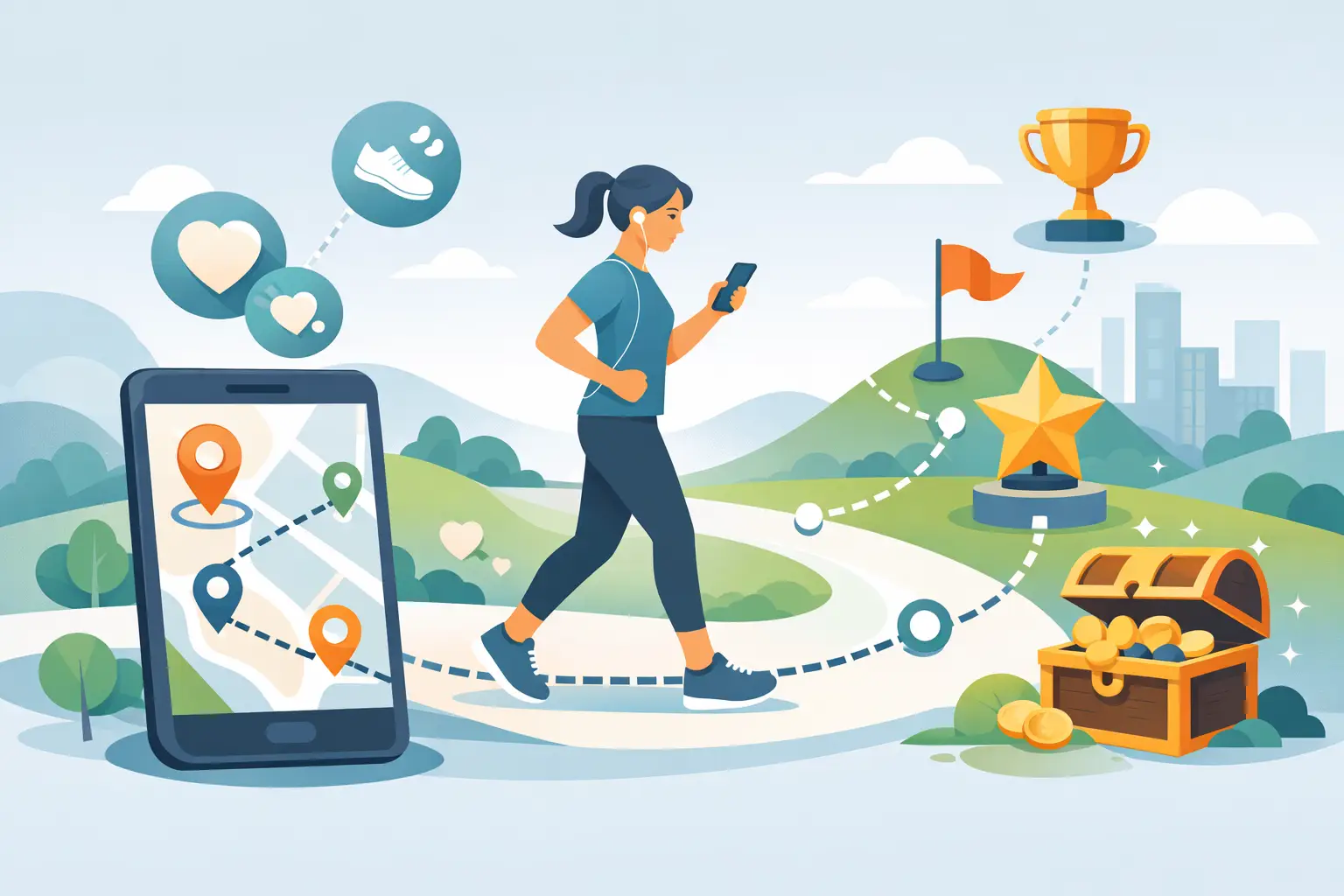
A normal city walk asks you to look around. A gamified route asks you to do something with what you find.
That difference is the reason how gamified walking routes work has become such a big conversation in travel, tourism, and urban discovery. Instead of following a passive map or listening to a one-way audio guide, participants move through a city as if they are inside a live, location-based game. Streets become levels. Landmarks become clues. Local stories become missions. The phone stops being just a navigation tool and starts acting like a game engine for the real world.
What makes a walking route gamified?
At the simplest level, a gamified walking route combines physical movement with game mechanics. You still walk from place to place, but each stop is designed to trigger action. That action might be solving a puzzle, answering a question, unlocking a chapter, collecting a digital object, or completing a challenge tied to the location.
The key shift is motivation. Traditional routes are built around information. Gamified routes are built around participation. Instead of saying, "Here is a historic square," the experience might say, "Find the hidden symbol on the building facade to open the next mission." That small change creates momentum. People are not just consuming a place. They are interacting with it.
This format works especially well for travelers who want freedom without losing structure. It also works for tourism brands and creators because it turns local knowledge into something more memorable than static signage or a standard app-based tour.
How gamified walking routes work in practice
Most experiences start with a mobile device. The user opens the route, sees a starting point, and begins moving through the city. From there, a mix of technologies and design choices shape the experience.
GPS and location triggers
The route usually knows where the participant is through GPS. When the person reaches a specific zone, the next part of the experience activates. That could be a piece of story, a challenge, a clue, or a reward.
This is what makes the city itself part of the interface. The route is not just displayed on a screen. It responds to movement in the real world. Walk to the old market and a mystery begins. Reach the riverside and a new task appears. Step into a cultural district and the app reveals a hidden layer of context.
GPS is powerful, but it is not perfect. Dense urban areas can affect accuracy, and indoor transitions can be tricky. Good route design accounts for that by using generous trigger zones, clear instructions, and backup ways to continue if the signal drifts.
Story-driven progression
The strongest gamified routes are not random collections of tasks. They have a reason for moving forward. That reason is often a narrative.
A route might cast the user as a detective, explorer, treasure hunter, or local insider. Each stop pushes the story ahead. Instead of feeling like a checklist of attractions, the city becomes a connected experience with rising curiosity and a sense of momentum.
This matters because story gives shape to movement. If users know why they are heading to the next street, they are more likely to stay engaged. For creators and tourism operators, story also helps turn familiar places into fresh products.
Missions, puzzles, and interactive tasks
This is where game design becomes visible. A mission can be simple, like finding a date on a monument, or more layered, like decoding a symbol seen across multiple locations. Some routes use trivia. Others use observation challenges, timed tasks, photo interactions, or digital item collection.
The best task design matches the place. A historic district might suit clue-solving and narrative reveals. A nightlife zone may work better with social challenges and team play. A family route often benefits from quick wins and visual tasks rather than text-heavy puzzles.
There is always a balance to get right. If the game is too easy, the route feels thin. If it is too hard, people stop walking and start getting frustrated. Strong experiences keep the friction low enough to feel smooth and high enough to feel satisfying.
Why these routes feel more immersive than standard tours
A passive tour gives you content. A gamified route gives you agency.
That sense of agency changes how people remember a place. When users solve something, choose a path, complete a mission, or uncover a hidden detail on their own, the location sticks. The experience feels earned. That is one reason gamified walking routes are increasingly used not just for leisure travel, but also for destination marketing, cultural engagement, educational programs, and event activations.
For younger mobile-first audiences, this format also matches behavior. People already explore through screens, maps, prompts, and social sharing. Gamification does not replace real-world travel. It gives digital structure to physical discovery.
How gamified walking routes work for different audiences
Not every route should work the same way. The mechanics need to fit the user.
For travelers and city explorers
Travelers want flexibility, instant access, and something more dynamic than reading plaques. Gamified routes fit that need because they are self-guided, mobile-first, and experience-led. A couple can start when they want. A solo traveler can move at their own pace. A friend group can turn sightseeing into a shared challenge.
What matters most here is momentum. The route should feel easy to enter and rewarding to continue.
For tourism brands and local organizations
Destinations, museums, and cultural institutions often use gamified routes to make local storytelling more interactive. Instead of asking audiences to absorb information passively, they can create participation around history, architecture, art, or neighborhood identity.
This format is also scalable. One well-designed route can serve many users without requiring a live guide at every session. That makes it attractive for organizations that want digital reach without losing experiential quality.
For creators and tour businesses
For guides and operators, gamified walking routes are not just a content style. They are a product model. Local expertise can be packaged into an interactive self-guided experience that remains sellable over time.
That is a major shift. It means creators can build tours that are not limited by live scheduling alone. A platform such as Leplace can turn local stories into real-life exploration games that feel contemporary, marketable, and easier to scale.
The mechanics that keep people engaged
The answer to how gamified walking routes work is not just technology. It is psychology.
Progress tracking matters because people like seeing movement toward a goal. Rewards matter because completion feels better when there is visible payoff. Surprise matters because curiosity drives walking better than instructions alone. Even small mechanics, like unlocking a badge, revealing a hidden scene, or collecting a virtual object, can make a route feel active rather than informational.
But more game mechanics do not always mean a better experience. Too many layers can distract from the city itself. If users spend the whole route staring at the screen, the format starts to work against the purpose of exploration. The strongest routes keep the device as a guide, not the main attraction.
Where gamified routes can fall short
This model is powerful, but it is not automatic.
A weak route often fails for one of three reasons. The story is thin, the tasks feel disconnected from the place, or the technology creates friction. If a mission could happen anywhere, it loses local magic. If clues are confusing, people stop trusting the experience. If navigation feels messy, the game loop breaks.
There is also a user-fit question. Some travelers want quiet reflection, deep history, or a traditional guided pace. A highly playful route may not suit every audience or every destination. It depends on the setting, the goals, and the kind of experience being promised.
That is why strong creators design for context, not novelty alone. They use game mechanics to amplify the place, not overshadow it.
The future of how gamified walking routes work
This category is moving fast because it sits at the intersection of travel, mobile gaming, creator tools, and smart tourism. As platforms improve, these routes can become more responsive, more personalized, and more cinematic. AR layers, branching storylines, live event integrations, and creator monetization are all pushing the format forward.
What will matter most is not flashy tech on its own. It will be whether the experience makes a city feel more alive. The best gamified routes do exactly that. They turn movement into discovery, discovery into action, and action into memory.
If you are building or booking one, that is the real benchmark. A good route helps people see a place. A great one gives them a reason to keep going.
Enjoyed this post?
Comments
Be the first to comment.