
May 31, 20267 min read
Outdoor Augmented Reality Tours That Engage
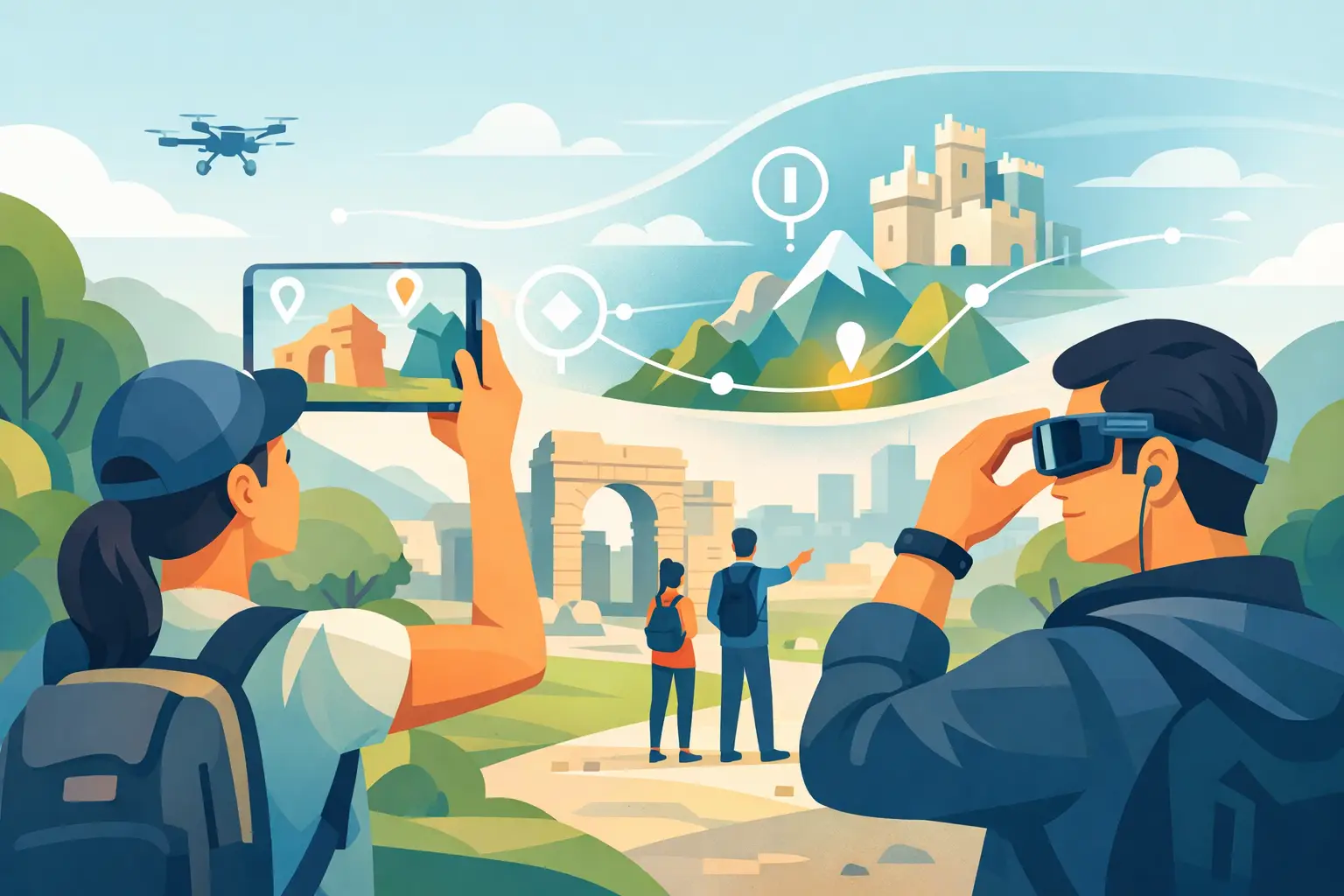
A city feels different when your phone stops acting like a map and starts acting like a portal. One street corner becomes a clue. A mural becomes a trigger. A public square becomes the stage for a hidden character, a challenge, or a piece of local history that only appears when you reach the right place. That is the real pull of outdoor augmented reality tours - they turn movement through a city into participation.
For travelers, that changes the whole rhythm of sightseeing. For tour creators, tourism brands, and cultural organizations, it changes what a tour can sell. You are no longer offering a passive stream of facts. You are packaging attention, momentum, and memory into a mobile experience people actively complete.
What makes outdoor augmented reality tours different
Most tours still follow a familiar model. You walk, listen, read, and move on. That works for some audiences, especially visitors who want a relaxed overview with minimal interaction. But it has limits. People tune out. Groups split attention. The city stays in the background while the guide or audio track does all the work.
Outdoor augmented reality tours reverse that dynamic. The environment becomes the interface. A route is no longer just a route. It becomes a series of location-based interactions where digital content appears in response to real movement. A statue might reveal a hidden story layer when viewed through a smartphone. A neighborhood might contain collectibles, timed tasks, or scene-based prompts that encourage people to look more closely at what is already there.
That shift matters because engagement changes behavior. When people need to solve, spot, collect, or trigger something, they pay more attention to the place itself. They remember details better. They stay active longer. And they are more likely to share the experience because it feels like something they did, not just something they consumed.
Why outdoor augmented reality tours work so well in cities
Cities are built for layered experiences. They already contain architecture, public art, local legends, hidden courtyards, business districts, and cultural landmarks sitting close together. AR does not need to invent interest from scratch. It amplifies what is already present and gives it structure.
That makes urban exploration a natural fit. A well-designed AR tour can guide people through a city without making them feel over-managed. They still get autonomy. They can move at their own pace, pause for coffee, take photos, or branch into surrounding streets. But the experience keeps its narrative pull because each stop feels like part of a larger mission.
This is where game logic becomes powerful. Not childish, not gimmicky - useful. If a traveler knows there is a challenge to complete in the next square, they keep going. If a couple is collecting virtual objects tied to a neighborhood story, they stay curious. If a solo explorer receives location-triggered prompts that reward observation, the city becomes more vivid.
That is why outdoor augmented reality tours often outperform standard self-guided formats for younger audiences and digitally fluent travelers. They match how people already use their phones - visually, interactively, and in short bursts of focused attention.
The best experiences mix story, challenge, and place
AR on its own is not enough. If the only idea is to place digital objects on a screen, the novelty fades fast. The strongest tours combine three things: a clear story arc, meaningful interaction, and a route that makes sense in the real world.
Story gives the experience shape. It can be historical, fictional, mystery-based, educational, or tied to local identity. Challenge gives people a reason to participate rather than just observe. Place is what makes it believable. If any one of those pieces is weak, the experience starts to feel flat.
For example, a heritage trail becomes stronger when visitors do more than read plaques. They might reconstruct a lost moment from the past by triggering scenes at key sites. A public art walk becomes more memorable when people unlock artist commentary, hidden animations, or collectible visual fragments tied to each location. A city center route becomes more dynamic when players solve clues that reveal where to go next instead of following a plain map pin.
This is also where creator thinking matters. Outdoor augmented reality tours are not just technology projects. They are experience design projects. Good creators think about pacing, line of sight, foot traffic, weather, safety, and how long attention can realistically hold between interaction points.
What travelers actually want from the format
People rarely wake up and say they want augmented reality. They want a better day out. They want to feel like they found something. They want a trip that is flexible but not aimless, independent but not empty.
That is why the best outdoor augmented reality tours are built around outcomes, not features. Travelers want a city experience that feels personal. Friend groups want something more active than scrolling through recommendations. Couples want a shared activity that creates moments worth talking about later. Solo visitors want confidence, structure, and surprise without joining a fixed group.
AR supports those needs when it stays useful. It can direct attention, reveal hidden context, create playful tension, and turn ordinary transit time into discovery time. But there is a trade-off. If the interface is clunky, if the instructions are vague, or if people spend too long staring at their screens, the real-world magic drops away.
The smartest products avoid that trap. They use AR as an enhancement, not a wall between the user and the city.
For creators and tourism brands, the opportunity is bigger than novelty
There is a commercial reason this format is growing. Outdoor augmented reality tours help organizations package local knowledge into products that are scalable, flexible, and easier to update than traditional tour formats.
A guide, museum partner, destination marketer, or event organizer can build an experience that works beyond a single scheduled departure. That means more availability, more reach, and more ways to monetize storytelling. Instead of relying only on live staffing, the experience can continue selling as a mobile product that visitors access when it suits them.
This opens up useful models. A tourism board can create a themed city trail for first-time visitors. A cultural institution can extend an exhibition into the surrounding streets. An event organizer can build a branded exploration game around a district. Independent creators can publish niche tours for architecture fans, mystery lovers, food-focused travelers, or families.
Platforms like Leplace make this especially relevant because they combine the consumer-facing tour experience with creator infrastructure. That means a local story does not have to stay local in a small, manual format. It can become a digital product with gameplay, location triggers, and self-guided access built in.
What separates a strong AR tour from a forgettable one
The difference usually comes down to restraint and clarity. More effects do not automatically create more excitement. In outdoor settings, reliability beats spectacle every time.
A strong tour respects the realities of being outside. GPS can drift. Sunlight affects screens. Streets can be noisy or crowded. People may be walking with friends, pushing strollers, or navigating unfamiliar neighborhoods. So the experience has to be intuitive. Directions should be simple. Interactions should load fast. Rewards should feel earned but not frustrating.
It also helps when the digital layer feels connected to the place rather than pasted on top of it. If a story could happen anywhere, it loses power. The best outdoor augmented reality tours are site-specific. They use the architecture, local history, visual landmarks, and movement patterns of a place as part of the design.
That is what gives the format staying power. The phone is not the attraction. The city is. AR just gives it a more interactive grammar.
Where the format is heading next
The future of city tourism is not passive, and it is not fully virtual either. It is hybrid. People still want the physical atmosphere of a real neighborhood, a real square, a real waterfront. But they also expect mobile experiences to be responsive, interactive, and personal.
Outdoor augmented reality tours sit right in that shift. They bring together self-guided freedom, game mechanics, digital storytelling, and location-aware design. For users, that means richer exploration without losing flexibility. For businesses and creators, it means tourism products that can feel contemporary, immersive, and commercially viable at the same time.
The winners in this space will be the ones who understand that technology is only the starting point. What people remember is the feeling of uncovering something where they stand, right there on the street, with the city suddenly behaving like it has another layer.
If you are building experiences for modern travelers, that is the opportunity worth chasing - not just showing people where to go, but giving them a reason to look closer when they get there.
Enjoyed this post?
Comments
Be the first to comment.