
Jun 30, 20267 min readLeplace
Self Guided Tour Software Review 2026
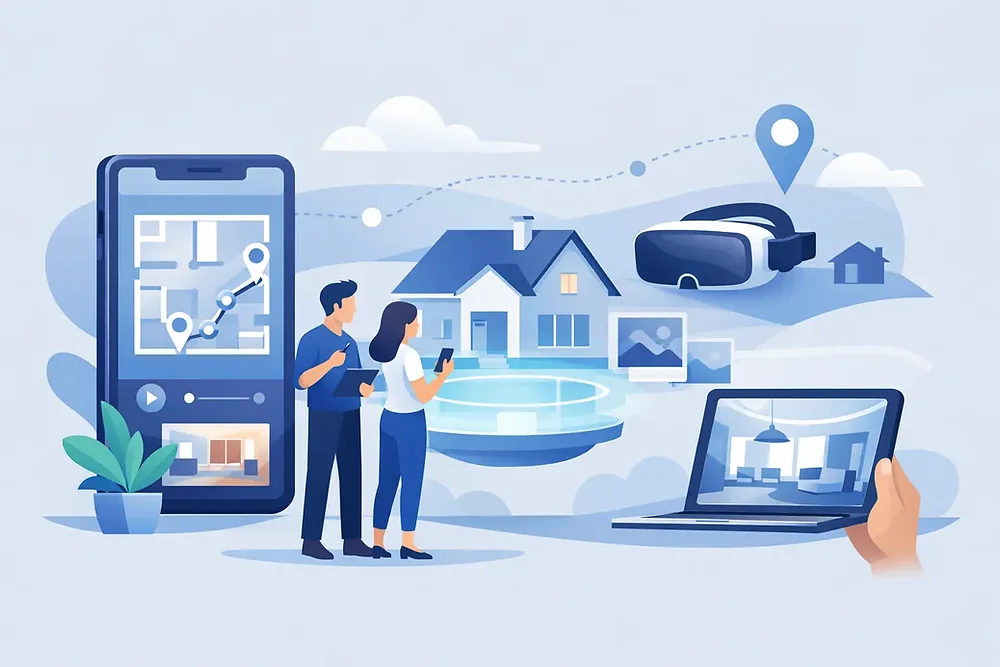
A self guided tour software review should start where most platforms get exposed - on the street, with a phone in one hand, low battery, spotty signal, and a visitor who wants something better than tapping through a static map. That real-world moment is where the gap becomes obvious between software that merely delivers stops and software that turns a city into an experience.
For travel brands, tour operators, museums, and independent creators, the category has matured fast. There are now plenty of tools that can publish an audio walk or location-based route. But not all of them are built for the same outcome. Some are designed to replace a brochure. Others are built to create real participation, longer engagement, stronger reviews, and products people actually want to pay for.
What a self guided tour software review should actually measure
Most reviews stay too surface-level. They compare dashboards, mention audio uploads, and stop there. That misses the point. Self-guided tour software lives or dies by what happens during the experience itself.
The first question is simple: does the platform create movement, curiosity, and momentum? A route with ten pins on a map is not automatically compelling. Travelers want autonomy, but they also want a reason to keep going. The stronger platforms create progression. They use narrative flow, timed reveals, location triggers, missions, collectibles, quizzes, or clues that make each stop feel connected.
The second question is whether the software is built for mobile behavior, not desktop assumptions. People exploring a city are not sitting down to study a long interface. They are walking, scanning, listening, checking directions, taking photos, and making quick decisions with limited attention. Good software feels immediate. Bad software feels like homework.
Then there is the commercial layer. For operators and destination partners, software is not just a creative tool. It is infrastructure. You need to know whether it can support monetization, flexible access, repeatable publishing, and a product catalog that can grow beyond one pilot tour.
Core features that matter most in a self guided tour software review
Route delivery is the baseline, not the differentiator
GPS routing, stop sequencing, maps, and multimedia support are table stakes now. If a platform cannot handle those reliably, it should not make the shortlist. But those features alone do not create a modern experience. They simply get you into the game.
What matters more is how the content unfolds. Does the platform support location-based triggers? Can content appear when a traveler reaches a place, rather than forcing them to manually search? Is there a sense of pacing? Can creators shape tension, surprise, and discovery instead of just uploading descriptions?
Interactivity changes the product value
This is where the market starts to split. Traditional self-guided tour tools often behave like digital audio guides. They are useful, but passive. Interactive platforms add game mechanics, tasks, checkpoints, and challenge-based exploration. That changes the emotional texture of the experience.
For younger travelers, couples, friend groups, and event audiences, this matters a lot. Participation creates memory. It also creates social energy. A self-guided experience that asks users to solve, collect, discover, or complete something usually performs better than one that only asks them to listen.
There is a trade-off, though. Not every audience wants full gamification. Some cultural institutions and historical tours need a lighter touch. The best software gives creators control over that balance, so a tour can be playful without becoming gimmicky.
Creator usability matters more than flashy demos
Some platforms look impressive in sales materials but become frustrating once you start building. A strong creator interface should make it easy to structure routes, upload assets, manage storytelling flow, and edit published experiences without needing custom development.
This is especially important for local guides, tourism teams, and cultural organizations that do not have in-house product teams. If publishing a tour feels technical or slow, the content pipeline breaks. Software should let experts in place-based storytelling stay focused on the story, not the system.
Monetization needs to be built in, not bolted on
A serious review has to look at how the platform handles paid access, ticketing logic, exclusive experiences, and creator revenue opportunities. If the software helps you publish but leaves monetization weak or awkward, it limits the business case.
This matters even more for scalable operators. A city tour can be an experiment. A portfolio of tours across multiple neighborhoods, themes, or partner sites is a business. The software should support that transition.
Where many platforms still fall short
The biggest weakness in this category is sameness. Many tools promise freedom and convenience, but the end product often feels interchangeable. A map, some audio, a few images, and basic stop descriptions are enough for functional tourism, but not for memorable tourism.
That becomes a problem in crowded cities and competitive destinations. If every operator offers a similar self-guided product, price pressure follows. The fastest way out of that trap is differentiation through experience design.
Another common issue is weak immersion. The interface may work, but the product does not feel alive. There is no feedback loop, no narrative momentum, no sense that the user is inside an unfolding experience. In 2026, travelers expect more from their phones than passive playback.
There is also the challenge of audience fit. Some software is great for museums and interpretive trails but not ideal for urban exploration games. Some tools support local tourism boards well but feel limiting for independent creators who want to monetize directly. A platform can be good and still be wrong for your use case.
The new standard: from tour software to exploration platform
The most interesting shift in this space is that the category is no longer just about digital tours. It is moving toward interactive exploration platforms.
That means the strongest products are not simply replacing a guidebook. They are combining storytelling, movement, play, and place-based technology into something that feels more like a real-life exploration game. This is where the market gets more exciting and, frankly, more valuable.
For consumer audiences, that creates stronger engagement. For B2B users, it opens up more product formats. A destination can launch a walking tour, yes, but also a scavenger hunt, a challenge route, a branded event experience, a seasonal quest, or a cultural trail with digital rewards. The software becomes a flexible engine for experience design.
This is also where a platform like Leplace stands out in the broader conversation. Its model is not centered on passive touring. It leans into mobile-first discovery, gameplay mechanics, and creator-driven publishing in a way that reflects where urban travel is heading rather than where it has been.
Who should choose what kind of platform
If your goal is simple audio narration for a museum, historic site, or low-complexity walking route, you may not need advanced game mechanics. In that case, ease of setup and playback reliability may matter most.
If you are a city tour operator trying to attract younger travelers or stand out in a saturated market, interactivity becomes much more important. You are not just selling information. You are selling time well spent.
If you are a tourism board, cultural district, or event organizer, scalability should be near the top of the checklist. Can multiple tours live inside one ecosystem? Can local creators contribute? Can the platform support different audience types without turning into a custom build every time?
And if you are an independent creator, monetization and ownership matter. You want software that helps you publish quickly, shape a distinctive experience, and generate revenue without forcing you into a generic template.
Final verdict on this self guided tour software review
The best self-guided tour software is no longer the one that simply digitizes a route. It is the one that turns physical places into interactive products people want to explore, finish, share, and remember.
That means your review criteria should go beyond maps, audio, and CMS features. Look at energy. Look at participation. Look at whether the platform gives creators enough control to build something with personality and enough commercial structure to make it sustainable.
Cities are full of stories, but stories alone are not the product anymore. The product is what people get to do with them once they step outside.
Enjoyed this post?
Comments
Be the first to comment.