
May 27, 20267 min read
Why Interactive Self Guided Tours Are Growing
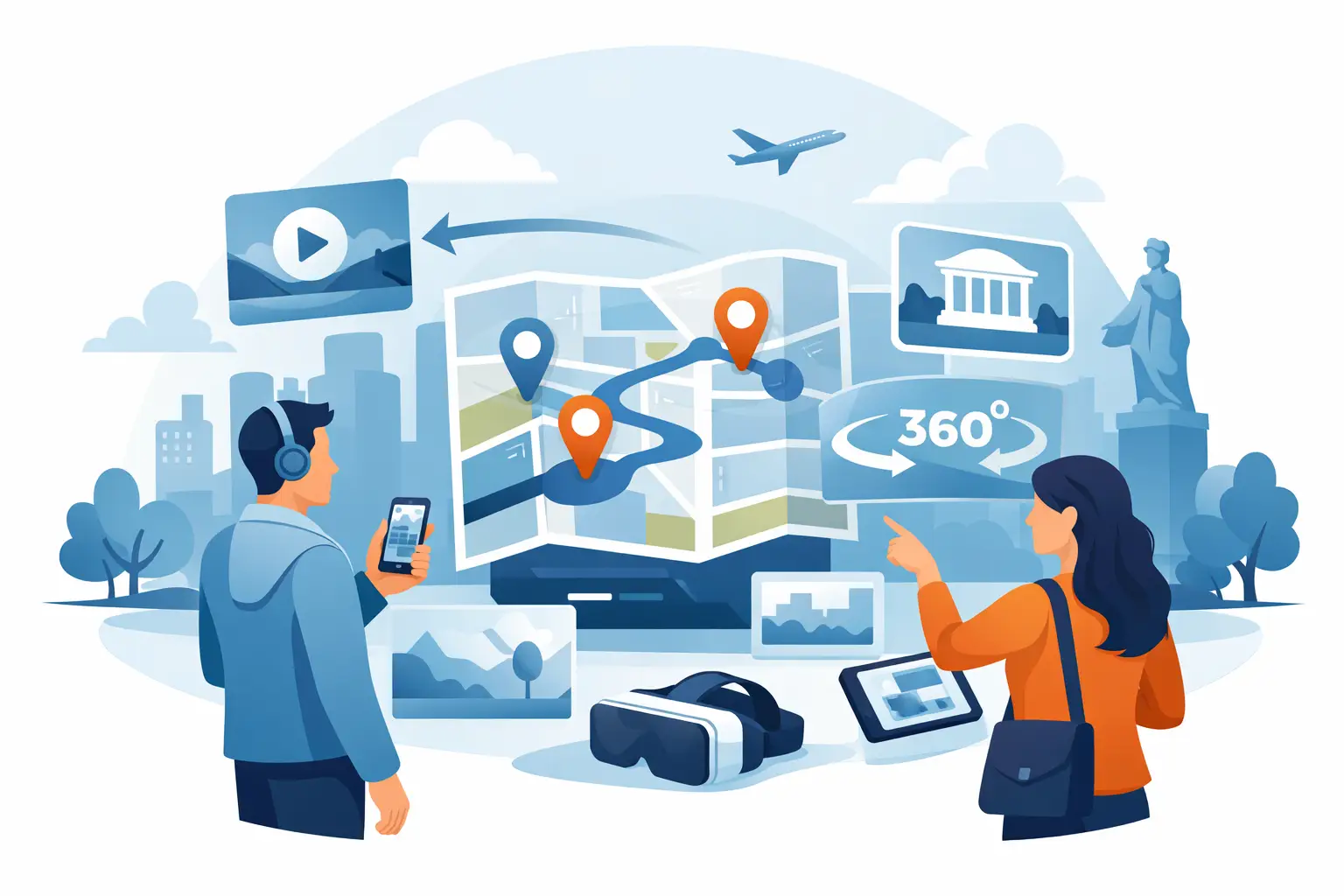
A standard city tour can lose people in the first ten minutes. One person wants history, another wants hidden spots, someone else is checking where to get coffee, and half the group is already wondering how long the route lasts. Interactive self guided tours fix that problem by putting the experience where modern travelers already live - on their phones, in their own time, and on their own path.
That shift matters because people are no longer satisfied with passive sightseeing. They want movement, choice, surprise, and a reason to keep going. The best mobile tour experiences do more than play audio at a landmark. They turn a city into a playable layer of stories, clues, challenges, and real-world discovery.
What makes interactive self guided tours different
A self-guided tour is not new. Cities have offered maps, plaques, and audio content for years. What changed is the level of participation.
Interactive self guided tours ask the traveler to do something. That might mean solving a location-based challenge, following narrative clues through a neighborhood, collecting virtual items, answering prompts, unlocking the next stop only after arrival, or choosing between different paths based on interest and pace. The phone stops being a playback device and becomes part guide, part game engine, part story companion.
That difference sounds small until you see how people behave during the experience. Passive tours often compete with distraction. Interactive formats create momentum. If the next reveal depends on where you go, what you notice, or what you complete, attention stays in the street instead of drifting back to social feeds.
For travelers, that means more ownership. For creators and tourism brands, it means stronger engagement and a more memorable product.
Why travelers are choosing interactive self guided tours
Freedom is the first reason. Travelers want to start when they want, pause when they want, and move at their own speed. That is especially true for solo explorers, couples, and small groups who do not want to organize their day around a fixed departure time.
But flexibility alone is not enough. Plenty of self-guided products are flexible and still forgettable. The growth comes from combining freedom with participation. When a route includes missions, branching story moments, hidden points of interest, or AR-style interactions, the city feels less like a checklist and more like an active environment.
That change fits how people already travel. They use their phones to navigate, document, share, and decide in real time. Interactive self guided tours meet that behavior instead of fighting it. They feel current because they are built around mobile habits rather than old tour formats.
There is also a social layer. A well-designed challenge-based tour works for solo users, but it becomes especially strong for friends, couples, families, and team events because it gives the group something to do together. Not just something to listen to.
The best experiences feel closer to games than guides
This is where the category gets interesting. The strongest products in the market do not treat interaction as a small feature added to a walking route. They build the route around interaction from the start.
That can look like a mystery unfolding across a district, a treasure hunt built around local legends, a cultural trail with unlockable rewards, or a city quest that blends storytelling with navigation. In each case, the traveler is progressing through an experience, not simply consuming information.
Game mechanics help because they create pace and curiosity. A clue gives context to the next street. A challenge makes a mural or square feel purposeful. A reward creates a sense of completion. Even simple mechanics can transform how a place is remembered.
There is a trade-off, though. Go too far into gameplay and the destination can disappear behind the mechanics. Go too far into education and the experience turns back into a lecture. The right balance depends on the audience. A destination brand might want soft challenges and rich local storytelling. An event organizer may want competitive missions and team scoring. A cultural site may want interaction that deepens interpretation without overwhelming the place itself.
Why destinations and creators are paying attention
For tourism businesses and cultural organizations, the appeal is not just novelty. It is scale.
A live guided tour is powerful, but it is also limited by staffing, scheduling, language, and capacity. Interactive self guided tours can extend access beyond those limits. They can run every day, support different traveler rhythms, and reach people who would never book a traditional group tour.
They also open up new formats that are difficult to deliver with a guide alone. Think after-hours city games, branded exploration routes for festivals, educational trails for museums, or neighborhood discovery experiences designed by local storytellers. Once the experience lives on a mobile platform, it becomes easier to update, localize, test, and package for different audiences.
That matters commercially. A creator can build one strong experience and keep selling it. A destination can offer a digital layer across multiple districts. An operator can expand inventory without adding more in-person departures. The product becomes more flexible, and in many cases, more profitable.
This is one reason platforms like Leplace are getting attention. They position the city itself as the stage, while giving creators the infrastructure to publish immersive, challenge-based tours without building custom tech from scratch.
What a strong interactive self guided tour includes
The strongest tours usually get four things right.
First, they have a clear emotional hook. Curiosity beats information overload every time. A traveler should know quickly whether they are chasing a mystery, following a local story, uncovering hidden architecture, or competing in a city-wide challenge.
Second, they create movement with purpose. Every stop should earn its place. If a location is included only because it is famous, the experience starts to feel generic. If it is tied to a clue, a choice, a reveal, or a meaningful moment, it becomes memorable.
Third, they respect mobile behavior. People will glance, walk, stop, take photos, and multitask. The experience has to be intuitive. Long text blocks and clunky instructions kill momentum fast.
Fourth, they reward attention. That reward might be narrative progress, points, digital collectibles, exclusive content, or simply the satisfaction of solving something in the real world. Without reward, interaction feels like work.
Where this format works best
Cities are the obvious fit because they already have density, landmarks, layers of story, and walkable routes. But the format works well beyond tourism downtowns.
Historic districts can use it to make heritage more active. Museums and cultural institutions can extend the experience outdoors. Event organizers can create branded city adventures tied to festivals, conferences, or seasonal programs. Universities can use it for orientation. Real estate and placemaking teams can use it to introduce neighborhoods through story rather than sales language.
The model also works across travel moods. Some users want a relaxed narrative walk. Others want a competitive hunt. Some want date-night discovery. Others want family-friendly exploration. The underlying format is flexible enough to support all of those, as long as the design matches the audience.
The challenge is not technology - it is design
It is easy to assume success comes from adding GPS, AR, or quizzes. Not quite. Technology can support the experience, but it does not automatically make the experience good.
A weak route with flashy effects is still a weak route. A story with no pacing still drags. A challenge that is too easy feels pointless, and one that is too hard creates drop-off. The real craft is experience design - shaping curiosity, friction, reward, and local meaning into something that feels alive on the street.
That is why the future of this category will belong to creators and platforms that understand both place and behavior. Not just software. Not just content. The combination.
What comes next for interactive self guided tours
Expect the category to get sharper, not just bigger. More creators will build niche experiences for specific traveler types. More destinations will use interactive formats to spread foot traffic beyond the usual hotspots. More brands will treat outdoor exploration as part entertainment, part storytelling, part local commerce.
The most exciting shift is that tours are no longer limited to explaining a place. They can stage a place. They can turn streets into scenes, landmarks into clues, and neighborhoods into interactive worlds people actively remember.
For travelers, that means less passive consumption and more ownership of the moment. For tourism brands and creators, it means a product people do not just book once - they talk about it, replay it in new cities, and recommend it because it felt different.
The opportunity is simple: if your audience is already moving through the world with a smartphone in hand, give them more than directions. Give them a reason to explore like the city is responding back.
Enjoyed this post?
Comments
Be the first to comment.