
Jun 3, 20267 min read
Why Mobile Treasure Hunt Tours Are Growing
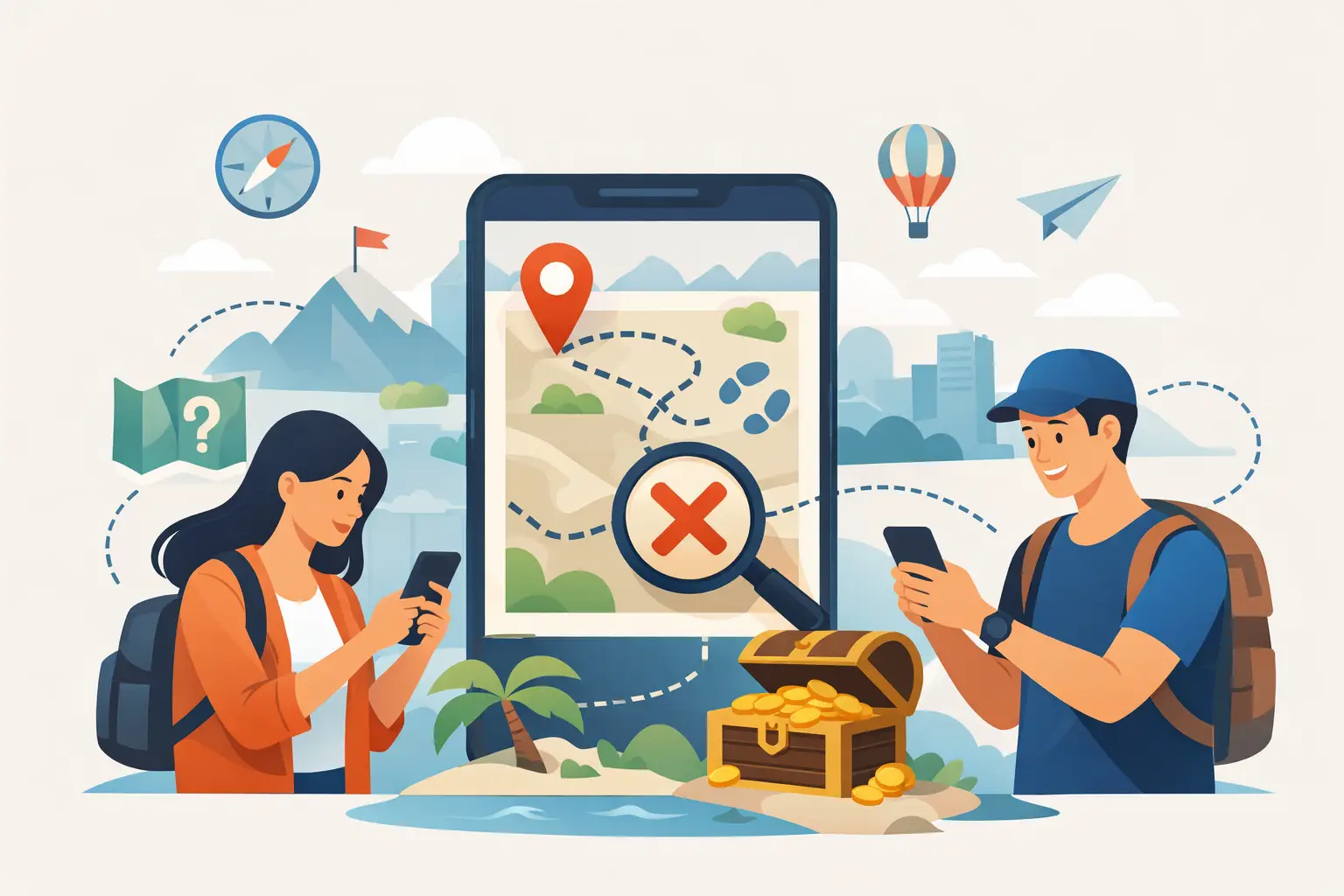
A standard city tour asks people to follow along. Mobile treasure hunt tours ask them to play. That shift changes everything.
Instead of walking past landmarks while passively listening to facts, travelers become active participants in the place itself. They solve clues, follow prompts, unlock story beats, and move through a city with purpose. The phone stops being a distraction and starts acting like a guide, game engine, map, and storyteller in one. For modern travelers, that feels less like sightseeing and more like being inside the experience.
That difference is exactly why this format is growing fast across tourism, events, and local culture. People still want history, architecture, food, and hidden gems. They just want to discover them in a way that feels personal, interactive, and worth remembering.
What mobile treasure hunt tours actually are
Mobile treasure hunt tours blend self-guided walking routes with game mechanics. A player or group moves through a real neighborhood or city center while using a phone to receive missions, clues, riddles, story prompts, or location-based challenges. Progress happens through action. You do not just read about a place. You find it, solve it, and advance through it.
The format can take many shapes. Some experiences feel like a scavenger hunt built around landmarks. Others are narrative-driven city games where each stop reveals a new piece of a mystery. Some include trivia, visual recognition tasks, or virtual item collection. The strongest versions use local storytelling, not generic puzzles pasted onto a map.
That matters because the best mobile treasure hunt tours are not only about winning. They are about making a city feel alive.
Why mobile treasure hunt tours work so well
The appeal is simple. They fit how people already travel.
Most visitors use their phones for navigation, recommendations, photos, tickets, and planning on the go. A mobile-first tour meets them where they already are. But unlike a static map or audio guide, it adds momentum. There is always a next objective, a new clue, or a reason to keep walking one more block.
That sense of progression is powerful. It gives shape to free time, especially in unfamiliar cities where people want flexibility but still need direction. A treasure hunt format removes the pressure of joining a group at a fixed time while keeping the energy of a guided activity.
It also creates emotional lift. Solving a clue near a hidden alley, uncovering a story behind a public square, or reaching a final location after a string of discoveries feels rewarding in a way that passive consumption rarely does. Even small wins matter. They turn movement into momentum.
There is also a social advantage. Couples, friends, families, and team groups need activities that spark conversation without forcing everyone into the same pace. A mobile treasure hunt tour gives people something to do together. That shared problem-solving naturally creates interaction. It is easier to remember the city when you remember the moment you cracked the clue.
A better fit for modern city exploration
Traditional tours still have value. A great live guide can read the room, answer questions, and bring deep local knowledge. But they come with trade-offs. Fixed schedules, crowd management, limited language options, and one-size-fits-all pacing do not work for every traveler.
Mobile treasure hunt tours solve a different problem. They are ideal for people who want autonomy without losing structure. Travelers can start when it suits them, move at their own speed, pause for coffee, and choose a more playful kind of discovery.
That flexibility is especially attractive in short city breaks, weekend travel, and spontaneous exploration. If someone lands in a city and wants an experience right now, a self-guided mobile format is easier to commit to than a booked group tour three hours later.
For destinations, this opens up new territory. Treasure hunt routes can spread foot traffic beyond the usual landmarks and introduce visitors to side streets, independent businesses, public art, waterfronts, or neighborhood history that standard tourism often misses. In practice, that means better distribution of attention and more room for local storytelling.
The real challenge - content, not just technology
It is easy to think the magic comes from GPS, maps, or app features. Those tools matter, but they are not the whole product. The real differentiator is experience design.
A weak route with random trivia will feel like a gimmick, even if the interface looks polished. A strong route creates rhythm. It knows when to challenge the player, when to reveal information, and when to let the city itself do the work. It uses the physical environment as part of the story.
That is where creators, guides, tourism boards, and cultural organizations have a huge opportunity. They already hold the raw material - local knowledge, archives, legends, street-level insight, and community perspective. Mobile treasure hunt tours give them a new way to package that value for a digital audience.
The trade-off is that this format demands intention. Writing for an interactive route is not the same as writing a brochure or script. Every stop needs a purpose. Every clue should push the experience forward. The challenge level has to feel satisfying, not frustrating. If the game overwhelms the place, the city disappears. If the content is too thin, the game feels empty.
Why this model is attractive for tourism businesses
For travel and tourism operators, the commercial case is getting stronger.
A mobile format can scale beyond the limits of one live guide. It allows destinations and creators to sell experiences that work across multiple start times, multiple languages, and larger audiences without rebuilding the operation every day. Once designed well, a tour can continue generating bookings while the creator focuses on promotion, updates, or new concepts.
It also creates product range. A business can offer a family-friendly trail, a nightlife mystery, a historic district challenge, a date-night route, or an event-based activation tied to a festival or seasonal campaign. That variety matters because not every audience wants the same tone.
There is also room for monetization beyond the classic ticket. Premium routes, branded collaborations, exclusive challenges, educational editions, and citywide event experiences all fit the model. For destinations trying to refresh their offer, this is far more dynamic than another static PDF map.
Platforms like Leplace push this model further by giving creators and tourism partners the infrastructure to publish, manage, and monetize interactive self-guided experiences without building the tech from scratch. That lowers the barrier to entry and lets local expertise move faster.
Where mobile treasure hunt tours perform best
Cities are the obvious match because they already contain layered stories, walkable density, and visual clues. Historic centers, waterfront districts, cultural quarters, university areas, and creative neighborhoods all work well because they reward close observation.
But urban tourism is only one part of the picture. Treasure hunt mechanics also fit museums, botanical gardens, heritage trails, festivals, destination campaigns, and team events. The format works anywhere movement and discovery can be tied together with narrative.
Still, there are limits. A route needs clear spatial logic, reliable mobile usability, and enough environmental detail to make each stop feel distinct. Not every location supports that equally well. A spread-out area with weak pedestrian flow may need a different structure than a compact old town. Good creators adapt the experience to the place instead of forcing the place into the wrong format.
What travelers increasingly expect
The audience for city experiences has changed. People want flexibility, but they also want texture. They want to feel independent without feeling lost. They want a reason to put the phone up, not away.
That is why mobile treasure hunt tours feel timely. They match the behavior of digitally engaged travelers while offering something richer than directions and review apps. They turn exploration into participation. They give cities replay value.
The strongest experiences do one thing especially well - they make people notice more. A carved symbol above a doorway, a statue people usually ignore, a local story attached to a narrow lane, a hidden courtyard with a clue tied to its past. These details are often the difference between visiting a place and actually connecting with it.
For creators and tourism brands, that is the opportunity. Not to digitize the old tour model and call it innovation, but to build experiences that feel native to how people move now. More interactive. More self-directed. More gameful. More alive.
If a city already has stories, mobile treasure hunt tours give those stories a stronger engine - and for travelers, that can turn an ordinary walk into the part of the trip they keep talking about.
Enjoyed this post?
Comments
Be the first to comment.