
Aug 9, 20268 min read
Are Digital Tours Profitable for Creators?
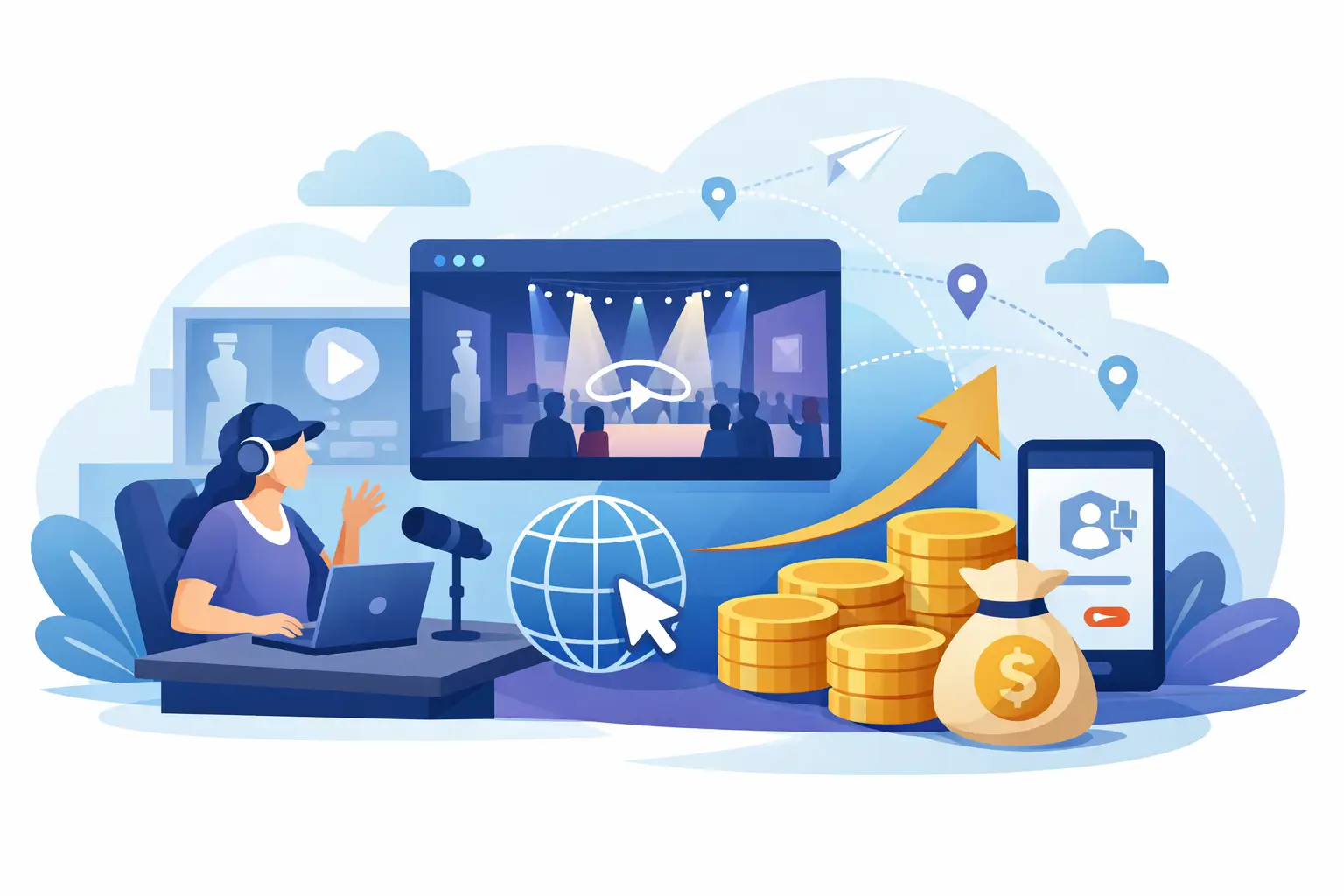
A great city story should not earn money only once. If you have mapped a neighborhood, researched its characters, found the details visitors miss, and built an experience people remember, that knowledge can become a product with a longer life than a single guided walk. So, are digital tours profitable for creators? They can be - but profitability comes from designing an experience people want to play, share, and buy without needing you on-site every time.
For local guides, cultural organizations, tourism teams, and creative entrepreneurs, digital tours create a different kind of inventory. Instead of selling only your available hours, you can sell access to a self-guided experience at any time of day. The opportunity is real. So are the trade-offs: production takes work, discoverability is earned, and a map with audio stops is rarely enough to command a meaningful price.
Are Digital Tours Profitable for Creators? It Depends on the Product
A digital tour is profitable when its value is clear enough to support a price higher than the cost of creating, marketing, and delivering it. That sounds obvious, but many creators treat a digital product as a cheaper version of a live tour. The better move is to make it a different experience.
A live guide can react to a group, answer questions, and create energy in the moment. A mobile experience cannot replace every part of that. What it can do is offer freedom, pacing, privacy, replay value, and playful interaction. It can invite travelers to solve a clue at a mural, collect a virtual item near a landmark, choose between routes, or uncover a story that changes how they see the street in front of them.
That distinction matters commercially. A basic audio walk competes with free content, search results, and public maps. An interactive self-guided tour competes with leisure spending: an afternoon activity, a date idea, a family adventure, or an unusual way to explore a city. The second category has more room for pricing power.
Profitability also depends on your audience. A hyper-specific tour about independent bookstores may sell steadily in the right city but not at massive volume. A game built around a famous historic district may have broader visitor appeal, especially if it works for couples, families, and groups. Neither model is wrong. The key is matching the product to a real moment of demand.
Start With a Revenue Model, Not Just a Route
Before recording narration or designing challenges, decide how the experience earns. Most successful creator tours use one primary model, then add a second revenue path once there is demand.
A one-time purchase is the most familiar option. Travelers pay for access to a themed route or exploration game, often because it fits a specific trip day. This model works well for highly visual, easy-to-understand experiences: a hidden-history mission, a food-and-stories walk, a mystery in an old town, or a city challenge designed for friends.
Group pricing can improve the economics when the experience is social. If one purchase covers a couple or small group, the customer feels they are getting an activity rather than an app download. The creator earns more per booking while the experience becomes naturally shareable. Be clear about what the purchase includes so there is no friction at checkout.
Premium or exclusive-fee experiences create another lane. These may include limited-time seasonal routes, event activations, private challenges, branded treasure hunts, or tours developed for a destination partner. They take more planning, but they can generate stronger revenue than consumer sales alone because the client is paying for engagement, not just access.
Recurring revenue is possible, though it is not the right starting point for every creator. A membership makes sense when you can reliably release new routes, local quests, or city collections. It is less compelling if you have one excellent tour and no plan to expand. In that case, focus on making that first product commercially sharp.
Price the Experience, Not the Number of Stops
Creators often price based on length: 10 stops must cost less than 20 stops. Travelers do not think that way. They ask whether this will make their afternoon better.
A 60-minute route with a strong narrative, polished visuals, GPS-triggered surprises, and satisfying challenges can feel more valuable than a three-hour sequence of facts. Likewise, a long tour can underperform if it creates fatigue or asks people to stare at a screen instead of looking around.
Start by considering the local alternatives. What does a museum ticket cost? What does a casual activity for two cost? What does a live walking tour cost? Your digital experience does not need to be the cheapest option. It needs to make its value immediately visible: flexible timing, a distinctive theme, an interactive format, and a real-world mission worth leaving the hotel for.
A useful test is whether you can describe the experience in one exciting sentence. “Explore downtown” is too broad. “Track a vanished fortune through the city’s oldest blocks” gives people a reason to choose it. Specificity improves conversion and helps justify price.
Build for Completion, Photos, and Recommendations
The most profitable digital tour is not necessarily the one with the largest launch audience. It is the one people finish, enjoy, and tell someone about afterward.
Design the route around momentum. Give players an early win in the first few minutes. Mix observation, movement, storytelling, and light challenges so the experience does not become repetitive. Use the city as the interface. A great prompt makes someone notice a carved doorway, a faded sign, a hidden courtyard, or a strange local detail they would otherwise pass.
Photo moments matter too. They do not need to be artificial selfie stations. A viewpoint, unusual object, striking street scene, or final reveal can create organic social proof. When participants share what they found, they are showing future customers what the product feels like.
Also plan for practical reality. Routes need accurate directions, sensible walking distances, safety awareness, and a graceful way to handle closed venues or construction. A memorable story loses its magic if players get stuck at stop three. Test the experience with people who do not already know the neighborhood, then watch where they hesitate.
Control the Costs That Quietly Erase Margin
Digital tours scale better than live tours, but they are not cost-free. The largest investment is usually upfront: research, route planning, writing, audio or visual production, game design, testing, and promotion. If you are building a highly produced experience, budget for revisions. The first version is rarely the version travelers actually use.
The strongest way to protect margin is to create reusable assets. A researched location can appear in a historic tour, a mystery route, a family challenge, or a seasonal event. A strong storytelling style can become a recognizable creator brand across multiple neighborhoods.
Avoid adding technology simply because it sounds futuristic. AR, virtual collectibles, and advanced challenges should strengthen the story or the player’s sense of discovery. If a feature adds production cost but does not improve completion, sharing, or willingness to pay, it may be decoration rather than value.
A platform such as Leplace can reduce the need to build the technical layer from scratch, allowing creators to focus investment on the route, narrative, and audience experience. That changes the equation for smaller operators who have local expertise but not a product development team.
Distribution Is Where the Business Is Won
A brilliant digital tour with no discovery path will not become profitable. Travelers need to find it when they are deciding what to do, not months after their trip ends.
Think beyond one promotional post. Hotels, hostels, visitor centers, museums, cafés, event organizers, and local businesses can all become distribution partners when the tour gives their guests something useful and distinctive. A neighborhood business may promote a route that brings curious visitors through its area. A cultural institution may use a game to extend engagement beyond its doors.
Creators should also package tours for different moments. One experience may be ideal for a rainy-day plan, another for a sunset date, another for a family weekend, and another for team-building. The route can be similar, but the message should meet the traveler’s actual need.
Track what converts. Which theme gets opened? Where do people abandon the experience? Which partner sends buyers? What do completed-tour reviews mention? Those answers tell you whether to refine the story, adjust pricing, simplify a challenge, or invest in a second route.
The Best First Tour Is a Proof of Demand
Do not begin with a citywide catalog. Begin with one experience that has a sharp promise, a defined audience, and a route you can personally test until it feels alive.
A profitable digital tour is built at the intersection of local knowledge and product thinking. It respects the city, gives travelers agency, and turns exploration into something more active than following a blue dot. Make the first experience so enjoyable that finishing it feels like discovering a new way to travel. Then give that success somewhere to go: a second neighborhood, a seasonal edition, a partner activation, or a growing world of stories people can explore on their own terms.
Enjoyed this post?
Comments
Be the first to comment.