
Oct 28, 20266 min read
12 Best Team Building City Games for Real Connection
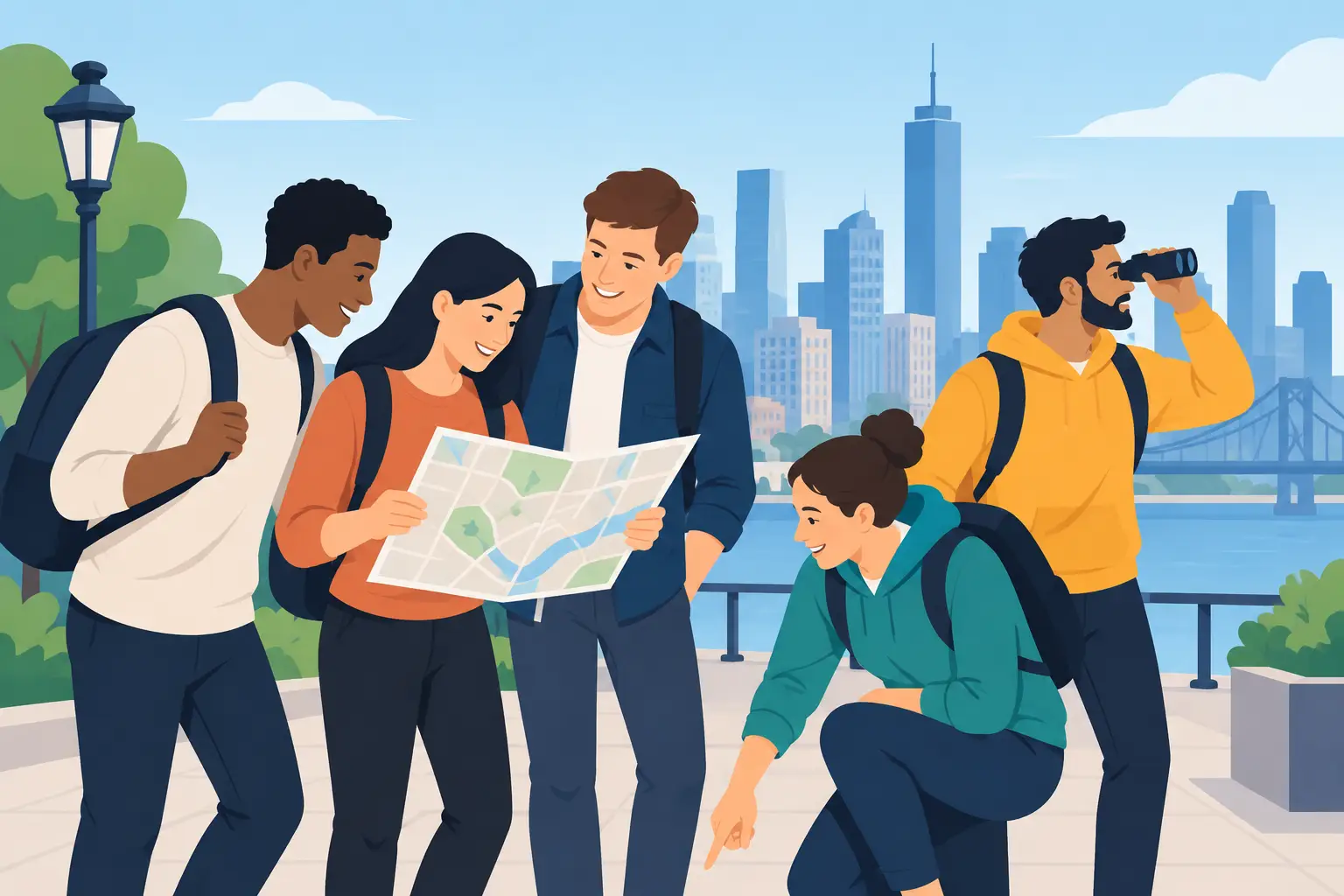
A team can sit through another trust-fall workshop, or it can race through a historic district decoding clues, spotting hidden details, and making decisions together under real-world pressure. The best team building city games turn the city itself into the playing field. Streets, landmarks, murals, markets, and overlooked corners become prompts for collaboration instead of scenery.
That shift matters. A well-designed city game gets people away from office roles and into shared action. The quiet analyst may spot a pattern no one else sees. The natural organizer may keep the group moving. The local-food expert suddenly has a mission-critical opinion. It is social chemistry with a route, a clock, and a reason to look up from the screen.
What Makes the Best Team Building City Games Work?
The strongest city games are not just scavenger hunts with a new label. They give teams a clear mission, a sense of progress, and challenges that require more than fast walking or a quick search result. Great formats mix observation, local storytelling, deduction, creativity, and light competition.
The right game also depends on the group. A sales team might thrive on timed rivalry and live scoring. A newly merged department may need cooperative missions that reduce pressure and create conversation. An international group may benefit from visual and location-based tasks that do not rely on deep local knowledge or perfect English.
Technology can make this easier to scale. A mobile-first format can deliver clues, GPS checkpoints, virtual collections, photo tasks, and instant score updates without forcing one facilitator to manage every move. That leaves organizers free to join the energy of the day instead of handing out paper maps and chasing late teams.
12 City Games That Get Teams Moving
1. The Story Hunt
Give every checkpoint a chapter in the neighborhood's story. Teams solve a clue to reach a location, then complete a challenge tied to its past, architecture, or cultural significance. It works especially well for teams visiting a city for the first time because the competition comes with a real sense of place.
2. The Photo Mission
Set a list of creative image challenges rather than obvious landmark selfies. Ask teams to capture symmetry, a doorway older than their company, a local color pattern, or a photo that recreates a historical scene. Scoring should reward interpretation and teamwork, not only speed. It is a strong option for visually minded groups and social event recaps.
3. The GPS Treasure Chase
A GPS-enabled route sends teams toward hidden digital treasures across a defined area. At each stop, they collect a virtual item, answer a location-specific question, or unlock the next part of the mission. This format feels immediate and game-like while keeping the route self-guided.
4. The City Escape Game
Bring the logic of an escape room outdoors. Teams must solve connected puzzles to stop a fictional villain, recover a lost artifact, or uncover a secret city code before time expires. The best versions make the buildings, public art, and street layout part of the puzzle rather than using generic riddles that could happen anywhere.
5. The Local Legends Challenge
Every city has characters, myths, scandals, inventions, and unlikely moments that deserve more attention. In this game, teams investigate those stories through clues and challenges. It is ideal for destination events because it gives attendees something more lasting than a checklist of tourist landmarks.
6. The Market Mission
Food markets and lively commercial districts create a natural setting for high-energy team play. Teams can identify ingredients, decode menus, find objects within a set budget, or complete respectful vendor interaction challenges. Keep purchasing optional and accessible, since food budgets and dietary needs can vary across the group.
7. The Neighborhood Takeover
Instead of sending everyone to the same famous downtown sights, assign each team a different neighborhood route. Their mission is to return with evidence of what makes their area distinct: a story, a sound, a public-space detail, and a local recommendation. A final share-out turns parallel exploration into a richer collective city portrait.
8. The Street Art Decoder
Murals, mosaics, installations, and typography become the clues in an art-focused challenge. Teams look for visual symbols, identify recurring motifs, and create their own short interpretation of a work. This can be more inclusive than trivia-heavy games because curiosity and observation matter as much as prior knowledge.
9. The Innovation Trail
For leadership groups, tech teams, or conference attendees, build a route around a city's ideas. It might follow startup districts, engineering landmarks, design spaces, historic inventions, or unexpected examples of urban problem-solving. Add prompts that connect what teams see to their own work, such as: What would you redesign here, and why?
10. The Time Traveler Race
Teams move through different eras of the city, completing a challenge at each point in time. One checkpoint may focus on an early settlement, another on industrial growth, another on contemporary culture. A fictional time-travel narrative gives the route momentum and makes history feel active rather than instructional.
11. The City Builder Game
This format asks teams to make choices, not simply find answers. At each location, they earn resources or information that helps them build a fictional future district, festival, transit system, or cultural campaign. It is a smart choice for strategy teams because it combines exploration with negotiation, trade-offs, and a final pitch.
12. The Mystery Match
Each team receives fragments of a city-wide mystery: witness accounts, location clues, historical details, and coded messages. No single checkpoint tells the whole story. Teams need to connect information across the route, which rewards both fast movers and careful listeners. This is particularly effective for groups that want a cinematic, story-led experience.
Design the Game Around the Team, Not the Map
A famous landmark does not automatically make a great checkpoint. The best challenges create a reason to pause, observe, discuss, and decide. If a team can answer a clue from a search engine without looking around, the city is not doing enough work.
Route design needs practical discipline, too. Keep walking distances realistic, provide a clear time window, and build in a natural finish point for drinks, food, or a debrief. A 90-minute route can be perfect for a conference agenda; a two- to three-hour experience gives more room for layered storytelling and neighborhood discovery. Bigger is not always better. A compact, well-paced area often creates more interaction than an ambitious route that leaves everyone tired.
Accessibility should shape the format from the start. Consider step-free routes, seating opportunities, language needs, daylight, weather contingencies, phone battery expectations, and team sizes. Competition can be motivating, but it should not humiliate slower teams or turn the experience into a sprint. Bonus points for creativity, collaboration, and local insight keep more people in the game.
For organizers who need a repeatable digital format, platforms such as Leplace can turn routes into interactive self-guided experiences with location-based storytelling, missions, and game mechanics. The value is not technology for its own sake. It is the ability to make a city feel responsive, playable, and personal at scale.
Make the Finish Line Count
Do not let the game end with a final score screen. Give teams ten minutes to share the clue that surprised them, the decision they debated most, or the place they would return to on their own. Those small stories are where a city game becomes a team memory.
Choose a format that fits the energy you want in the room afterward. If the goal is laughter, use creative missions. If the goal is sharper collaboration, use connected puzzles. If the goal is destination discovery, let local stories lead. The right city game does more than fill an afternoon. It gives people a new way to see the place, and each other.
Enjoyed this post?
Comments
Be the first to comment.