
Oct 22, 20268 min read
Event Quest Engagement That Gets People Moving
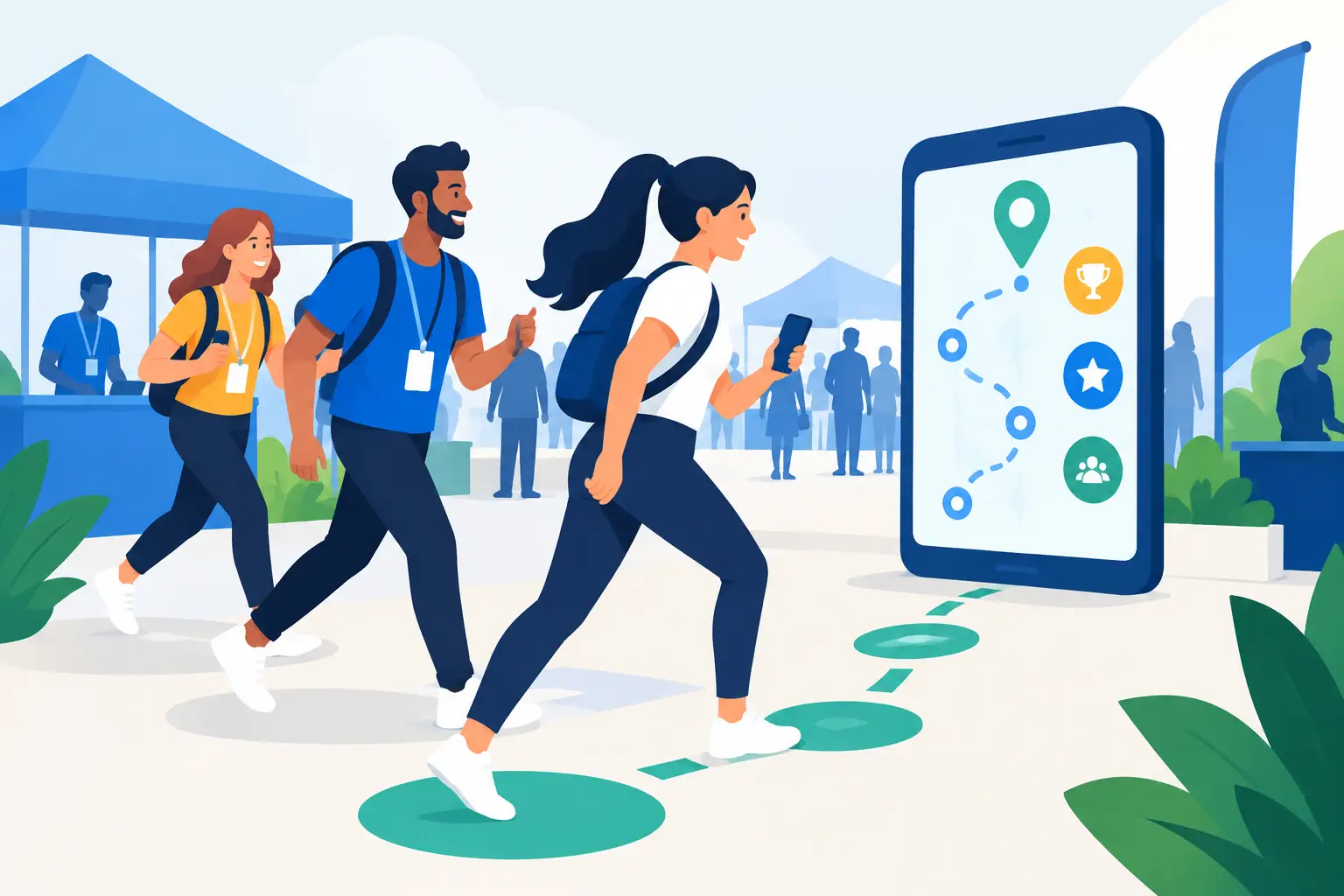
A busy event floor can look successful while feeling strangely passive. People arrive, collect a badge, scan the schedule, take a few photos, and gravitate toward the familiar faces or the nearest coffee station. Event quest engagement changes that pattern by giving every attendee a reason to move, notice, choose, and participate.
A well-built quest turns an event venue, a neighborhood, or an entire destination into a playable world. Instead of telling people where to go, it gives them a mission worth following. They might collect virtual artifacts from exhibitors, solve a local history clue near a landmark, complete a team challenge, or uncover a hidden story that only appears at a specific GPS location. The result is not just more activity. It is a more memorable event experience.
Event Quest Engagement Is More Than a Game
Quests work because they add purpose to exploration. Attendees are not simply walking from one activation to another. They are progressing through a narrative, building a collection, competing lightly with friends, or contributing to a shared goal.
That distinction matters. A standard event app can publish maps, agendas, and sponsor information. Useful, yes, but mostly functional. A quest-based experience turns the same ingredients into moments of discovery. A sponsor booth becomes a checkpoint with a challenge. A historic building becomes a story trigger. A networking session becomes a collaborative mission rather than another room full of introductions.
The strongest event quests use gameplay to support the real purpose of the gathering. At a trade show, that might mean helping visitors discover relevant exhibitors. At a city festival, it can guide people beyond the main stage and into local businesses. For a cultural institution, the quest can make an exhibition or public space feel participatory rather than instructional.
The goal is not to make every event feel like a video game. The goal is to make participation feel rewarding.
Start With the Behavior You Want to Create
Before writing clues or designing digital badges, decide what success looks like. “Increase engagement” is too broad to design around. A quest needs a specific behavioral target.
Maybe an organizer wants attendees to visit quieter zones during peak hours. Maybe a destination partner wants visitors to explore independent shops beyond the central tourist route. Maybe an event team needs more meaningful sponsor interactions, better session attendance, or a reason for solo attendees to start conversations.
Choose one primary behavior and two supporting outcomes. This keeps the experience focused. If a quest asks people to do everything, it usually encourages them to do nothing with much intention.
For example, a food and culture event might set its primary goal as driving foot traffic to six local venues. Supporting outcomes could include sharing local stories and collecting attendee feedback. The quest then becomes a city trail with short location-based challenges, not a generic checklist of booths.
The behavior should also match the event’s natural rhythm. A conference with 20-minute breaks needs fast, nearby missions. A weekend festival can support longer routes and open-ended exploration. A corporate offsite may benefit from team quests that unfold across the full day. Good design respects the time people actually have.
Build a Story People Can Step Into
Story is what separates a scavenger hunt from an experience people talk about afterward. It does not need a complicated fictional universe. A clear premise is enough: recover lost city signals, follow the route of a hidden creator, help rebuild a future neighborhood, or collect fragments of a local legend.
The story should belong to the place. If the event happens in a waterfront district, use the waterfront. If it is hosted in a museum, bring forward the collection, the building, or the people who shaped it. If a brand is activating at a music festival, connect challenges to sound, movement, and the culture around the event.
Generic tasks drain energy quickly. “Take a photo at Booth 42” feels transactional. “Find the maker whose design was inspired by the river, then reveal the next chapter of the river’s story” gives that same visit context. It creates curiosity before the attendee even reaches the booth.
This is where local guides, cultural partners, and creators have a real advantage. They hold the details that make a place feel alive: overlooked architecture, neighborhood rituals, street-level history, surprising connections, and the voices people will not find on a standard event map.
Keep Challenges Friction-Light and Varied
Every quest has a friction budget. Spend too much of it on long instructions, complicated registration, or repetitive tasks, and people stop playing. The mobile experience should be fast to enter and simple to understand within seconds.
Location-aware challenges are especially effective because they reward real movement. GPS check-ins, QR triggers, photo prompts, digital item collection, and simple multiple-choice questions can all work. The best choice depends on the setting. Indoor venues may need QR codes or visual markers where GPS is less reliable, while outdoor events can make full use of route-based discovery.
Variety keeps momentum high. Mix observation challenges with short puzzles, interactive polls, photo missions, and social tasks. Not every task should require a screen, either. Ask people to notice a mural, listen for a sound, find a detail in the environment, or speak with a local expert. The phone should guide attention toward the real world, not pull attention away from it.
Difficulty needs calibration. A few easy wins create momentum early. Mid-quest tasks can ask for more thought or movement. One optional challenge can give highly engaged players something to chase. If every clue is difficult, the experience becomes work. If every clue is obvious, there is no sense of achievement.
Make Rewards Feel Worth the Detour
Rewards do not always need to be expensive. Recognition, access, and progression can be more motivating than a pile of giveaway items. A digital collection that reveals a final story, entry into a limited experience, a leaderboard for teams, or a chance to influence the next event chapter can all create strong motivation.
Physical rewards still have a role, especially when they connect to the theme. A local tasting, a partner perk, exclusive merchandise, or a final-location surprise can give the quest a satisfying finish. The key is relevance. Random prizes attract people to the reward, not to the experience.
Consider whether competition suits the audience. A public leaderboard can energize friend groups and festival crowds, but it may discourage people who arrive late or prefer independent exploration. In those cases, personal progress, hidden achievements, and collaborative milestones are better choices. A shared target, such as helping the community reveal a final AR scene, creates participation without turning every attendee into a competitor.
Give Partners a Real Role
Event quest engagement becomes commercially stronger when partners are part of the story rather than interruptions in it. Sponsors, exhibitors, retailers, and institutions should contribute something useful: an expert insight, a creative task, a special item, a behind-the-scenes detail, or a reward that fits the mission.
This creates better value for everyone. Attendees receive a reason to engage beyond collecting branded material. Partners receive more intentional visits and a clear opportunity to measure interaction. Organizers can spread traffic across the venue or city instead of concentrating it at the obvious hotspots.
A partner checkpoint should never feel like a forced sales pitch. Design it as a moment of discovery first. If the exchange is interesting, the commercial conversation has a much better chance of happening naturally.
Platforms such as Leplace make this model practical by combining self-guided mobile exploration with location-based storytelling and game mechanics. That gives event teams and local creators a way to build an interactive route without asking attendees to download a stack of disconnected tools or follow a printed trail.
Measure the Journey, Not Just the Finish Line
Completion rate is useful, but it is not the whole story. A participant who completes three meaningful stops and spends time with partners may be more valuable than someone who races through ten checkpoints for a prize.
Look at where people begin, where they drop off, how long they stay at each point, which challenge types drive repeat interaction, and which routes create the strongest partner traffic. Compare activity by time of day to see whether the quest is helping manage event flow. If social sharing is a goal, track what participants choose to capture and share, not simply how many prompts they were shown.
Feedback should be built into the final moments. Ask one short question while the experience is still fresh: What was the best discovery? What should be added next time? Which stop surprised you? These answers can be more revealing than a long post-event survey.
Design for the Moment After the Quest
The best quest does not end when the last badge appears. It gives people a reason to keep the story in their mind, return to the place, or follow the next route. That might mean revealing a personalized recap, offering a new neighborhood mission, or inviting attendees to revisit a partner they discovered during the event.
For organizers, this is where a one-time activation becomes a repeatable experience format. For travelers and city explorers, it is the difference between passing through a place and feeling like they found a piece of it for themselves.
Build the quest around a real reason to explore, then let the city, venue, and people do what they do best: surprise your audience.
Enjoyed this post?
Comments
Be the first to comment.