
Sep 2, 20267 min read
Guide to Outdoor Mixed Reality Experiences
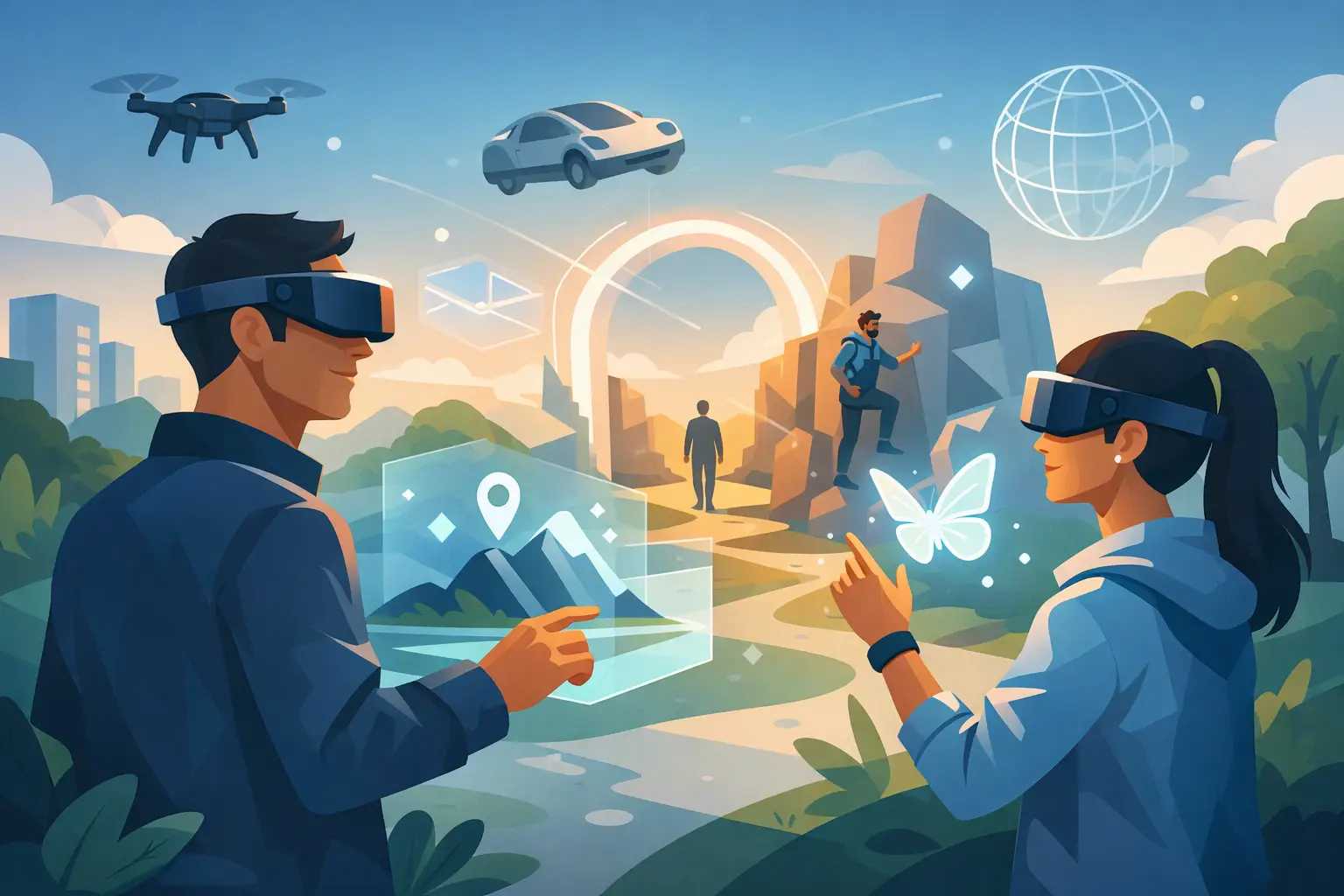
A city square can be a meeting point, a battlefield, a gallery, or the first clue in a hidden story. This guide to outdoor mixed reality experiences is for travelers who want their surroundings to do more than sit behind a camera lens - and for creators who want to turn local knowledge into something people can play, follow, and remember.
Outdoor mixed reality is not about replacing the real world with a screen. The best experiences make the physical world feel more alive. A mural becomes a portal. A statue becomes a witness. A quiet side street becomes the route to the next challenge. Your phone adds the digital layer, but the place remains the main character.
What Outdoor Mixed Reality Actually Feels Like
Mixed reality outdoors combines physical movement, location-aware mobile technology, and interactive digital content. Depending on the experience, that can mean GPS-triggered stories, augmented reality objects, virtual collectibles, timed missions, audio clues, camera challenges, or location-based puzzles.
For a traveler, the result feels closer to a real-life exploration game than a standard audio tour. Instead of listening passively while walking from stop to stop, you make choices, hunt for details, complete challenges, and earn a reason to look more closely at where you are.
That distinction matters. A conventional tour may tell you that a building is historic. A well-designed mixed reality experience can ask you to find the detail that reveals its past, collect a virtual item connected to its story, or solve a clue that sends you to the next block. Information becomes participation.
A Guide to Outdoor Mixed Reality Experiences: Start With the Place
The strongest experiences begin with a real setting, not a technology feature. Before opening an app, take a moment to notice the terrain, the pace of the neighborhood, the weather, and the density of landmarks. A fast-moving downtown district supports short challenges and frequent discoveries. A waterfront, historic district, or large park may reward a slower route with longer story moments.
Choose an experience that fits the way you want to explore. If you are short on time, look for a compact route with a clear start and finish. If you are traveling with friends, select something with shared missions, scoring, or scavenger-hunt energy. Solo explorers may prefer a story-led route that gives them freedom to pause, wander, and investigate without keeping up with a group.
The phone is a guide, not your destination. Keep your eyes up between prompts. The real payoff comes when a digital clue changes what you notice in front of you: an unusual street name, a faded sign, the angle of a skyline, or a local business you would have walked past.
Set Up for a Better Street-Level Experience
Outdoor mixed reality works best when the practical details are handled before the first mission appears. Charge your phone, bring a portable battery if you plan to explore for more than an hour, and allow location access when the experience requires it. GPS and camera features can use more battery than a regular map.
Mobile data is another variable. In dense urban areas, connection is usually easy, but underground spaces, remote trails, and crowded event zones can affect loading times. Download any available content before leaving Wi-Fi, and do not let a spinning screen pull your attention away from where you are walking.
Comfort changes the experience too. Wear shoes that can handle extra blocks and unexpected detours. Bring water in warm weather. If rain is likely, protect your device or choose a route that still works when you need to step under cover. These details sound basic, but they determine whether a playful discovery becomes a frustrating one.
Most importantly, stay aware of traffic, bikes, uneven pavement, private property, and local rules. A great mixed reality route encourages curiosity, not reckless behavior. Pause before crossing streets. Step aside when reading a long prompt. Respect memorials, residences, and places of worship, even when a game mechanic makes you eager to find the next clue.
Follow the Story, Then Make It Your Own
The most memorable outdoor experiences leave room for both structure and spontaneity. Follow the route closely enough to understand the narrative, but give yourself permission to stop when something catches your attention. A café mentioned in a clue, a market near a checkpoint, or a view revealed by an AR moment can become part of your personal version of the journey.
This is especially useful when exploring a new city. A self-guided experience provides momentum without locking you into a tour group schedule. You can start when you are ready, take a break when you want, and spend more time in the places that genuinely interest you.
For couples and friend groups, decide early whether the goal is competition or collaboration. A race to finish every task can be exciting, but it may also make people miss the story. Collaborative play tends to work better in culturally rich areas: one person scans the environment, another reads clues, and everyone contributes observations. The route becomes a shared memory instead of a scorecard.
What Makes an Experience Worth Your Time
Not every location-based activity delivers the same depth. The better ones connect game mechanics to the character of the place. A virtual coin placed randomly on a sidewalk is forgettable. A collectible tied to a local legend, neighborhood craft, architectural detail, or historical event gives the action meaning.
Look for experiences with a clear sense of progression. You should understand what you are doing, why the next location matters, and what you gain by completing a task. That gain does not need to be a prize. It can be a surprising story reveal, a new perspective on a landmark, or access to a hidden layer of the city.
Good design also respects pacing. Too many screen prompts turn exploration into app administration. Too few interactions make the experience feel like a map with decorations. The sweet spot is a rhythm of movement, observation, interaction, and discovery.
Visual effects are only one part of the equation. AR characters, overlays, and animations can create a strong first impression, but local storytelling is what makes an experience stay with you after the screen goes dark. Technology should amplify the location, not compete with it.
For Creators: Build Routes People Want to Finish
For guides, tourism teams, cultural institutions, and event organizers, outdoor mixed reality creates a new way to package place-based stories. The opportunity is not simply to digitize an existing walking tour. It is to redesign the experience around participation.
Start with one compelling promise. Maybe participants are tracing a lost invention, collecting fragments of a city’s music history, investigating an old mystery, or racing through a festival district. A clear premise gives every stop a job to do. It also helps visitors understand why they should keep walking.
Then match each interaction to its location. A historic theater might trigger an audio scene or a virtual program from its past. A public artwork might invite a visual challenge. A market could become a mission about ingredients, languages, or neighborhood traditions. The closer the connection between task and setting, the less the experience feels like a generic game pasted onto a map.
Keep the route realistic. Consider walking distance, accessibility, lighting, street crossings, opening hours, seasonal weather, and crowd flow. A beautiful route that requires participants to backtrack repeatedly will lose energy. Test it on foot with people who do not already know the area. Their confusion is useful data.
Platforms such as Leplace give creators a mobile-first way to turn these ideas into interactive self-guided tours, from GPS-led discovery to challenge-based storytelling. The commercial value is clear: one well-built experience can serve independent travelers, group outings, destination campaigns, and event activations without requiring a guide to be present at every start time.
The Trade-Offs Are Part of the Design
Outdoor mixed reality is powerful because it sits between digital entertainment and real-world travel. That position comes with trade-offs. More interaction can increase excitement, but too much friction can break the flow of a walk. Longer routes can create a sense of adventure, but they may exclude visitors with limited time or mobility. High-detail AR can look impressive, but it may perform inconsistently on older phones or in bright sunlight.
The answer depends on the audience and the place. A family-friendly museum district may need simple, low-pressure tasks. A nightlife activation can support faster pacing and team competition. A heritage route may benefit from fewer mechanics and deeper story moments. There is no universal formula, only a better fit between purpose, people, and location.
The next time you head outside, do not just ask what there is to see. Ask what story the street is ready to give you - then let your next step become part of it.
Enjoyed this post?
Comments
Be the first to comment.