
Aug 19, 20267 min read
How to Monetize Walking Experiences That Sell
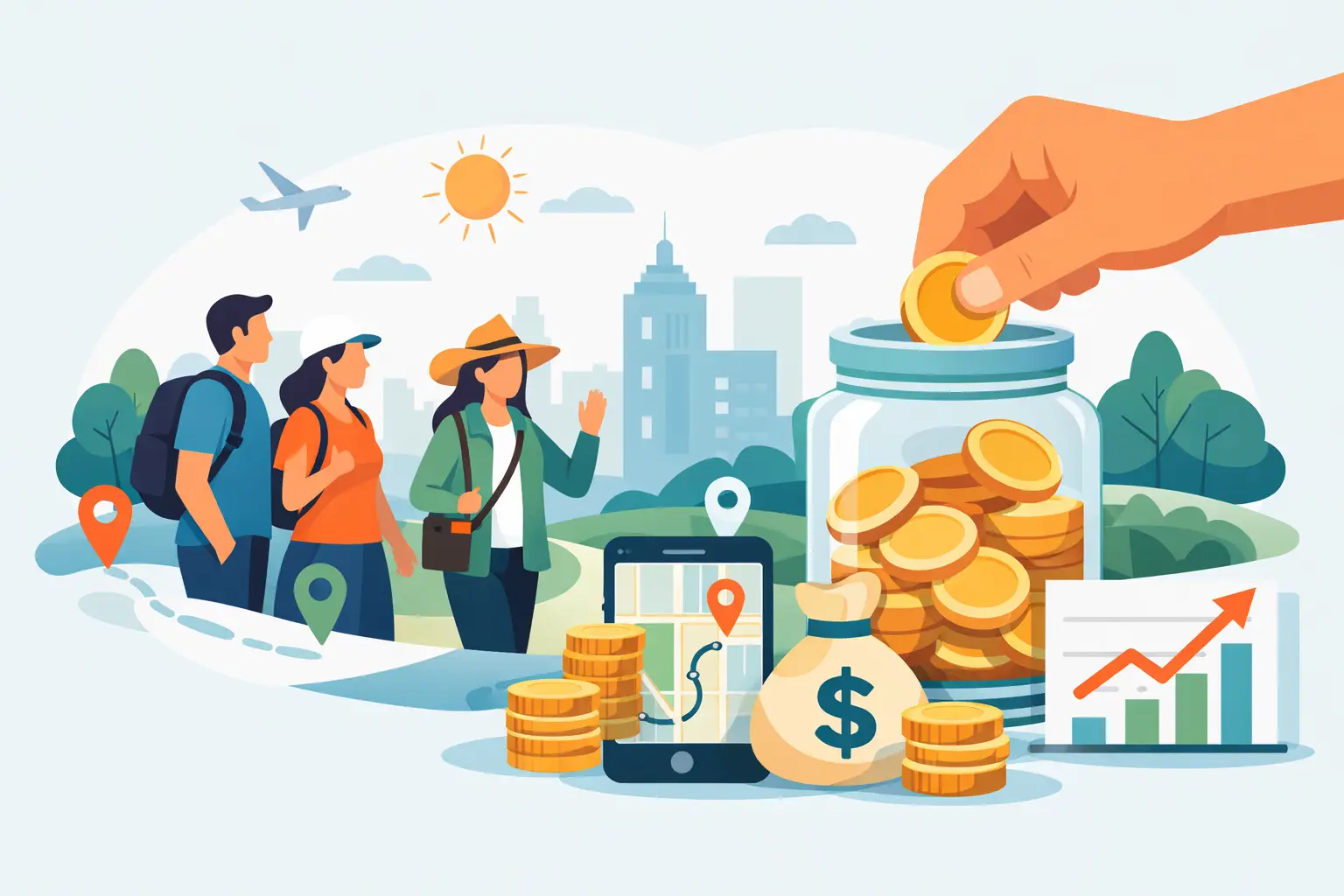
A great city walk can create a memory. A great mobile experience can create a business.
If you are figuring out how to monetize walking experiences, do not start by asking what people will pay for a route. Start with what they will remember, share, and choose over a generic map pin. The commercial opportunity is not simply getting visitors from landmark A to landmark B. It is turning local knowledge into a story-driven mission with moments of surprise, progress, and payoff.
That shift matters for independent guides, destination teams, museums, event organizers, and creative studios. A walk sold as information competes with free blog posts. A walk designed as an interactive real-life exploration game gives people a reason to buy, play, and recommend it.
Build an experience, not a digital brochure
The strongest paid walking products give travelers agency. They let a couple take the route at their own pace, send a friend group into a playful challenge, or turn a solo afternoon into a mission through a neighborhood they would otherwise rush past.
A route needs a clear premise before it needs more stops. Maybe guests are following a vanished artist through downtown, solving a mystery hidden in old architecture, collecting virtual artifacts tied to a waterfront, or testing their knowledge of local food culture. The premise creates anticipation. The stops then earn their place by moving the story, challenge, or reward forward.
This is where many walking tours lose commercial power. They pile on facts because the facts are available. But visitors do not pay for a longer list of dates, statues, and street names. They pay for a feeling: discovery, connection, competition, nostalgia, or the satisfaction of seeing a familiar city through a new lens.
Build each stop around one action. Ask players to spot a detail, solve a clue, make a choice, capture a photo, listen for a sound, or locate an overlooked object. Keep instructions short and mobile-friendly. The phone should guide attention back to the city, not trap people in a screen.
Design for a specific buyer
A citywide route for “everyone” is difficult to market. A focused experience is easier to position and price. Think in terms of a moment and a group: a date-night mystery in a historic district, a family-friendly treasure hunt near major attractions, a team challenge for conference attendees, or a local-history trail for culture-first travelers.
The right format depends on the audience. Visitors with limited time may prefer a 60-minute route near a central transit hub. Enthusiasts may gladly spend two or three hours on a deeper district story. Families need obvious breaks, simpler puzzles, and a clear finish. Corporate groups may value scoring, team names, and branded checkpoints more than historical depth.
Specificity is not restrictive. It tells the right customer, “This was made for your kind of day.”
How to monetize walking experiences with the right offer
Pricing should match the value and the friction of participation. A self-guided experience can sell at a lower price than a live private tour because buyers can start whenever they want and move at their own pace. That lower operational cost also makes self-guided products easier to scale across dates, languages, and cities.
Use more than one revenue model when the experience supports it. The best choice depends on your audience, route length, local partnerships, and how much live facilitation is involved.
- Single-route access works well for tourists who want a simple purchase before or during a trip. Price it clearly per device, per group, or per player. Per-group pricing often feels friendlier for couples and families.
- Premium themed experiences can command more when they include stronger gameplay, exclusive content, seasonal storytelling, AR-style moments, or a distinct narrative world.
- Bundles and passes encourage longer stays. Package two or three neighborhood routes, or pair a daytime discovery game with an evening mystery walk.
- Private and branded activations create higher-value sales for companies, conferences, schools, festivals, and destination campaigns. These can include custom clues, sponsor messages, team scoring, or a final gathering point.
- Partner-funded routes can work with museums, hotels, retail districts, restaurants, and cultural organizations. The key is relevance. A partner should add a useful reward, a meaningful story beat, or a natural stop, not interrupt the experience with an ad.
Avoid pricing from instinct alone. Test it. A $12 self-guided route may convert better than a $20 one for casual visitors, while a $35 themed game may perform strongly for groups looking for a complete activity. Review purchase data, completion rates, refunds, and feedback before deciding whether a lower price or a stronger product is the real answer.
Create moments people want to share
Marketing is easier when the route produces proof that it was worth doing. Give explorers visual moments: an unusual viewpoint, a hidden courtyard, a satisfying reveal, a collectible badge, a final score, or a photo challenge that looks great in a camera roll.
The shareable moment should feel earned. If every stop asks for a photo, the experience becomes work. If one or two points create a genuine “we found it” reaction, guests will naturally document them.
This also helps your sales page and promotional content. Show the game in motion. Show players reading a clue beside a real landmark, celebrating a solve, or comparing scores at the end. A static list of locations rarely communicates the energy of interactive self-guided tours. Demonstrate the transformation from ordinary walk to active discovery.
Reviews matter too, but ask for them at the right time. The best prompt arrives after the final reward, when players have completed the story and are still feeling the result. Make the request short and specific: what surprised them, what place they saw differently, or who they would bring next time.
Turn local knowledge into a repeatable product
Monetization becomes more reliable when your experience can run without you being physically present every time. That does not mean removing the human voice. It means packaging your perspective in a format that can be discovered and enjoyed on demand.
Map the route for real conditions, not ideal ones. Check crossing times, construction risk, public access, cell coverage, noise levels, opening hours, and whether a clue can be completed after dark. Include a route length that reflects actual walking time plus time spent solving, photographing, and taking breaks.
Then build a content system you can reuse. A strong story framework might include an opening mission, five to eight meaningful challenges, optional bonus stops, a progress mechanic, and a finale. Once that structure works, you can adapt it for another neighborhood, season, or audience without rebuilding from zero.
Creator platforms can make this more practical by handling mobile delivery, GPS-based progression, payments, and publication in one place. With Leplace, for example, creators can turn place-based stories into interactive products rather than commissioning a custom app for every new route. The business benefit is speed: more time refining the experience, less time managing technical infrastructure.
Use partnerships to expand the value of each walk
A walking experience is often most valuable to businesses that want people to spend more time in a place. Hotels want guests to have a memorable first afternoon. Museums want visitors to engage with the surrounding district. Retail corridors want foot traffic that feels intentional. Destination organizations want a fresh reason to explore beyond headline attractions.
Approach partners with a clear proposition. Do not lead with “Can you promote my tour?” Lead with the audience you bring, the part of the city you activate, and the action you want guests to take. A hotel concierge may need an easy, all-weather activity. A café may want a timed reward that drives visits outside peak hours. A cultural institution may want a route that makes its collection more accessible to younger visitors.
Be selective with discounts and vouchers. They can improve conversion, but they should not become the only reason the route exists. The core product has to stand on its own. A coffee reward is a bonus. The story, game, and discovery are what create lasting value.
Measure what moves revenue
The number of purchases is only one signal. Track where buyers find you, how many start after purchase, where they leave the route, how long completion takes, and which challenges generate the most positive reactions. If players consistently quit at stop four, the issue may be a confusing clue, a poor transition, or an experience that simply runs too long.
Look for the difference between attention and conversion. A dramatic social video may attract views but bring the wrong audience. A niche partnership with a hotel, local creator, or conference organizer may deliver fewer clicks and far more paid starts. Keep testing the channel, the promise, and the product together.
Your first paid route does not need to represent an entire city. Make one neighborhood feel electric. Give people a mission worth leaving their hotel for, then let their footsteps show you what to build next.
Enjoyed this post?
Comments
Be the first to comment.