
Aug 21, 20267 min read
Treasure Hunt Apps for Tourists That Make Cities Playable
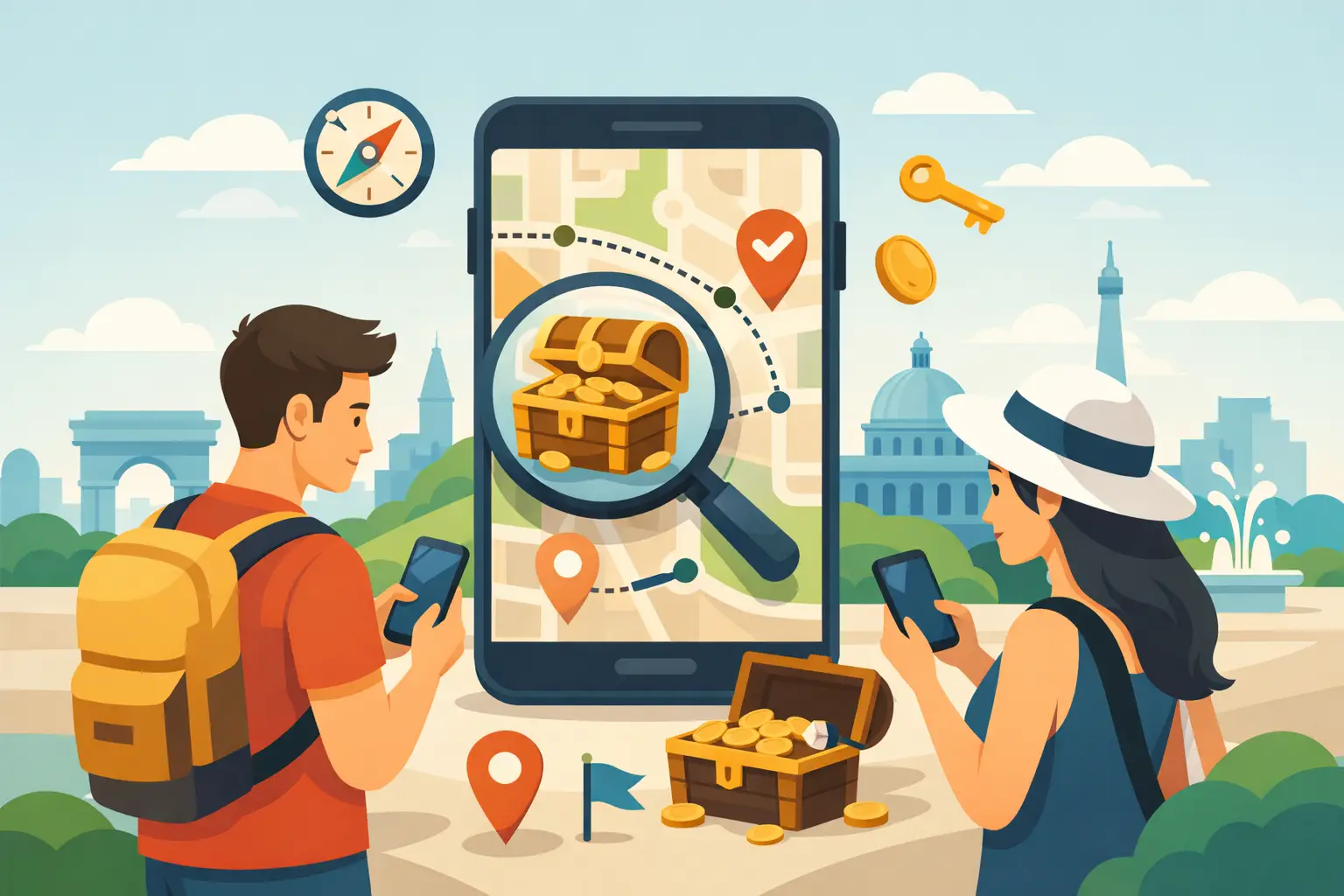
A city can look very different when your next stop is not just a landmark, but a clue. Instead of following a blue dot from museum to café, treasure hunt apps for tourists turn the streets between those places into part of the experience. A mural becomes evidence. A hidden courtyard becomes a level. A local story becomes the answer that moves the game forward.
That shift matters because most travelers do not remember every date on a plaque. They remember the moment they found a viewpoint they would have missed, solved a challenge with friends, or saw a familiar neighborhood through a new story. The best city experiences do not simply deliver information. They create participation.
Why treasure hunt apps for tourists are changing city trips
Traditional sightseeing is often passive by design. You stand, listen, read, and move on. That works for some moments, especially inside a major museum or at a historic site that needs careful context. But a city is bigger than its headline attractions. It has side streets, characters, details, and stories that reward curiosity.
A treasure hunt app puts that curiosity to work. It uses a phone's GPS, map, camera, and screen as tools for real-world exploration. Players may follow location-based missions, decode clues, collect virtual items, answer local trivia, or complete photo challenges before reaching the next chapter.
The result is a self-guided experience with momentum. Travelers still control the pace, can pause for lunch, and do not need to keep up with a group. Yet they have more direction than they would on an unplanned walk. For solo travelers, that can make an unfamiliar city feel approachable. For couples and friend groups, it gives the day a shared objective beyond deciding where to go next.
What makes an app worth using on vacation
Not every game layer improves a tour. If the challenges feel copied from one city to another, the experience can become a scavenger hunt with generic questions pasted onto a map. The strongest apps make the gameplay serve the destination.
Local stories should drive the missions
A good clue should reveal why a place matters. It might lead players to an old market and explain the trade that shaped the district. It might ask them to spot an architectural feature that connects to a city legend. The task creates a reason to look closely, while the story gives the discovery meaning.
This is where local creators have an advantage. Guides, historians, artists, and neighborhood experts know which details make visitors stop and look again. Their knowledge can turn a route from a list of places into a story with a point of view.
The route needs real-world flow
An app may have great writing and still disappoint if it sends users zigzagging across town for no reason. A smart experience accounts for walking time, street safety, opening hours, weather, and natural stopping points. It should make sense as a walk, not just as a collection of pins.
Length matters, too. A 45-minute game can be perfect for filling an afternoon before dinner. A two- or three-hour route can anchor a full day in a new neighborhood. Travelers should be able to see the expected duration and difficulty before they start, then choose a route that fits their energy and schedule.
Technology should support the street, not replace it
The phone is the interface, but the city is the main character. Excessive screen time can drain the magic from a location-based experience. The most effective treasure hunt apps prompt people to observe what is around them, then put the device down long enough to take it in.
GPS accuracy also affects trust. A challenge that will not register at the right location can break the flow fast. Clear instructions, sensible check-in areas, and alternatives for places affected by construction or crowds make a major difference. Offline access or low-data options are especially useful for international visitors managing roaming costs.
Choose the right experience for your travel style
The word “treasure hunt” covers a wide range of formats. Some apps are puzzle-heavy and competitive. Others are closer to interactive walking tours, where challenges guide a narrative through a district. The right choice depends on what you want from the trip.
If you are traveling with friends, look for collaborative missions and a route with a clear finish. A timed challenge can add energy, but only if your group enjoys a little pressure. If you are traveling alone, a story-led route with flexible pacing may feel more rewarding than a leaderboard. You can explore on your own terms without losing the feeling that someone has designed a path through the city for you.
Families should prioritize straightforward instructions, shorter distances, and challenges that work for different ages. The best family experiences invite kids to notice statues, symbols, colors, and odd details while giving adults a genuine local story rather than a watered-down tour.
For culturally curious travelers, look beyond famous attractions. A route centered on street art, food culture, architecture, music, film, or local history often delivers the kind of memories that standard sightseeing misses. A themed exploration game can also be an excellent first activity after arrival because it helps orient you to a neighborhood without demanding a packed itinerary.
How to get more from a city treasure hunt
Start with one route, not five. It is tempting to load a trip with activities, but interactive exploration works best when you leave room for detours. A good mission may lead you to a bakery, public square, gallery, or park worth lingering in. Let it.
Before you begin, check the route's distance, expected duration, phone battery needs, and whether you will need headphones. Wear shoes for walking, bring water in warm weather, and carry a portable charger if you plan to use maps and photos throughout the day. These are small details, but they prevent the experience from becoming a race against a dying battery.
Travelers should also decide what kind of competition they want. Keeping score can make a group outing lively. But if someone is stopping to photograph details while someone else is sprinting toward the next GPS point, the game can pull the group in two directions. Agree on the mood before starting: fast and competitive, or curious and unhurried.
Most importantly, treat the app as an invitation rather than an instruction manual. If a street musician catches your attention or a local recommends somewhere nearby, take the detour. The app gives structure. The unexpected moments give the experience its character.
A bigger opportunity for destinations and tour creators
For tourism organizations and local experience businesses, treasure hunt technology is more than a novelty. It is a way to package local knowledge into an interactive product that can run beyond the limits of a fixed group schedule.
A guide who normally leads one afternoon walk can create a mobile route that reaches independent travelers throughout the week. A cultural institution can build an outdoor game that extends its exhibition into the surrounding neighborhood. An event organizer can use location-based challenges to move attendees through a festival, campus, waterfront, or downtown area with purpose.
The format also creates useful choices for different audiences. A destination can offer a free teaser route that introduces a neighborhood, then sell longer premium experiences built around exclusive stories or harder missions. It can design routes for first-time visitors, repeat travelers, team events, and seasonal activations without asking every participant to arrive at the same meeting point.
The trade-off is creative effort. A strong digital tour needs more than a map and a few quiz questions. It needs a narrative arc, thoughtful pacing, accurate locations, visually clear prompts, and testing in the real environment. But once that foundation exists, the experience can be updated, translated, and adapted for new audiences.
Platforms such as Leplace bring these pieces together by giving creators a way to publish story-driven, GPS-enabled exploration games without building a travel app from scratch. That makes interactive tourism more accessible to the people who know a place best.
The city is not the background
The most memorable treasure hunt apps do not turn travel into staring at a screen. They turn the screen into a reason to notice the world beyond it. A clue can get someone off the main avenue. A mission can transform a quiet square into a discovery. A local story can make an ordinary building impossible to walk past without looking up.
On your next trip, choose an experience that gives the city room to surprise you. Follow the route, chase the clues, then leave space for the places that were never on the map.
Enjoyed this post?
Comments
Be the first to comment.