
Sep 14, 20267 min read
What a Walking Tour Platform Should Actually Do
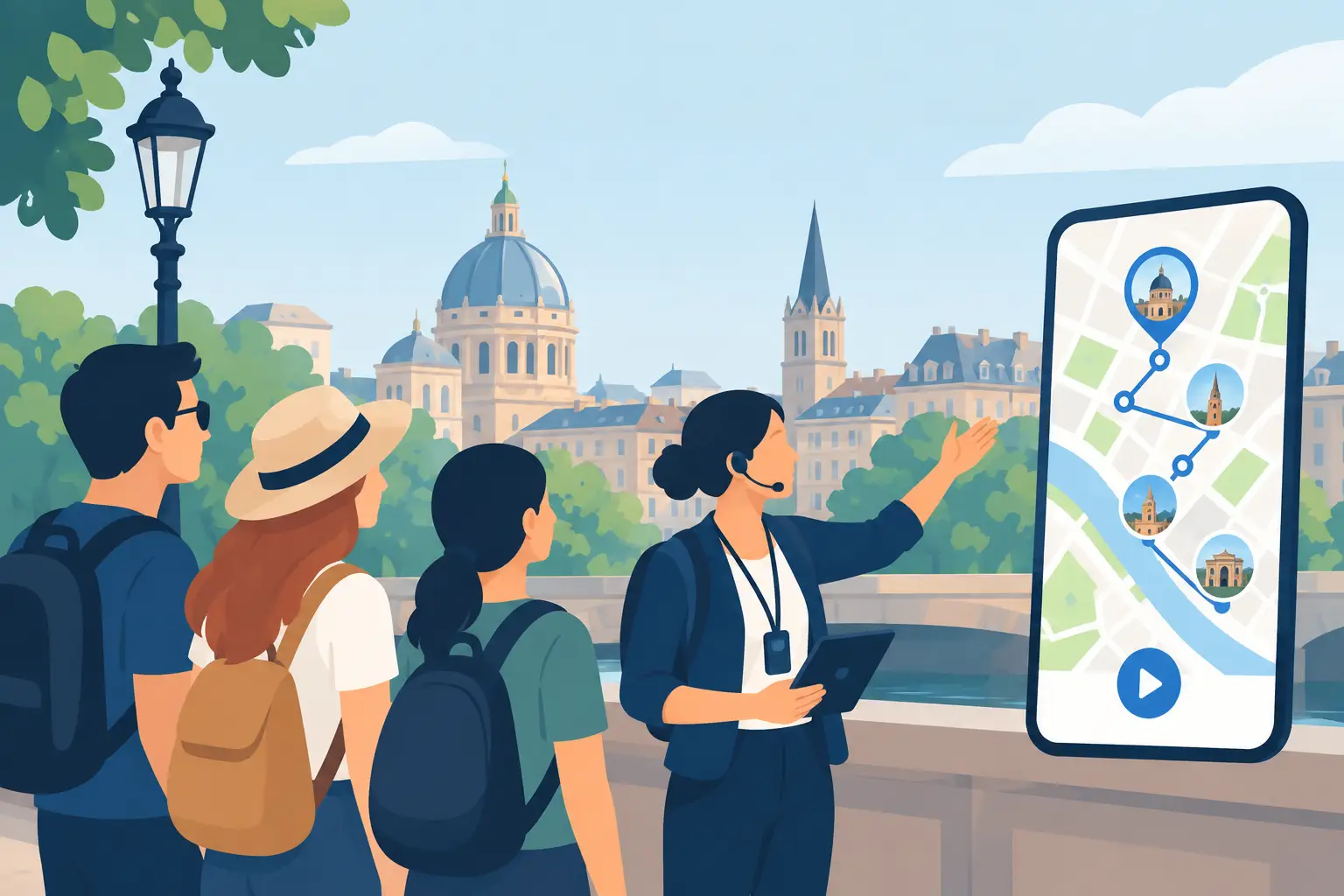
A walking tour platform should do more than move a visitor from landmark to landmark with a map pin and a block of text. It should make the street itself feel active. A hidden courtyard becomes a clue. A public artwork becomes a challenge. A local story becomes something travelers can find, collect, solve, and remember.
That shift matters because travelers are no longer satisfied with passively consuming a city. They carry a powerful device in their pocket, expect freedom on their own schedule, and want experiences worth sharing long after the trip ends. For tour creators and destination partners, the opportunity is just as clear: turn local knowledge into a product that can reach more people without running every tour in person.
A Walking Tour Platform Is Not Just a Digital Guide
A standard digital guide can be useful. It helps people navigate, provides historical context, and makes independent sightseeing easier. But utility alone rarely creates a memorable experience. If every stop follows the same pattern - arrive, read, leave - the city can start to feel like a checklist.
An interactive walking tour changes the rhythm. It asks the traveler to look closer, choose a direction, answer a question, locate a detail, or complete a real-world mission. The phone becomes a companion to the place, not a screen that pulls attention away from it.
This is where gameplay has real value. Scavenger hunt mechanics, treasure-style clues, GPS-triggered moments, virtual item collection, and timed challenges can create momentum between locations. They give people a reason to keep moving and a sense of progress as they explore. The goal is not to turn every historic district into a video game. The goal is to use game dynamics to make local stories feel alive.
The best experiences still leave room for wonder. A traveler may pause longer at a mural, follow an unexpected side street, or stop for coffee after finding a recommendation inside the tour. Self-guided does not mean isolated. It means each person can explore at their own pace while the experience provides a strong narrative thread.
What Travelers Want From Interactive City Exploration
For solo explorers, a mobile tour can turn an unfamiliar afternoon into a confident adventure. There is no need to coordinate with a group or wait for a scheduled departure. For couples and friends, challenges create natural conversation and friendly competition. For families, a route built around observation and discovery can keep younger travelers engaged far better than a long stream of facts.
The experience has to earn that attention. Great city exploration starts with stories that belong to a specific place. Not generic trivia that could appear anywhere, but the strange detail behind a building facade, the overlooked figure who shaped a neighborhood, the food tradition tied to a street, or the hidden connection between two sites travelers would never spot on their own.
Technology should support that storytelling, not bury it under features. A well-designed tour uses the phone when it adds value: to trigger a location-based prompt, reveal a clue, display a visual overlay, track progress, or help a traveler find the next stop. Then it sends the visitor back into the real world to observe, listen, walk, and interact.
That balance is especially important for immersive outdoor experiences. AR-style elements can add surprise and context, but they work best when they amplify what is already there. A digital object floating over an ordinary street may be forgettable. A digital layer that reveals the vanished architecture, a forgotten local character, or a hidden story behind that same street can change how someone sees it.
The Features That Make a Platform Worth Using
A strong platform gives travelers a clean, mobile-first experience, but it also gives creators enough control to build something distinct. The difference is in the details.
Routes need flexible GPS-based progression so explorers can move naturally through a neighborhood rather than follow a rigid line. Stops should support rich media, visual prompts, and short, readable storytelling. Challenges need to feel connected to the location instead of added merely for points. A good prompt might ask visitors to identify a symbol above a doorway or decode a clue from a public monument. A weak one asks a random question they can answer without looking up.
Creators also need a way to shape the experience around their audience. A nightlife discovery route, a museum-adjacent cultural trail, a team-building city game, and a family-friendly heritage walk should not feel like the same template wearing different colors. They need different pacing, difficulty, length, language, and calls to action.
Commercial tools matter too. Local guides, tour operators, and cultural organizations need to package an experience, set access conditions, sell paid tours, and measure what is working. If the technology requires a custom app build, a large development budget, and months of technical support, many excellent local stories will never become experiences at all.
The right creator infrastructure lowers that barrier. It lets experts focus on route design, storytelling, and partnerships while the platform handles the mobile delivery layer. That is how a city guide can become a digital product, and how a one-time event activation can become an experience with a longer life.
Designing a Tour People Will Finish and Share
The most successful self-guided tours are designed like journeys, not databases. They open with a clear premise: follow the trail of a lost inventor, uncover the neighborhood's hidden creative history, investigate an urban mystery, or collect pieces of a city legend. The premise gives every stop a purpose.
Pacing is the next test. Too many stops packed tightly together can feel exhausting. Too much distance between moments can drain energy. A route needs frequent reasons to continue, plus moments where people can pause, eat, take photos, or simply absorb the atmosphere. In a busy downtown, a compact one-hour route may work brilliantly. In a park, waterfront, or spread-out historic area, a longer format may be the better fit.
Reward design should be thoughtful rather than noisy. Progress bars and digital collectibles can motivate travelers, but the strongest reward is a genuine payoff: a final reveal, a new way of understanding the neighborhood, a recommendation they would not have found otherwise, or a completed mission that feels earned.
Shareability follows naturally when the experience produces real moments. Travelers share a surprising discovery, a beautiful location, a funny challenge result, or proof that they solved something together. They do not share because a tour tells them to post. They share because the route gave them a story of their own.
Why This Matters for Cities and Experience Partners
Cities compete for attention, but attention is only the first step. Destination brands and cultural organizations also want visitors to spread beyond the most crowded landmarks, stay longer, support local businesses, and form a stronger connection with the place.
Interactive routes can help distribute discovery. A carefully designed experience can lead people toward overlooked districts, independent shops, public spaces, cultural venues, and local narratives that deserve more visibility. That does not mean pushing travelers into areas without community input. It means working with local partners to create routes that respect the place and bring value to it.
For events, the format creates a practical way to activate a location at scale. A festival can add a citywide quest. A museum can extend an exhibition outdoors. A tourism office can create thematic routes for different audiences without asking every visitor to join a fixed group tour.
Leplace brings this model together through interactive self-guided tours and creator tools built for real-life exploration games. The result is a format that can serve independent travelers while giving guides, organizations, and destination partners a scalable way to publish and monetize place-based experiences.
The Next City Experience Starts on the Street
The future of urban tourism is not a traveler staring at a phone while a city passes by. It is a traveler using technology to notice more of what is already around them. The best route does not replace the human texture of a neighborhood. It gives people a reason to step into it with curiosity.
For creators, that is the standard worth building toward: make every clue lead somewhere meaningful, make every stop feel native to the place, and leave explorers with a story they could only have found by walking it themselves.
Enjoyed this post?
Comments
Be the first to comment.