
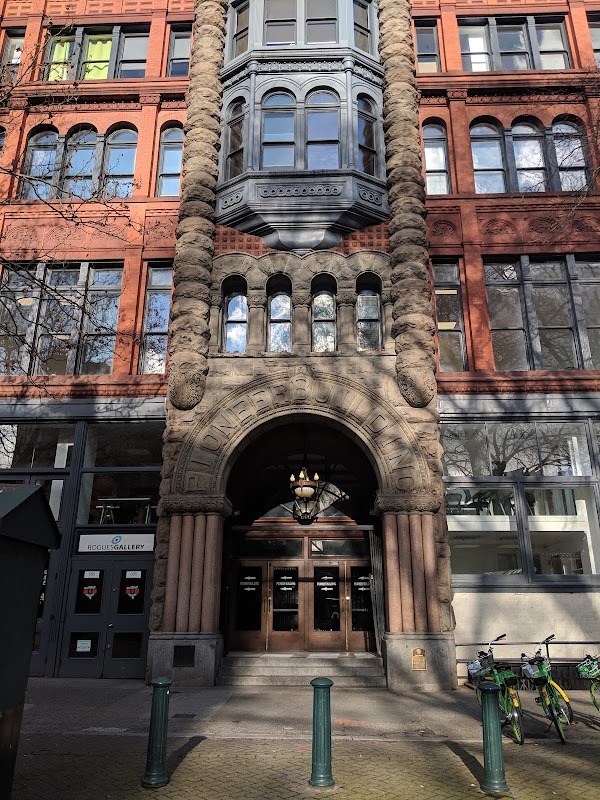
Pioneer Building Seattle, WA, is a landmark of Seattle's post-fire rebuilding, completed in 1892 as the city reshaped its commercial identity. Its Richardsonian Romanesque architecture projected permanence just as Seattle was moving from a frontier town toward a serious commercial port—and its imposing presence soon belonged to the city's Klondike Gold Rush ambitions.
What is the Pioneer Building in Seattle, WA?
The Pioneer Building is a Seattle structure completed three years after the Great Seattle Fire of June 6, 1889, which destroyed much of the city's commercial heart. It rose during the rebuilding that followed, when fire-resistant masonry and a bold architectural language helped define the renewed commercial center.
Designed by Seattle architect Elmer H. Fisher, the building expresses the Richardsonian Romanesque style through rounded arches, heavy stone, deep-set windows, and a strong sense of permanence. Those choices made the Pioneer Building more than a replacement after the fire: they made it a public statement about the kind of city Seattle intended to become.
Why does the Pioneer Building matter in Seattle history?
The Pioneer Building matters because its construction captured Seattle's recovery after the Great Seattle Fire and its determination to establish itself as a serious commercial port. Its fire-resistant masonry and weighty architectural language gave the rebuilt district an image of stability and endurance.
That image aligned with Seattle's expanding commercial ambitions. The building's scale and Richardsonian Romanesque details presented a city that could support merchants, shipping firms, banks, and investors—not merely a rough frontier settlement. The Pioneer Building therefore belongs to the physical story of Seattle's transition as much as to its architectural history.
How is the Pioneer Building connected to the Klondike Gold Rush?
The Pioneer Building's commercial symbolism became especially important after gold was discovered in the Klondike in 1896. In 1897, Seattle seized the opportunity when the steamship Portland arrived with what newspapers called a “ton of gold.”
Seattle then promoted itself as the essential outfitting point for stampeders heading north to Alaska and the Yukon. Buildings like the Pioneer Building projected the reliability, wealth, and order that merchants, shipping firms, banks, investors, and hopeful newcomers wanted to associate with the city. Its appearance helped reinforce Seattle's claim to be the commercial gateway for the rush.
What should you notice when you stand before the Pioneer Building?
Start with the rounded arches, heavy stone, deep-set windows, and the building's overall masonry presence. Together, these details communicate permanence and reflect the fire-resistant rebuilding that followed the 1889 fire.
The Pioneer Building is included as a stop on the Seattle and the Klondike Gold Rush route, which connects its architecture with the commercial ambitions that shaped Seattle in the late nineteenth century. Visit the building, then start the route to explore that connection through the city itself.
The tour that visits Pioneer Building
Each one is a self-guided route you can start whenever you like.
Seattle, WA · 1h 20m
Seattle and the Klondike Gold Rush
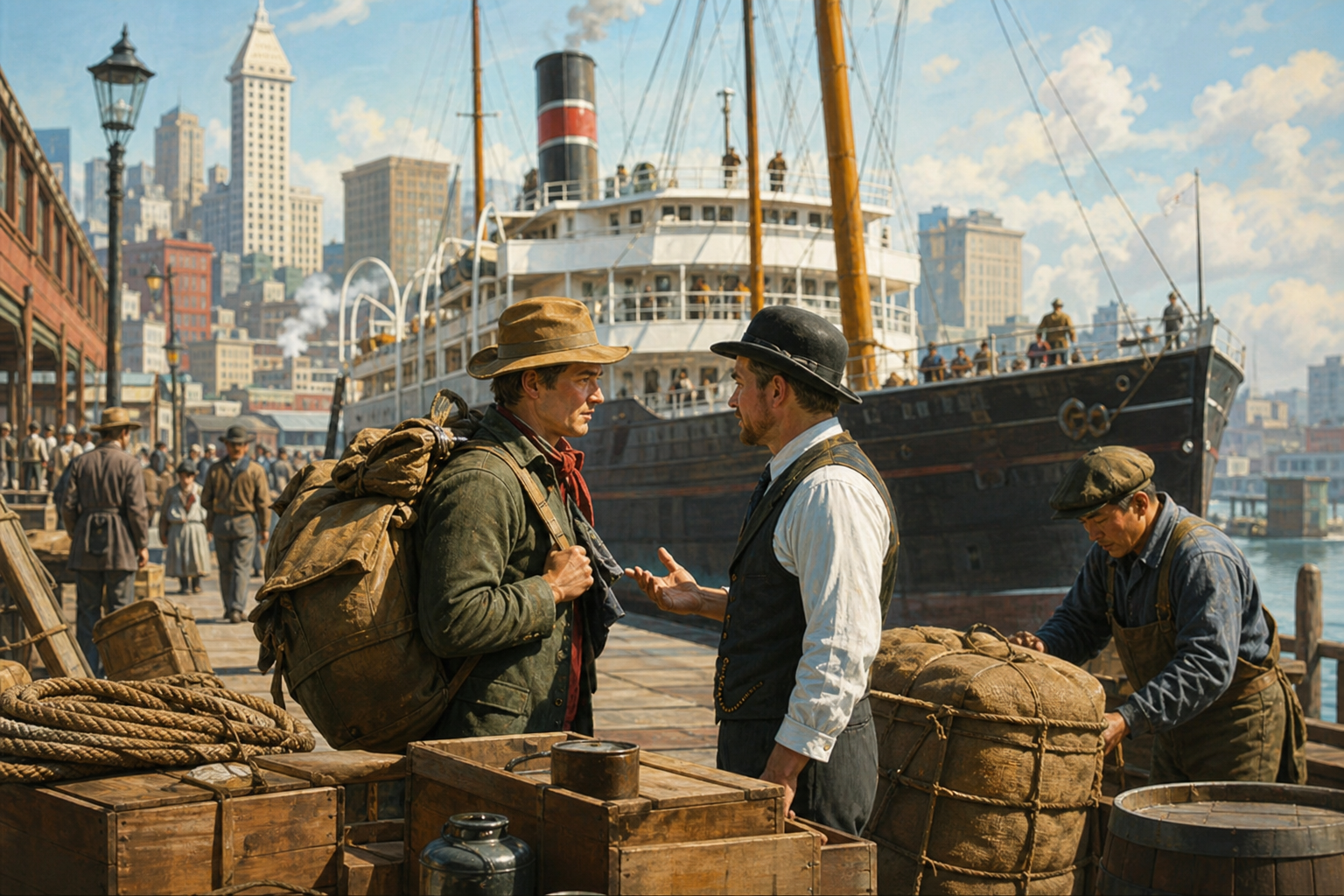
Walk through the Seattle that cashed in on the Klondike Gold Rush. From Pioneer Square to the waterfront, uncover how the 1897 gold frenzy transformed a rebuilding port into the bold "Gateway to Alaska." Expect historic landmarks, big personalities, surprising facts, and the story of a city that struck gold without ever swinging a pick.
- places
- Seattle, WA
- Seattle
- Pioneer Building
- Seattle history
- Klondike Gold Rush
- architecture