
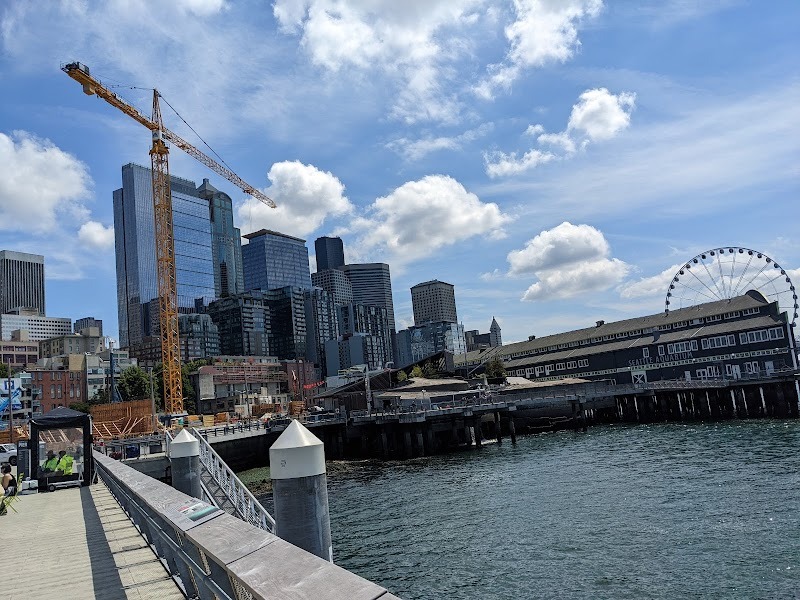
Seattle Waterfront is Seattle’s Central Waterfront neighborhood in Seattle, Washington. It occupies the most urbanized portion of the Elliott Bay shore, running from the Pioneer Square shore roughly northwest past Downtown Seattle and Belltown to the Broad Street site of the Olympic Sculpture Park.
What is Seattle Waterfront?
Seattle Waterfront refers to the Central Waterfront Seattle neighborhood along Elliott Bay. Its position links the shoreline with several of the city’s central districts, while its historic piers give the area a distinctive maritime identity.
The waterfront’s boundaries describe more than a single pier or viewpoint: the Central Waterfront extends along the shore from Pioneer Square, through Downtown Seattle and Belltown, and ends at the Broad Street site of the Olympic Sculpture Park. That continuous shoreline is the defining geography behind the name Seattle Waterfront.
How did the Seattle Waterfront shape the Klondike Gold Rush?
Seattle Waterfront became a launch point for the Klondike Gold Rush after the steamship Portland arrived in Seattle on July 17, 1897, carrying miners and what newspapers claimed was nearly a ton of Klondike gold. The great strike had taken place in Canada’s Yukon in August 1896, but the Portland’s dramatic arrival, followed days later by other treasure-laden ships, helped turn the discovery into an international stampede.
Seattle’s business leaders quickly promoted the city as the “Gateway to Alaska.” Merchants, shipping companies, railroads, and newspapers established the waterfront as a place where stampeders could outfit themselves before traveling north. Between 1897 and the early 1900s, thousands of people departed from the piers for Dyea, Skagway, Nome, and other northern ports.
What would you have seen on Seattle’s waterfront in 1897?
Seattle’s 1897 waterfront was a working harbor organized around the demands of the northern journey. Steamships loaded flour, bacon, tools, tents, boots, and other supplies required by prospectors and the North-West Mounted Police. Each prospector was expected to carry roughly a year’s worth of provisions before entering the Yukon.
The harbor’s activity filled the Central Waterfront with cranes, gangplanks, warehouses, and ticket offices. Fortune seekers stood alongside seasoned sailors, laborers, and entrepreneurs, while banks, outfitters, and transport firms expanded rapidly around the traffic moving through the piers.
Not everyone who sailed found gold, but Seattle Waterfront’s docks launched a consequential migration in Pacific Northwest history and deepened the city’s maritime identity. For the place-specific stories behind this transformation, follow Seattle and the Klondike Gold Rush along the waterfront.
The tour that visits Seattle Waterfront
Each one is a self-guided route you can start whenever you like.
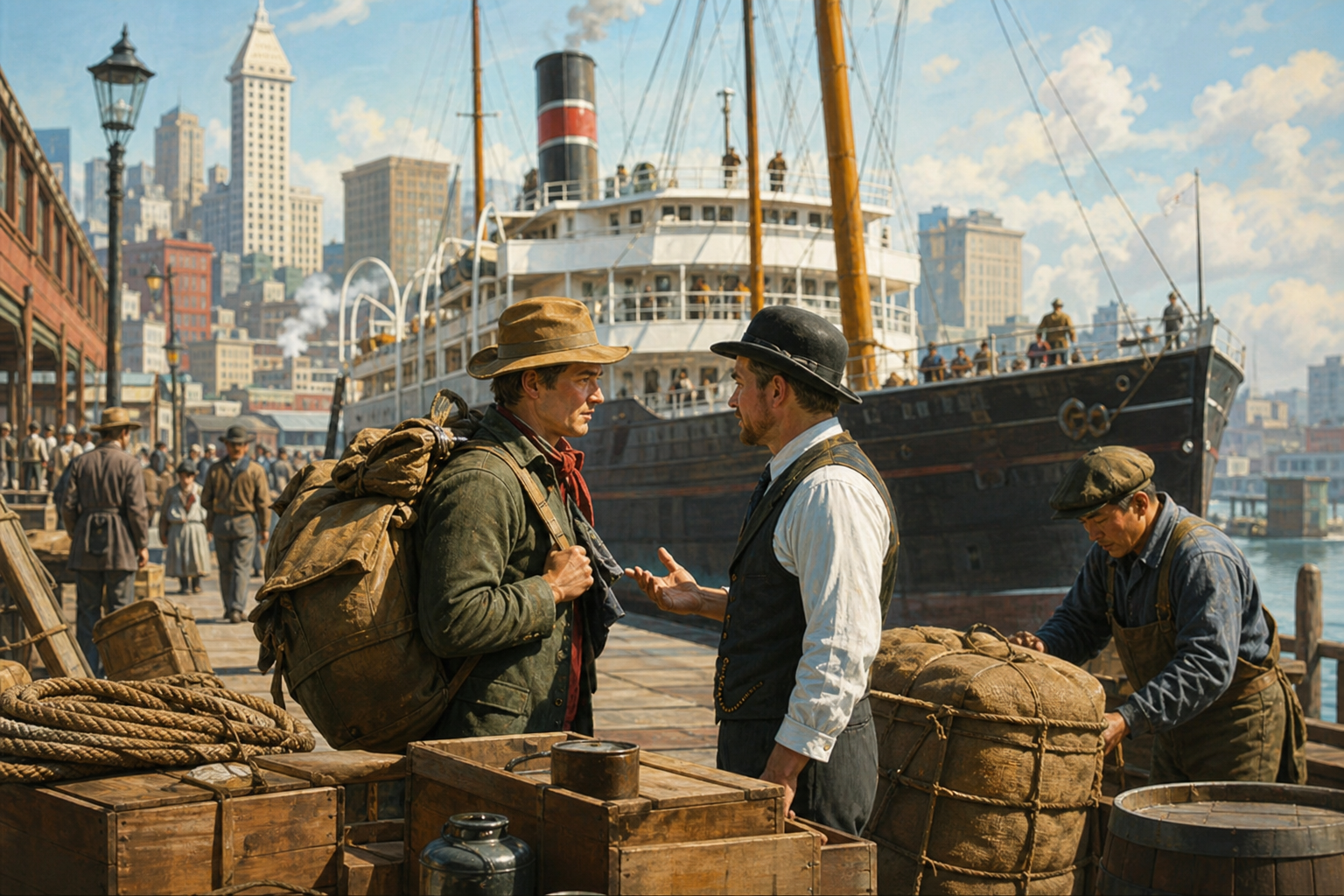
Seattle, WA · 1h 20m
Seattle and the Klondike Gold Rush
Walk through the Seattle that cashed in on the Klondike Gold Rush. From Pioneer Square to the waterfront, uncover how the 1897 gold frenzy transformed a rebuilding port into the bold "Gateway to Alaska." Expect historic landmarks, big personalities, surprising facts, and the story of a city that struck gold without ever swinging a pick.
- places
- Seattle, WA
- Seattle Waterfront
- Seattle history
- Klondike Gold Rush
- Seattle travel