
Portland, OR, United States2 min read
Skidmore Fountain Portland, OR: History and What to Notice
Skidmore Fountain on Google Maps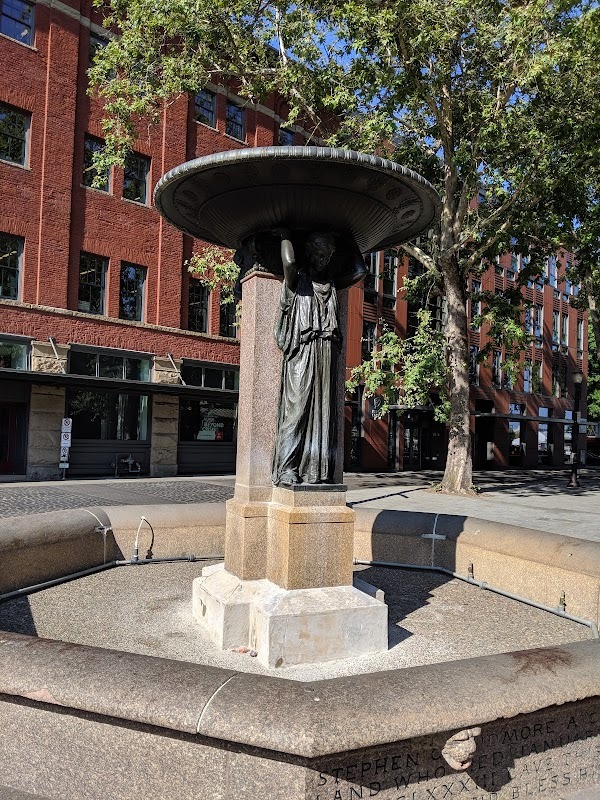
Skidmore Fountain Portland, OR, is a historic fountain in Portland, Oregon, United States. Completed in 1888, it was both one of the city's first major public monuments and a working water supply for horses, workers, and travelers moving through Old Town near the waterfront.
That combination makes the fountain distinctive: its bronze basins and troughs were made for practical use, while the structure also marked Portland's investment in a visible public landmark during a period of rapid urban and economic growth.
What is Skidmore Fountain in Portland, OR?
Skidmore Fountain is a historic fountain in Portland's Old Town, near the Willamette River and the waterfront. Its setting placed it close to the city's busiest commercial streets and within an expanding port district shaped by river commerce.
The fountain belonged to a working part of Portland filled with warehouses, hotels, merchants, and transport businesses. Freight and passengers moved through the district by horse-drawn transportation, so a public source of drinking water served the people and animals that kept this commercial activity moving.
Why was Skidmore Fountain built?
Skidmore Fountain was completed in 1888 to supply drinking water to horses, workers, and travelers. You can read its original purpose directly in its form: the bronze basins and troughs were not simply decorative features, but infrastructure for a busy commercial district.
Pharmacist Stephen G. Skidmore funded the fountain through a bequest, and sculptor Olin Levi Warner designed it. The result became one of Portland's first major public monuments while continuing to meet an everyday need created by the city's dependence on horse-drawn transportation for moving freight and passengers.
Its practical role also explains why the fountain mattered as the city grew. It stood where river commerce, transport businesses, and crowded commercial streets came together, giving Portland a public amenity that was useful as well as prominent.
What should you notice around the fountain?
Start with the bronze basins and troughs: they show how the fountain joined civic symbolism to working infrastructure. As you examine the structure, keep its original users in mind—horses, workers, and travelers passing through Old Town near the waterfront.
Then place the fountain in its historical surroundings. It stood near the Willamette River, the city's busiest commercial streets, and a district of warehouses, hotels, merchants, and transport businesses tied to river commerce. Those details are not incidental scenery; they explain why this particular location needed a dependable public water supply.
Skidmore Fountain became a recognizable landmark within Portland's expanding port district because it served both purposes at once: it helped sustain movement through a freight-and-passenger corridor, and it made the city's investment in public amenities visible. The Portland: River Trade, Lumber and Vice Tour visits Skidmore Fountain as stop 4 of 8, giving you a way to place its monument and working-water-supply roles within the river-commerce district. If you want to explore the fountain alongside that wider context, follow the Portland river trade tour.
The tour that visits Skidmore Fountain
Each one is a self-guided route you can start whenever you like.
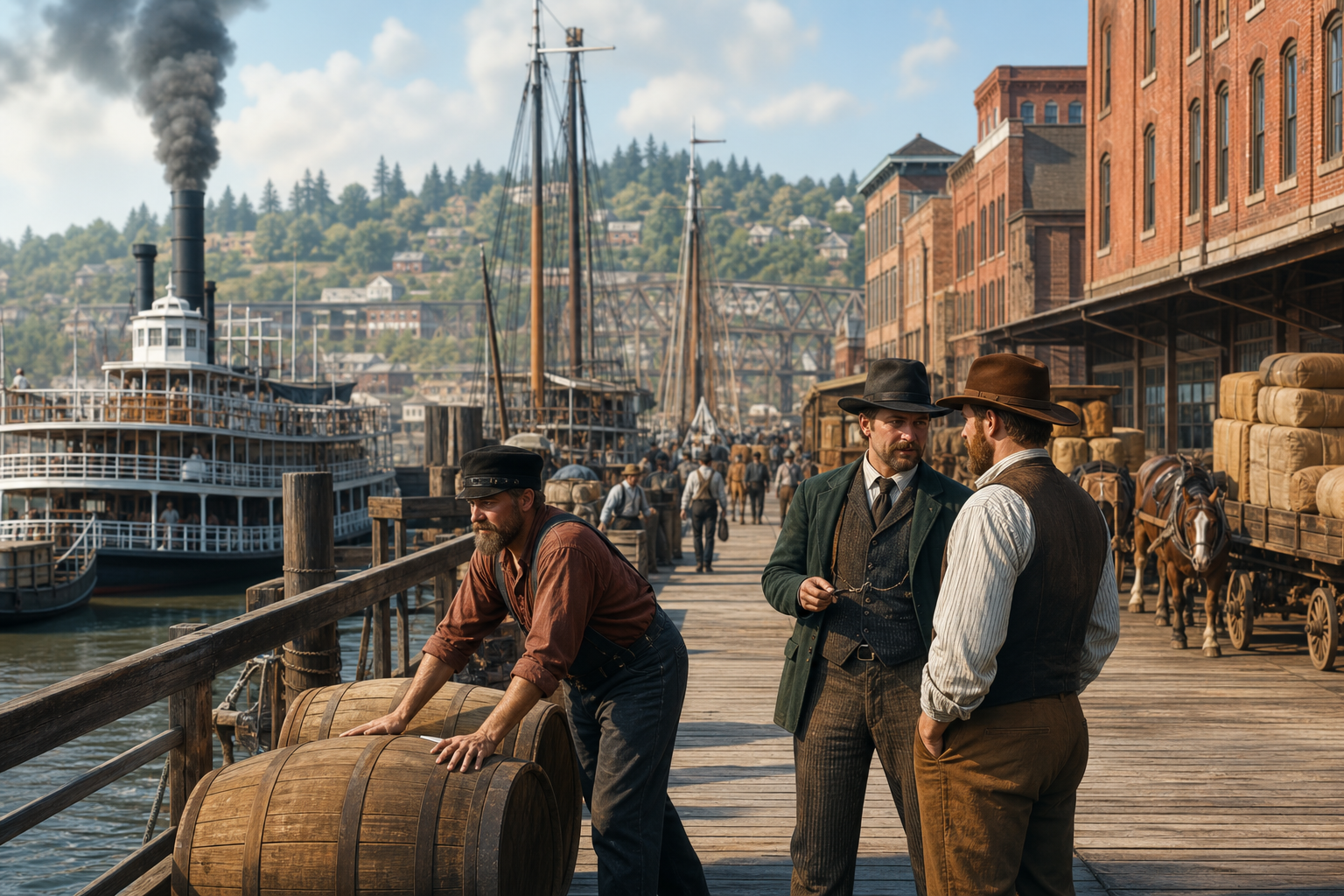
Portland, OR · 1h 25m
Portland: River Trade, Lumber and Vice Tour
A vivid walk through Portland's rough-and-rowdy beginnings. Follow the Willamette from docks to depots, uncovering how river trade, lumber wealth, railroads, immigration, and vice built the city between 1845 and the early 1900s. Expect steamships, saloons, Shanghaiing legends, and plenty of frontier swagger.
- places
- Portland, OR
- Portland
- Oregon
- Skidmore Fountain
- Old Town Portland
- Portland history