
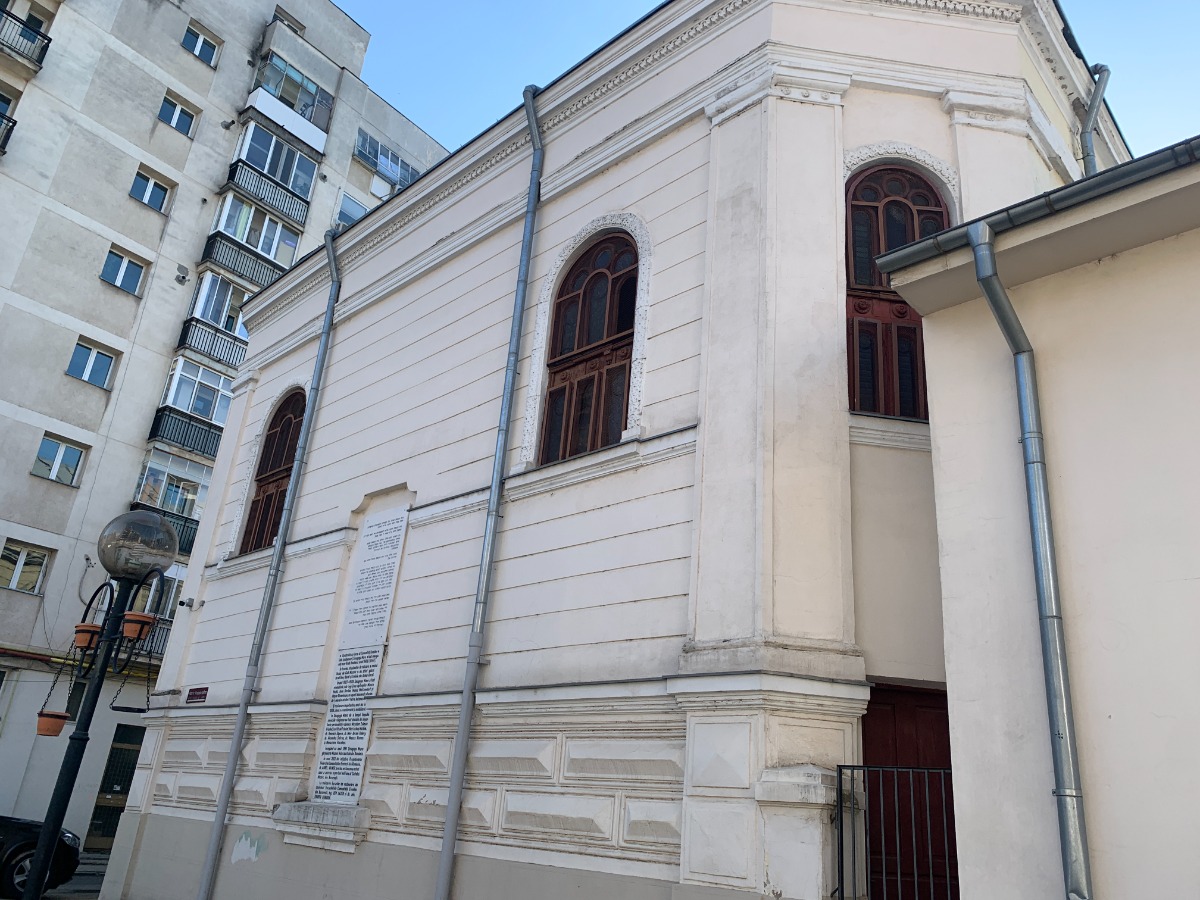
The Great Synagogue Bucharest is a Jewish congregation and synagogue at 11 Vasile Adamache in Bucharest's Old Jewish District. It is also known as the Great Polish Synagogue, and the building is used as a Jewish museum, connecting the site to the changing history of the city's Jewish community.
What is the Great Synagogue Bucharest?
The Great Synagogue, also known as the Great Polish Synagogue, was built by Bucharest's Polish-Jewish community and is located at 11 Vasile Adamache. The building is also used as a Jewish museum.
The sources give two dates for its construction history. Wikipedia states that the synagogue was completed in 1847 by the Polish-Jewish community, while the Jewish Bucharest material describes it as built in 1846 by Ashkenazi Jews. These dates should be read as separate construction and completion references, rather than combined into one unsupported date.
The name reflects the synagogue's place within Bucharest's Jewish life at the time. The Jewish Bucharest material says it became known as the Polish Synagogue or the Great Synagogue because it was the largest religious synagogue in Bucharest when it was constructed.
What should you notice about the synagogue's architecture?
The Great Synagogue's documented architectural history is one of repeated change. Alterations to the architecture and the Ark were made in 1903 and 1909, so the building's form and central religious feature were both modified after its original construction.
Electricity was added to the synagogue in 1915. In 1936, the building was repainted in rococo style. These recorded interventions mark different stages in the synagogue's physical history, from changes to the Ark and architecture to updated services and a new decorative treatment.
The surviving descriptions do not provide a complete account of the building's facade, interior details, or present access arrangements. What they do establish is a synagogue whose architecture was repeatedly adapted rather than left unchanged since the nineteenth century.
What happened to the Great Synagogue Bucharest over time?
The Great Synagogue was damaged by the 1940 earthquake. The Jewish Bucharest material also records that it was ravaged by the Legionaires in 1941 and repaired in 1945.
The building's setting changed significantly in 1980, when high-rise buildings were built around it in a U shape. The source describes this arrangement as an attempt to hide the synagogue from the general public, making the surrounding buildings part of the site's documented history.
By 1991, the Great Synagogue had also started hosting the Museum of the Holocaust. Its use as a Jewish museum therefore sits alongside a history of architectural changes, physical damage, repair, and a transformed urban setting.
How can you place the Great Synagogue in Bucharest's Old Jewish District?
Place the Great Synagogue at 11 Vasile Adamache in Bucharest's Old Jewish District. It is stop 3 of 10 on the Jewish Bucharest route, making the address a specific point of reference for exploring this part of the city on foot.
The building's two names, its differing construction and completion dates, its architectural alterations, and its later museum use all belong to the history of this particular synagogue. Use the address to locate the Great Synagogue, then connect the physical building with the documented changes that shaped it.
The tour that visits The Great Synagogue
Each one is a self-guided route you can start whenever you like.
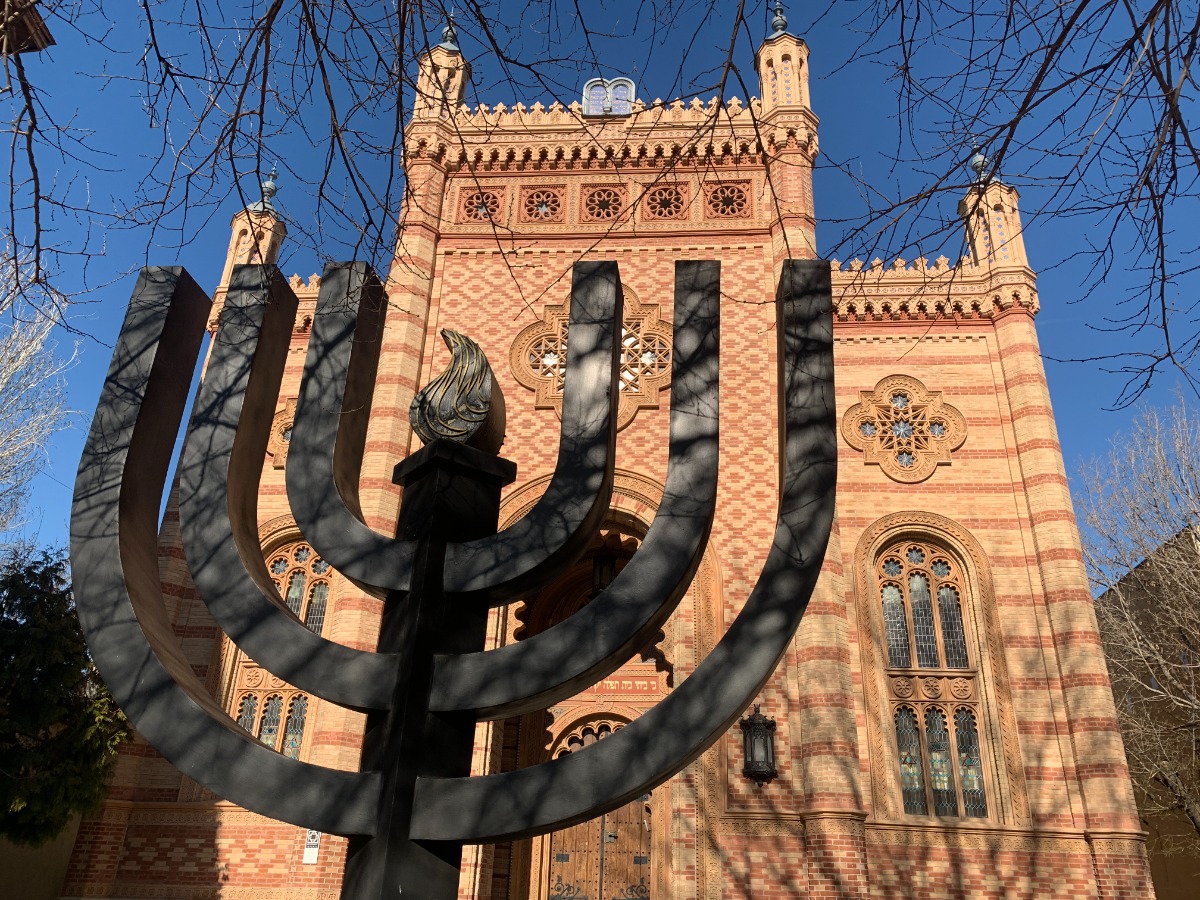
Bucharest · 1h 55m
Jewish Bucharest
Discover the fascinating Jewish heritage of Bucharest on this immersive tour. Explore the evolution of the Jewish community in the city, from early merchants to the modern Jewish Community Center. Uncover the history and impact of Jewish culture, traditions, and contributions to Romanian society. A journey through time and culture awaits you.
- places
- Bucharest
- Jewish heritage
- synagogues
- Romania
- urban history