
May 28, 20267 min read
What a GPS Walking Tour App Should Do
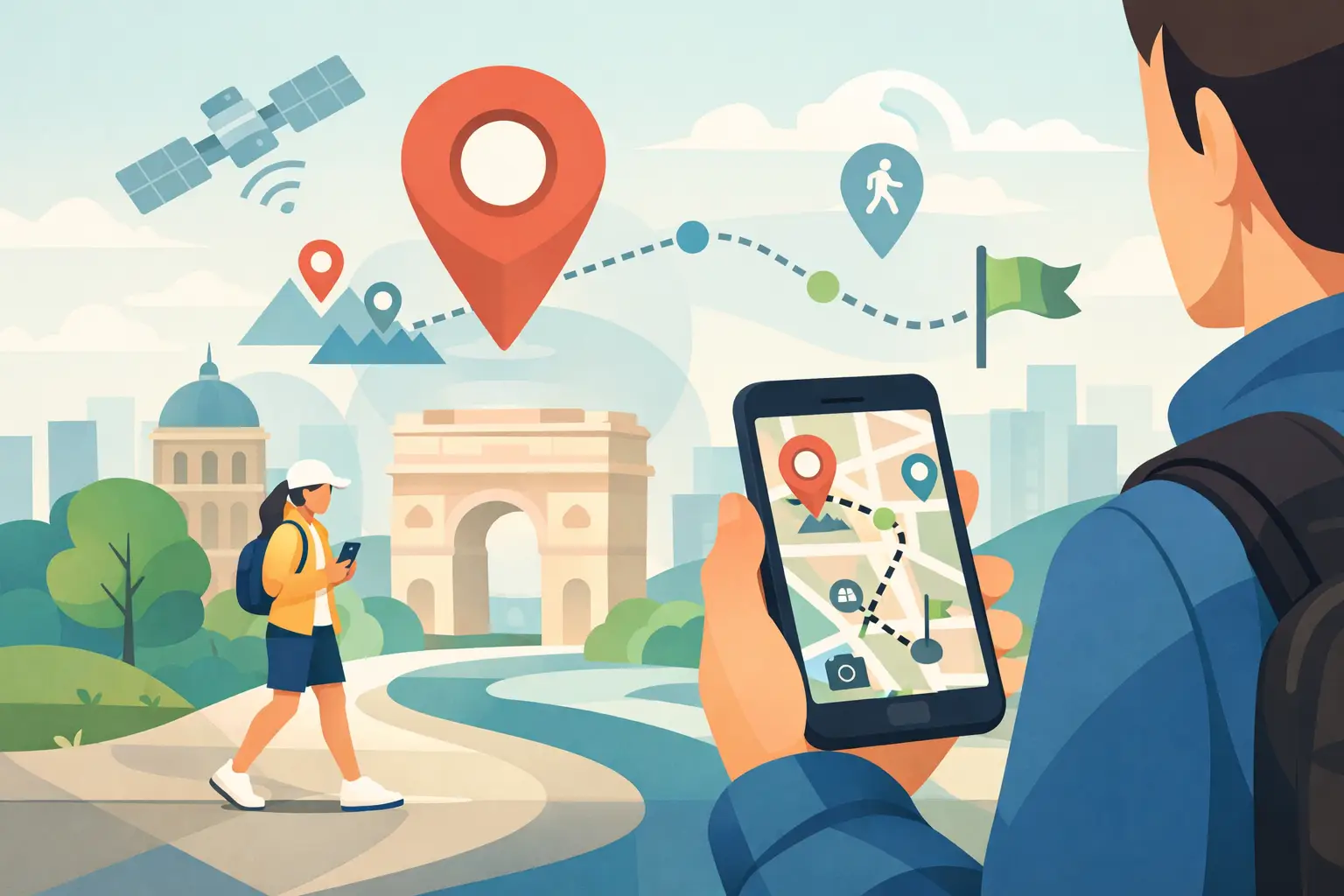
You can spot the difference within five minutes. One tour sends you down a sidewalk while a voice recites dates you will forget by lunch. Another asks you to notice a symbol above a doorway, make a choice at the next corner, and follow a clue that changes how the street feels. That is the real test of a GPS walking tour app - not whether it can guide people from point A to point B, but whether it can turn a city into an experience.
For travelers, that shift matters because phones are already the main travel companion. People book, navigate, photograph, translate, and share from the same device. A walking tour that lives there should feel native to that behavior. It should be flexible, visual, responsive, and alive to the place around you. For creators and tourism teams, the same shift matters for a different reason. Static tours are hard to scale and easy to forget. Interactive mobile experiences can travel further, run longer, and create stronger participation without requiring a guide to be present every time.
Why a GPS walking tour app needs more than navigation
Basic GPS guidance is no longer impressive on its own. Everyone expects a blue dot and a route line. If that is the whole product, the experience is competing with free map apps and losing on excitement.
What people actually want is context tied to movement. They want the story to trigger when they arrive somewhere meaningful. They want the next step to feel earned. They want freedom to explore without wondering if they are missing the point. A strong GPS walking tour app uses location as the engine, but the value comes from what location activates - narrative, interaction, challenge, surprise, and momentum.
That is especially true in cities where attention is fragmented. Traffic, storefronts, messages, weather, and crowded sidewalks all compete with the tour. Passive listening struggles in that environment. Active participation performs better because it gives the user something to do. When a tour asks for observation, choice, or problem-solving, the place starts to hold attention instead of fighting for it.
The best GPS walking tour app feels like a real-world game
This is where the category gets interesting. The strongest mobile tours borrow from game design without turning the city into a gimmick. They create progression. They reward curiosity. They use missions, clues, checkpoints, collections, or small achievements to keep people moving.
That does not mean every tour should feel like a scavenger hunt for kids. Tone matters. A cultural district walk, a ghost route, a food neighborhood experience, and a heritage trail should all behave differently. But they benefit from the same principle: people engage more deeply when they are part of the experience rather than just listening to it.
A good example is the difference between telling someone that a square was once a political meeting point and asking them to stand in a specific location, identify a detail in the architecture, then unlock the next piece of the story. The information may be similar. The memory is not.
For brands, cities, museums, and local guides, this opens up a bigger opportunity. A tour can become a lightweight outdoor attraction. It can serve solo travelers, couples, school groups, team outings, and event activations with the same core infrastructure. That is a stronger product than an audio file with a map attached.
What travelers actually want from the experience
Travelers do not all want the same pace, depth, or style, so the app has to balance structure with autonomy. If it is too rigid, it feels like homework. If it is too loose, it feels unfinished.
The best experiences make the route clear without making users feel trapped. They leave room for coffee breaks, detours, and spontaneous discovery. They also reduce friction. Nobody wants to stand on a busy sidewalk trying to decode a confusing interface or wondering whether the next stop failed to load.
That means the experience should be visually simple and mobile-first. Instructions should be short. Triggers should work reliably. Content should match the setting. Audio can help, but it should not carry the whole experience. Photos, prompts, text moments, and interactive tasks often do more to anchor attention in a live urban environment.
It also helps when the tour respects different travel modes. Some users want a fast city intro in 45 minutes. Others want a layered afternoon with optional branches and hidden stops. A flexible GPS walking tour app can support both, which makes it more useful across destinations and audiences.
What creators and tourism teams need from the platform
For the B2B side, the conversation is different. The question is not only whether the tour is fun. It is whether the model works.
Tour operators, destination marketers, local storytellers, and cultural organizations need tools that let them publish experiences without building custom software. They need to update routes, adjust content, manage paid access, and launch new concepts without a long development cycle. If every new idea requires a separate app build, the format becomes too expensive and too slow.
This is where creator infrastructure matters. A modern platform should let partners package local knowledge into interactive products that can be sold, reused, seasonalized, and adapted for different audiences. One route might become a family version, a nightlife version, and an event edition with different prompts and difficulty levels. The underlying city story stays valuable, but the product becomes more commercial.
It also creates a clearer path to monetization. Free walking tours rely heavily on in-person staffing and variable tips. Traditional group tours are limited by schedules and guide availability. Digital self-guided experiences can run at scale, support direct bookings, and stay available beyond standard operating hours. That does not replace every live guide product, but it expands the business in a practical way.
Where simple tour apps fall short
A lot of walking tour apps still treat digital as a delivery format instead of a design advantage. They digitize a brochure, add a map, and stop there. That is better than paper, but it misses what smartphones can actually do in the field.
Location awareness should shape the flow. Challenges should adapt how people move through a space. Unlocks should create anticipation. Optional layers can reward people who want more depth without overwhelming casual users. Even small mechanics like timed reveals, collection systems, or branching choices can make a route feel alive.
There is also the question of replay value. A standard route is often consumed once and forgotten. Interactive formats can create stronger retention because they feel more personal. People remember what they solved, found, chose, or noticed. They are also more likely to recommend an experience that felt active and surprising than one that simply narrated landmarks.
The trade-off is that richer experiences require better design discipline. Too many tasks can slow the route down. Poor GPS logic can frustrate users. Game elements that do not fit the setting can feel cheap. The goal is not to add noise. The goal is to create momentum.
A better model for city discovery
The most exciting part of the GPS walking tour app category is that it is moving beyond tourism in the narrow sense. The same format can power culture trails, festival activations, university welcomes, branded city challenges, public art programs, and local business discovery routes. That makes the format more versatile than traditional guided sightseeing.
It also matches how people already move through cities. They want independence, but not emptiness. They want structure, but not a rigid timetable. They want stories, but they also want participation. Mobile, location-based experiences sit right at that intersection.
Platforms built around interactive self-guided tours are pushing that shift forward by treating place as something users can play through, not just pass through. Leplace is part of that movement, combining location-based storytelling with challenge-driven exploration and creator tools that help destinations and tour makers build experiences instead of just publishing stops.
That direction makes sense because modern travelers are not looking for another static guide in their pocket. They are looking for a reason to look up, walk further, notice more, and remember the city as something they entered rather than something they observed.
The next time you think about what makes a walking tour valuable, start there. Not with the route line, but with the feeling someone has at the third stop when the city suddenly stops being background and starts behaving like the experience itself.
Enjoyed this post?
Comments
Be the first to comment.