
Oct 20, 20267 min read
Augmented Tourism Turns Cities Into Playgrounds
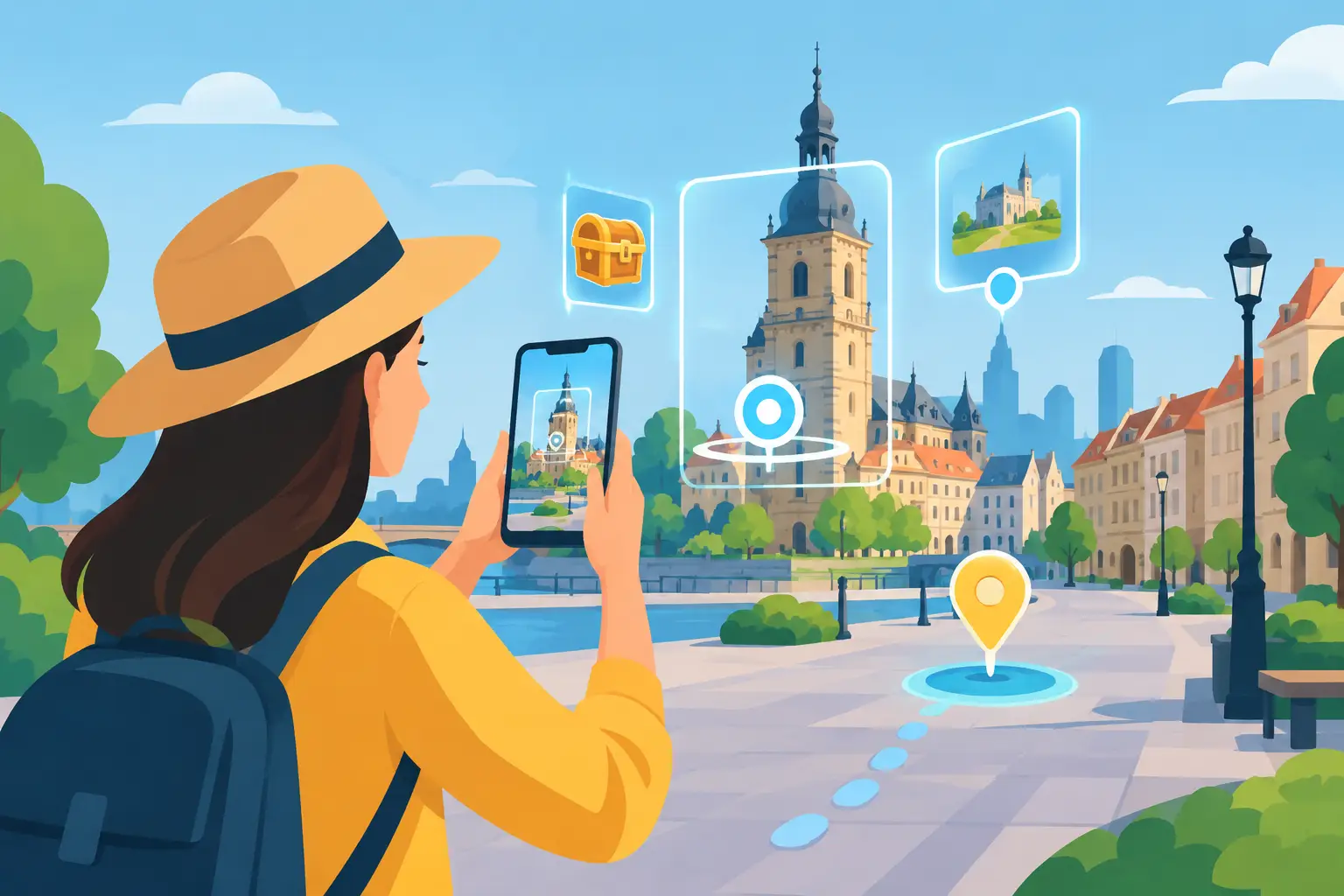
A bronze statue is no longer just a photo stop. With augmented tourism, it can become the starting point of a mission: find the symbol hidden on a nearby facade, solve a local riddle, collect a virtual artifact, and uncover the story that most visitors walk past.
That shift matters because travelers have changed. They still want landmarks, architecture, food, and culture. But they also want agency. They want to choose their pace, follow curiosity, and come home with more than a camera roll full of the same images everyone else took. Augmented tourism turns a city into an interactive layer of stories, challenges, and discoveries - all activated through the device already in a traveler’s pocket.
What Is Augmented Tourism?
Augmented tourism uses digital content to add new ways of seeing and interacting with real places. It can include augmented reality visuals, GPS-triggered stories, location-based games, virtual collections, interactive maps, audio moments, puzzles, and challenges that lead visitors through a neighborhood or destination.
The key word is not simply technology. It is participation.
A standard self-guided tour may tell someone that a building was once a theater. An augmented experience can ask them to locate the old entrance, reveal a historic performance poster on screen, and continue only after finding a clue in the streetscape. The physical city remains central. Digital tools give it momentum.
This is why augmented tourism is bigger than putting 3D objects over a phone camera. AR can be powerful, especially when it recreates a lost structure or brings a local character to life. Yet an excellent experience does not need cinematic effects at every stop. Smart storytelling, a clear route, and a compelling reason to keep moving can be just as immersive.
Why Passive Sightseeing Is Losing Its Pull
Traditional tourism often follows a familiar pattern: walk, look, listen, repeat. There is nothing wrong with that format. A great guide can make a street, museum, or monument unforgettable. But passive formats do not always fit the way independent travelers move through cities now.
Many visitors are navigating on their own, traveling in shorter windows, and looking for experiences that feel personal rather than prepackaged. Solo travelers may want structure without joining a group. Couples and friends want something they can do together, not just consume side by side. Families need movement and small wins to hold attention. Destination partners need formats that encourage visitors to go beyond the busiest landmarks.
Interactive self-guided tours answer those needs because they give people a role. The traveler is not an audience member. They are an explorer, detective, collector, or player moving through a real-world game.
That feeling changes behavior. A challenge can encourage someone to take a different street. A virtual reward can motivate them to complete a route. A local story can make a seemingly ordinary square feel worth ten more minutes of attention. For destinations, those extra minutes can translate into deeper engagement with neighborhoods, local businesses, and cultural sites that rarely appear on the default itinerary.
The Building Blocks of a Great Augmented Tourism Experience
The best experiences balance technology with place. If the screen becomes more interesting than the street itself, the product has missed the point. Travelers should look up, move, notice details, and feel that the digital layer is revealing the city rather than replacing it.
A route with purpose
Every strong experience needs a reason to move from one point to the next. That could be a mystery unfolding across a historic district, a food-and-culture quest, a public-art hunt, or a mission built around a city’s hidden characters. The route should create anticipation, not just connect pins on a map.
A linear route works well when the story has a clear beginning and ending. A more open format can work better for repeat visitors or festival audiences who want freedom to choose their own path. The right model depends on the destination, the density of points of interest, and the time travelers actually have.
Stories people can act on
Facts alone rarely create a memorable experience. A date, name, or architectural style becomes more powerful when it gives visitors something to do. Instead of presenting a historical fact as a block of text, the experience might ask users to spot a detail, compare then and now, make a decision, or solve a clue connected to the story.
This also makes local expertise more valuable, not less. Guides, historians, artists, and community organizations know the stories that do not appear on generic travel sites. Augmented tourism gives them a way to package that knowledge into a product travelers can access at any time.
Challenges that match the audience
Gameplay should create energy, not friction. A puzzle that takes five minutes to understand can stop a city walk cold. A simple photo mission, observation challenge, or location-based question often works better because it keeps the experience moving.
The level of challenge should reflect the audience. A family trail may prioritize quick wins and visual prompts. A group of friends may enjoy competitive scoring or timed missions. Cultural travelers may prefer deeper stories and optional research layers. There is no universal formula, which is exactly why flexible creator tools matter.
Digital rewards with real meaning
Badges, points, and virtual objects can make exploration feel more satisfying, but only when they support the story. Collecting a random digital coin at every stop gets old fast. Collecting pieces of a local legend, historic artifacts, or characters from a neighborhood narrative creates a reason to care.
For partners, rewards can also connect to the local economy. Completing a route might reveal a bonus stop, a seasonal offer, or an invitation to continue exploring. The experience should feel valuable even without a discount, but smart incentives can help spread visitor activity more evenly across an area.
What It Means for Tourism Creators and Destinations
Augmented tourism is not just a consumer trend. It is a practical product opportunity for the people and organizations that shape how a place is experienced.
Tour operators can turn a limited-time guided format into a self-guided product that runs beyond staff hours. Local guides can build niche experiences around architecture, street art, music, food, film locations, or overlooked history. Museums and cultural institutions can extend their storytelling into the surrounding streets. Event organizers can create interactive city missions that turn attendance into participation.
The commercial value is in scale and flexibility. A well-designed digital route can serve one traveler on a quiet Tuesday and a large group during a major event. It can be sold directly, bundled with an attraction, offered as a premium add-on, or used as a branded activation. It also produces useful signals: which stops people complete, where they pause, which stories draw attention, and where a route loses momentum.
That data should guide improvement, not reduce travel to metrics. Completion rates matter, but so does whether people feel surprised, connected, and eager to tell someone about what they found.
Platforms such as Leplace make this model more accessible by giving creators a way to turn local knowledge into location-based, story-driven mobile experiences without building a custom app from scratch. The opportunity is not to digitize a brochure. It is to design a real-life exploration game that gives a place a new rhythm.
Where Augmented Tourism Can Go Wrong
Innovation is not automatically a better visitor experience. Heavy AR can drain batteries, struggle in bright light, or exclude travelers with older devices. GPS can be unreliable around tall buildings. Too much screen time can make a traveler feel like they are playing anywhere rather than being present in a specific city.
There are also cultural considerations. Local stories need context, consent, and care. A neighborhood is not a game board to be extracted for content. Creators should work with local voices, represent difficult histories honestly, and avoid sending visitors into residential areas without a clear benefit to the community.
The strongest projects plan for these realities. They offer a clear onboarding flow, simple controls, realistic walking times, and fallback content if a location trigger fails. They make accessibility part of the design, with readable text, alternatives to audio-only storytelling, and routes that account for mobility needs. They test outdoors, not only on a desktop map.
The Next City Walk Should Ask More of You
The future of city exploration is not about replacing serendipity with screens. It is about giving serendipity a spark. A well-made augmented experience can lead a visitor to the alley they would have missed, the story they would never have searched for, and the local detail that turns a trip into a memory.
For travelers, the best question is not, “What should I see?” It is, “What can I discover if I start moving?”
Enjoyed this post?
Comments
Be the first to comment.