
Oct 2, 20267 min read
A Guide to City Storytelling That Gets People Moving
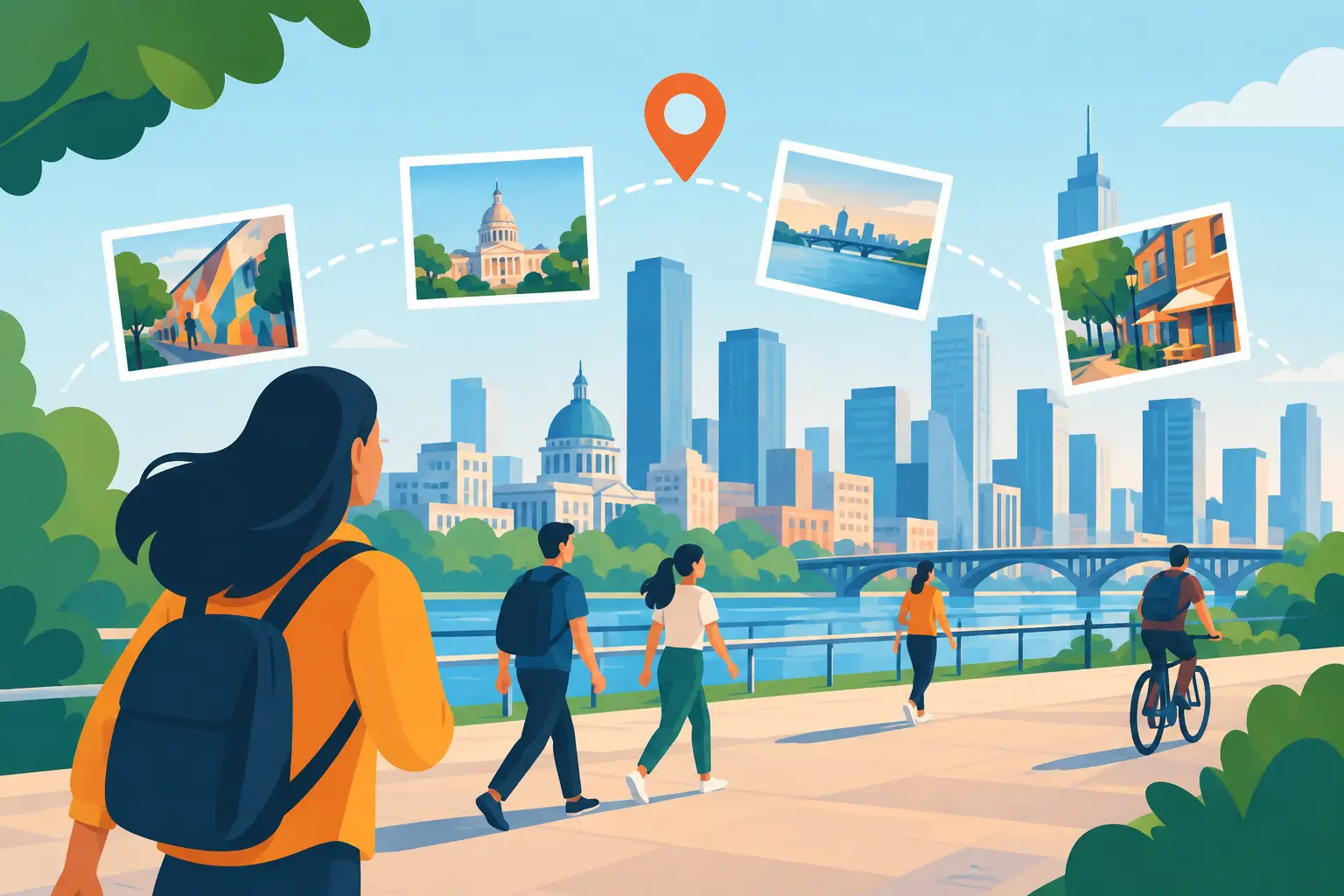
A city can have famous monuments, beautiful streets, and centuries of history yet still feel flat to a visitor scrolling on a phone. The difference is not how much information you provide. It is whether people feel like they are part of the place. This guide to city storytelling is for creators, guides, tourism teams, and cultural organizations ready to turn a route into a real-life exploration game.
Great city storytelling gives people a reason to look up, walk farther, notice details, and make decisions. It replaces the passive loop of stop, listen, move on with a more memorable question: what happens if I follow this clue, enter this courtyard, or uncover the story behind that overlooked door?
Start With a Point of View, Not a Map
A map is logistics. A story is a lens.
Before choosing stops, decide what your city experience is actually about. Not the broad answer - “the history of downtown” - but the specific perspective that gives the route energy. Maybe it follows the hidden lives of a waterfront district. Maybe it tracks the inventions that changed a neighborhood. Maybe it asks players to solve a fictional mystery built on real local legends.
The strongest concepts create a clear promise. Visitors should understand within seconds why this experience is different from an ordinary walking tour. “Find the lost symbols of the old market” is more active than “Learn about the old market.” “See how rebels, artists, and entrepreneurs reshaped this block” creates more momentum than “Historic city center highlights.”
A focused point of view also makes editing easier. Cities are full of material. That is the challenge. If every plaque, building, and anecdote makes the route, the experience becomes a mobile encyclopedia. Choose what serves the central story and let the rest remain a reason to come back.
Build a City Story Around Movement
Place-based storytelling works because the audience is physically inside the setting. Use that advantage. Do not tell someone a square was crowded, tense, glamorous, or dangerous if you can help them sense why while standing there.
At each location, connect three layers: what people can see now, what happened there before, and what you want them to do next. A former train station may be visually impressive, historically significant, and ideal for a challenge that asks visitors to spot clues from its original purpose. The narrative becomes active when the environment provides evidence.
This is where mobile-first design changes the game. GPS triggers can reveal a scene only after someone reaches the right spot. A photo challenge can make visitors search for a carved symbol above eye level. Virtual item collection can give every discovery a payoff. These mechanics are not decoration when they reinforce the narrative. They are a reason to engage with the real street.
Pace matters too. A great route alternates intensity. Pair a dense historic stop with a playful task. Follow a dramatic story with a quiet viewpoint, snack recommendation, or moment to take in the atmosphere. A route that demands constant reading becomes tiring. A route with no friction feels disposable.
Choose Stops That Do More Than Look Good
A landmark earns its place when it advances the story. A less famous alley can be more powerful than the city’s signature building if it delivers surprise, emotion, or a meaningful decision.
When selecting locations, test each one with a simple question: what can people experience here that they cannot get from a web search? The answer might be a sound, a view, an architectural detail, a personal testimony, or the thrill of finding a tucked-away spot on their own.
Aim for a route with contrast. Give visitors grand civic spaces and human-scale corners. Show polished facades alongside working neighborhoods, if that contrast is respectful and relevant. Add stops that reveal a city’s present, not only its past. A city is not a museum display case. Local makers, public art, food culture, transit, and changing communities can all make a narrative feel alive.
There is a trade-off. Hidden locations feel exclusive, but they may be inaccessible, closed at certain hours, or difficult for first-time visitors to find. Famous attractions are easier to navigate but can be crowded and overused. The best city storytelling balances discoverability with surprise, then gives clear instructions so an unexpected turn feels intentional rather than confusing.
Make Facts Feel Like Discoveries
Facts matter. But facts without tension rarely travel far.
Instead of opening every stop with a date, begin with a detail that creates curiosity. What was lost here? Who had something to hide? Why does this building have an extra doorway? What changed after one night, one decision, or one ambitious project? Then use verified history to answer the question.
Specificity builds trust. Name the people who shaped the place. Include voices that are usually missing from the standard version of the city. If a story comes from oral history, clearly frame it as a local account or remembered tradition rather than presenting it as settled fact. When fiction is part of the experience, label the boundary with confidence. A fictional detective trail can still be grounded in accurate local history.
Write for the street, not the classroom. Short passages usually work better on a phone, especially when users are standing in sunlight, crossing streets, or traveling with friends. Give each stop one strong idea, one vivid detail, and one action. If visitors want more depth, offer it as an optional layer rather than blocking the route.
Turn Participation Into the Plot
The difference between a digital guide and an interactive experience is agency. People remember what they found, chose, collected, and solved.
Use challenges with purpose. A scavenger hunt item should represent something meaningful, such as a symbol connected to a local craft or a clue tied to the route’s central mystery. A question should reward observation, not force users to guess trivia they could not possibly know. A GPS checkpoint should create anticipation, not simply prove that someone walked there.
Four game mechanics are especially useful when they fit the story:
- Observation challenges that direct attention to signs, shapes, murals, sounds, or details in the streetscape.
- Location-based reveals that unlock the next chapter only when explorers reach the setting.
- Collectible digital items that mark progress through themes, eras, or local characters.
- Choice moments that let people follow different routes, suspects, viewpoints, or story outcomes.
Not every experience needs every mechanic. Too many challenges can make a cultural route feel like a worksheet. The goal is not to gamify every sentence. The goal is to make people active participants in the city.
Design for Real People in Real Streets
The story may be cinematic, but the route needs to work on a rainy Tuesday, during a festival, and for someone whose battery is at 18 percent.
Check walking times honestly. Account for crossings, hills, construction, restrooms, opening hours, and places where GPS can drift. Keep instructions direct. If a clue depends on a tiny detail, make sure it is visible from a safe public spot. Build alternate paths for closures where possible.
Accessibility should shape the concept early, not appear as a late disclaimer. Consider step-free options, seating, readable screen contrast, audio alternatives, language needs, and the fact that some visitors may be traveling with children or moving at a slower pace. A shorter, well-designed experience can outperform a two-hour route that leaves people exhausted.
For tourism partners and creators, this operational thinking is commercial as well as considerate. An experience people can complete easily earns better reviews, more recommendations, and stronger repeat use. Platforms such as Leplace make it possible to package routes as interactive self-guided tours without asking every creator to build their own tech stack, but the technology cannot rescue a route that ignores the reality of the street.
Give the Ending a Payoff
Do not let the experience disappear at the final pin. The ending should make the opening promise feel earned.
A mystery route can reveal the final answer. A heritage trail can connect individual stories to a larger shift in the city. A food-focused adventure can send visitors to a local final stop with enough context to choose what they want next. Even a simple completion screen can feel meaningful when it reflects what the explorer accomplished.
Then leave a door open. Suggest a nearby district, a related route, or a question visitors can carry into the rest of their trip. The best city stories do not claim to explain an entire destination. They make people curious enough to keep exploring it.
Your city already has the raw material: overlooked details, conflicting memories, local characters, and streets that reward a second look. Build an experience that gives those elements a role, hand the visitor a reason to move, and let the city do what it does best - reveal itself one discovery at a time.
Enjoyed this post?
Comments
Be the first to comment.