
Aug 7, 20268 min read
A Practical Guide to Gamified Tourism Products
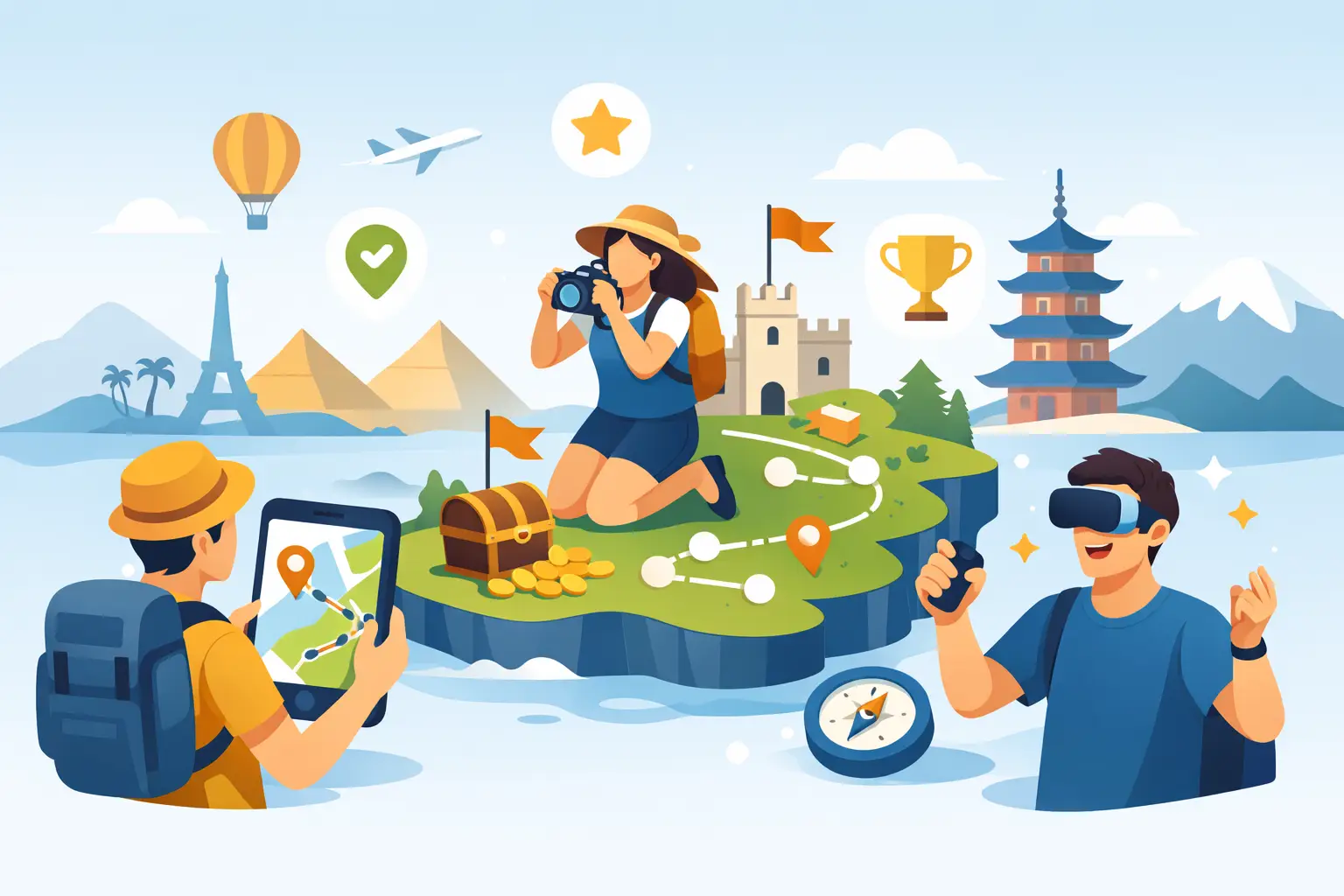
A guide to gamified tourism products starts with a simple shift: stop treating a city like a checklist. The strongest digital experiences turn streets, landmarks, neighborhoods, and overlooked details into part of the action. Instead of following a pin from one attraction to another, travelers solve a clue, choose a route, collect a virtual object, uncover a local story, or complete a mission that makes them look at a familiar place differently.
That shift matters because travelers have changed. They still want the major sights, but they also want agency. They want a reason to wander one more block, enter a quieter square, notice the mural behind the restaurant line, and remember why a place felt different from every other trip. Gamified tourism products turn that curiosity into momentum.
What Makes a Tourism Product Gamified?
Gamification is not about adding random points to an ordinary walking tour. A real-life exploration game uses game mechanics to strengthen the experience of place. The mechanic has to give the traveler a meaningful reason to pay attention, move, decide, or interact.
A GPS-triggered story can reveal the next chapter only when a player reaches a historic building. A riddle can lead a couple through a neighborhood market. A timed mission can add energy to a team outing. A collection mechanic can encourage visitors to find public art, local legends, or hidden architectural details across a district.
The best products connect three layers: the physical city, a compelling narrative, and a clear player action. Remove any one of them and the result gets weaker. A beautiful story without movement becomes another audio guide. A scavenger hunt without context can feel disposable. A map full of locations without choices becomes passive sightseeing with more screen taps.
Start With the Experience, Not the Feature List
For creators, tourism operators, and destination brands, the first question is not, “Which game mechanic should we use?” It is, “What should this place make people feel?”
A ghost-story route might build suspense after dark. A food district experience could create playful competition between friends. A heritage trail may encourage reflection and recognition. A festival activation can create social energy, movement, and shareable moments. The same city can support all of these, but each needs a different rhythm.
Define the player promise in one sentence. For example: “Help a missing architect recover the blueprints that changed the city,” or “Race across downtown to prove you know the local music scene.” If that promise sounds exciting without a feature explanation, you have the beginning of a product people may actually choose.
Then decide who it is for. Solo travelers need clarity, confidence, and flexible pacing. Couples may enjoy collaborative puzzles and romantic story beats. Friend groups often respond to timed challenges, scoreboards, or roles. Families need accessible routes, lighter reading, and missions that work across age groups. Corporate groups may value competition, team communication, and a clear finish line.
One experience cannot serve every audience equally. A broad product may reach more people, but a sharply designed one is more likely to earn strong reviews and recommendations.
Build a Route That Rewards Curiosity
A game route should feel like a story unfolding in real space, not a forced march between pins. Start by identifying a walkable area with enough visual variety, safe pedestrian access, and places where people can pause without blocking traffic or feeling exposed.
Choose stops for more than their popularity. A well-known landmark can establish context, but a hidden courtyard, strange statue, viewpoint, old storefront, or surprising local detail often creates the stronger memory. The route needs contrast: busy and quiet, grand and intimate, expected and unexpected.
Each stop should have a job. It can advance the plot, teach a piece of local history, introduce a character, offer a choice, reveal a puzzle answer, or provide a small payoff. If a location does none of these, it may be a detour rather than a meaningful stop.
Pacing is where many gamified tours succeed or fail. A 90-minute experience does not need 20 complex puzzles. Travelers need time to walk, look around, take photos, grab coffee, and absorb the city. Use quick wins early to establish confidence, then build toward more satisfying challenges and a memorable final reveal.
Choose Mechanics That Belong in the Story
The most effective mechanics are easy to understand and hard to forget. GPS check-ins work well when arriving somewhere is itself meaningful. Photo missions fit visual neighborhoods, public art trails, and event activations. Riddles work when the answer is visible in the environment. Virtual item collection can create a strong sense of progress when every item has story value.
Use points carefully. A score can add excitement, especially for groups, but it should not make people rush past the city. Timers create urgency, yet they can frustrate travelers who want a relaxed afternoon or who are navigating crowds, weather, accessibility needs, and unpredictable opening hours.
Choice is often more powerful than competition. Let players choose which lead to follow, which character to trust, or which side mission to complete. Even small decisions make an interactive self-guided tour feel personal. The route stays manageable for the creator, while the traveler feels like an active participant rather than a person following instructions.
Design for the Phone and the Street
Mobile-first tourism products live in a demanding environment. Bright sun makes screens hard to read. Battery levels drop. GPS can drift between tall buildings. Travelers may have limited data, language barriers, or only one hand free while holding a coffee.
Keep instructions short and specific. Replace vague prompts such as “Explore the area” with a clear action that directs attention: “Stand beside the fountain and look for the animal carved above the second arch.” Write clues that reward observation, not obscure trivia. If a player gets stuck, offer a hint system that preserves momentum without giving away the whole answer immediately.
Accessibility should shape the experience from the start. Consider step-free alternatives, rest points, route length, crossing complexity, audio and text options, color contrast, and whether a puzzle can be solved by people with different physical abilities. A flexible route is not a compromise. It is a better product for more travelers.
The phone should enhance the city, not replace it. Use the screen for missions, maps, story reveals, and feedback. Keep the real world at the center. A player should spend more time looking up than staring down.
Make Local Stories the Competitive Advantage
Anyone can create a generic treasure hunt. Local knowledge is what makes a tourism product worth paying for.
Work with guides, historians, artists, business owners, community groups, and cultural institutions. Their perspectives can turn a standard route into an experience with texture and credibility. A former factory becomes a story about migration and invention. A neighborhood bakery becomes a clue in a family history. A public square becomes the setting for a moment that changed the city.
This comes with responsibility. Not every story should be reduced to a game. Sites connected to trauma, sacred traditions, or living communities need care, context, and permission. A playful mechanic can be appropriate in one location and disrespectful in another. When in doubt, consult people connected to the story and design the tone around the place, not around a desire for easy engagement.
Test It With Real Players Before You Sell It
Creators often know their city too well. What feels obvious to you may be invisible to a visitor. Test your route with people who did not help build it, then watch where they hesitate, get lost, skip text, or lose interest.
Ask practical questions: Did the clue make sense on location? Was the walking time accurate? Did the story motivate the next stop? Did players feel safe and confident? Which moment would they tell a friend about afterward?
Use those observations to simplify. The best revision is often removing a stop, shortening a paragraph, clarifying one instruction, or giving a stronger reward after a challenge. Products improve when creators protect the player’s energy.
Platforms such as Leplace make it possible to package story-driven routes, location-based challenges, and digital exploration into a product without building a custom app from scratch. But technology is only the delivery system. The value comes from the route, the story, and the feeling that a city is responding to the player.
Turn a Great Experience Into a Product
A gamified tour needs a clear commercial position. Sell the outcome, not the mechanics. “Solve clues” is less compelling than “Experience the old city as a mystery you can walk through.” Travelers buy a feeling, a memory, and a reason to choose your experience over an ordinary map.
Price depends on duration, exclusivity, content depth, and audience. A short self-guided game can work as an accessible impulse purchase. A premium experience may include exclusive locations, seasonal content, prizes, live support, or partner offers. Destination organizations may use free experiences to distribute visitors beyond crowded attractions, while event organizers may treat them as ticketed activations.
Measure more than purchases. Completion rate shows whether the route holds attention. Hint usage can reveal difficult puzzles. Drop-off points expose weak pacing or confusing navigation. Photo shares and reviews show whether the experience created emotional value. Those signals help you improve both the game and the business behind it.
The next great city experience may not begin at a ticket desk or behind a guide’s umbrella. It may begin with a mission on a phone, a question worth following, and a street that suddenly feels full of possibilities.
Enjoyed this post?
Comments
Be the first to comment.