
Oct 24, 20267 min read
Tourism Technology That Makes Cities Playable
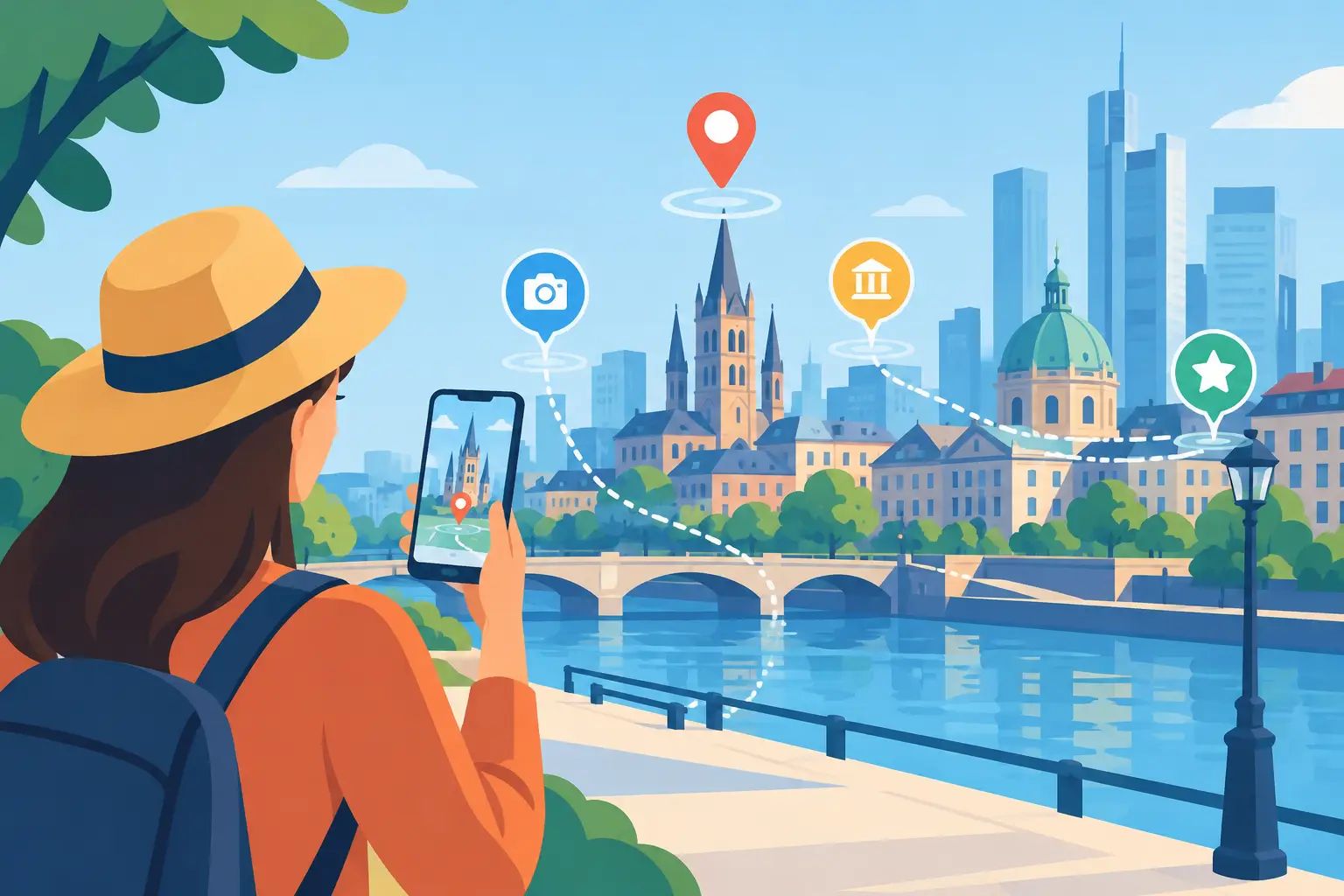
A visitor standing outside a historic building does not need another paragraph of text to scroll past. They need a reason to look up, move closer, notice the hidden symbol above the door, and follow the story to its next location. That is where tourism technology changes the experience. It turns a phone from a passive travel utility into a trigger for real-world discovery.
The strongest travel experiences have always been active: getting slightly lost in a new neighborhood, following a local recommendation, finding a viewpoint that was not on the original plan. Technology should not replace that feeling. It should create more of it, with better context, clearer choices, and a reason to keep exploring.
Tourism technology is moving beyond the digital guide
For years, tourism technology mostly solved practical problems. Maps helped people navigate. Booking platforms helped them reserve rooms and tickets. Review sites helped them choose where to eat. Those tools remain essential, but they do not automatically make a destination memorable.
The next layer is experiential. Mobile-first platforms can connect stories, places, challenges, media, and rewards into an interactive self-guided tour. Instead of pressing play on a generic audio track, travelers can follow clues, complete missions, collect virtual items, uncover local history, and shape their own route through a city.
That shift matters because travelers have changed. Many visitors, especially solo explorers, couples, and friend groups, want autonomy without feeling disconnected from the place they are visiting. They want the freedom to begin when they are ready, pause for coffee, take a detour, and continue without losing the thread of the experience.
A good digital experience gives them structure without trapping them in a schedule. It makes a destination feel less like a checklist and more like a world waiting to be explored.
What makes interactive city exploration work
Not every app-based tour creates real engagement. A long list of pins on a map is still a long list of pins. The technology earns its place when it changes how people behave in the street.
Story gives the route a purpose
A route becomes more compelling when each stop belongs to a bigger narrative. It could follow the architecture of a city, the rise of a music scene, a famous mystery, a neighborhood’s food culture, or the lives of people whose stories rarely make the guidebook.
The story does not need to be fictional. In fact, local history often lands harder when travelers discover it through action. A prompt to find an old market sign, compare two buildings, or identify a detail in a public square asks people to observe rather than simply consume information.
Gameplay turns attention into participation
Game mechanics are not a gimmick when they serve the place. Challenges, GPS checkpoints, timed missions, scoring, collectible items, and treasure-hunt logic add momentum to a walk. They also solve a common travel problem: the moment when excitement drops after the first few landmarks.
A well-designed challenge creates a small question in the traveler’s mind: What is around the next corner? Can we find it? What happens when we do? That curiosity pulls people through areas they might otherwise skip.
The trade-off is simple. Too much competition can distract from the destination, while too little interaction makes the experience feel like a standard guide with extra taps. The best designs use gameplay to sharpen attention, not to turn every historic street into a scoreboard.
Location creates the magic
The most powerful part of place-based technology is that it works only where the story happens. A GPS-enabled task at a waterfront, a sound clip that starts near a theater, or an augmented reality moment at a monument connects digital content to physical presence.
This is why outdoor AR and location-based experiences can be so effective. They do not ask people to escape into a screen. They ask people to use the screen to see their surroundings differently.
The traveler benefit: freedom with momentum
A live group tour can be excellent, especially when a great guide brings personality and local insight. But it is not right for every traveler. Fixed start times, large groups, language constraints, and limited availability can make a tour feel like another appointment on a packed itinerary.
Interactive self-guided tours offer a different value. Travelers can start on demand, choose their pace, and explore with the people they came with. They still receive direction and storytelling, but the experience belongs to them.
That flexibility is especially valuable for destinations with visitors arriving throughout the day, event crowds, cruise passengers with tight windows, and travelers who prefer spontaneous plans. It also makes urban exploration more accessible after traditional tour hours, provided routes are designed with safety, lighting, and neighborhood context in mind.
Technology is not a substitute for human hospitality. It is an additional format - one that gives more people a way into local stories when a guide is not physically available.
The partner opportunity: turn local knowledge into a product
For tourism boards, cultural institutions, local guides, event organizers, and creative teams, tourism technology is also a publishing opportunity. Valuable local knowledge no longer has to live only in brochures, staff training, or one-off guided walks.
A creator can package a route into a digital experience that is available to more visitors, across more hours, without rebuilding the experience from scratch each time. That can support direct tour sales, premium content, exclusive event activations, or a broader destination campaign.
The key is not to digitize everything. A museum may use a city game to bring visitors through surrounding streets before they enter. A local guide may offer a self-guided version of their most popular theme while reserving live tours for deeper, personal interaction. An event organizer may create a temporary challenge that sends attendees to partner venues and overlooked corners of a host city.
Each format has different goals. A destination brand may measure foot traffic and visitor engagement. A guide may prioritize revenue and reach. A cultural organization may focus on education and audience development. The platform should support those goals instead of forcing every experience into the same template.
How to build an experience people will finish
The best interactive tours are designed for the reality of travel: tired feet, spotty attention, weather changes, wrong turns, and unexpected discoveries. That means creators should start with the route, not the technology.
Choose a walkable area with a clear beginning, a satisfying finish, and enough visual or cultural texture to reward exploration. Then build a story around what people can genuinely notice there. A puzzle should be solvable from the environment. A challenge should lead somewhere worth reaching. A reward should feel connected to the narrative, not pasted on top.
Keep instructions short and mobile-friendly. Travelers are reading outdoors, often in motion. Long blocks of copy slow the experience down. Short prompts, strong visuals, audio moments, and clear next steps keep the energy moving.
It also helps to design for different kinds of players. Some want to race through every challenge. Others want to linger, take photos, and learn. A flexible experience can serve both by making core progress simple while offering optional layers for the curious.
Platforms such as Leplace make this approach practical by giving creators tools to publish story-driven, challenge-based experiences without building a tourism app from the ground up. The result is not just a digitized walking tour. It is a real-life exploration game with a business model behind it.
Where tourism technology goes next
The future is not about putting more screens between travelers and cities. It is about making screens more aware of place, timing, preference, and context. AI can help personalize routes and adapt storytelling. AR can add visual layers to streets and landmarks. Better creator tools can put more local voices into the travel market.
But the standard should stay high. More technology is not automatically better tourism. If an experience keeps people staring at a phone, sends them to irrelevant stops, or makes every city feel identical, it has missed the point.
The winning experiences will make travelers feel present. They will send people down the side street, toward the overlooked statue, into the neighborhood story, and back home with something worth talking about. A city is already full of quests. Tourism technology simply gives more people a reason to start one.
Enjoyed this post?
Comments
Be the first to comment.