
Oct 8, 20267 min read
Tourism Gamification Results That Move Cities
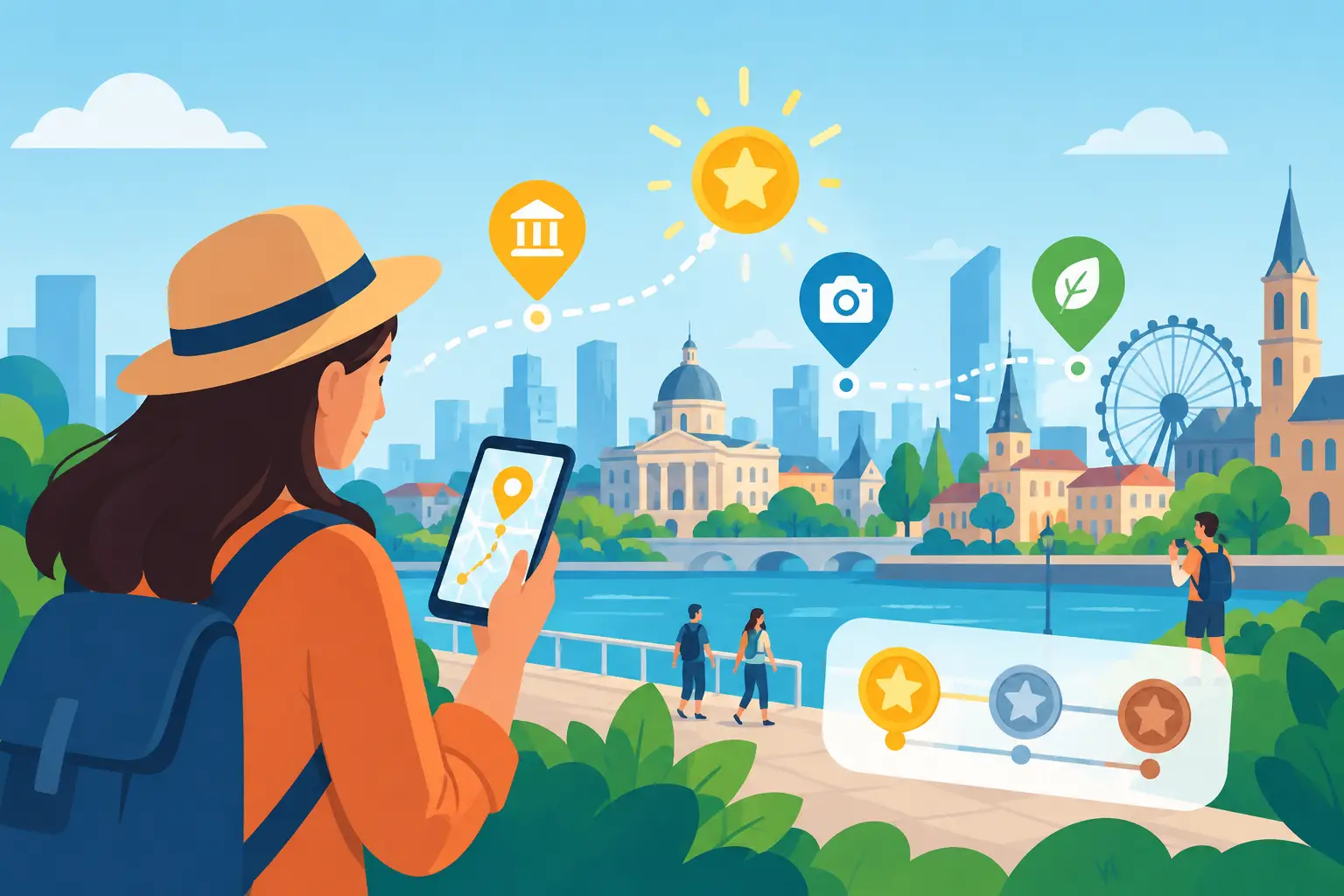
A traveler stands outside a landmark with a phone in hand. They can read a plaque, take a photo, and move on. Or they can follow a clue, collect a virtual artifact, solve a location-based challenge, and uncover why that corner of the city matters. The difference shows up in tourism gamification results: not just more taps on a screen, but more time in place, more curiosity, and a stronger reason to keep exploring.
For destinations, guides, cultural organizations, and tour creators, gamification is not a decorative layer of points and badges. Done well, it changes how people move through a city. It can turn overlooked streets into discovery routes, give local stories a sense of momentum, and create a product visitors are willing to finish, share, and buy.
What Tourism Gamification Results Actually Measure
The most useful results are behavioral. A game-like experience gives travelers a reason to choose the next stop rather than simply follow a route. That matters because conventional self-guided tours often face a quiet challenge: visitors can abandon them at any time. A challenge, a story beat, or a reward creates forward motion.
That does not mean every destination needs a leaderboard. A city walk built around mysteries, hidden architecture, food traditions, street art, or historical characters may be more effective than a high-score competition. The right mechanic depends on the audience and the story.
For a tourism business, the strongest signals usually include four connected outcomes:
- Higher completion rates, showing that travelers stay with the experience from the first location to the final reveal.
- Longer dwell time, especially at cultural sites, neighborhood businesses, and lesser-known areas that benefit from visitor attention.
- Greater engagement per stop, such as challenge attempts, clue interactions, photo moments, virtual collection, and story progression.
- More commercial value through tour purchases, repeat play, referrals, partner visits, and creator revenue.
These metrics tell a fuller story than downloads alone. An app can attract installs without changing a visitor's day. A well-designed exploration game changes the route, the pace, the conversation, and often the spending decision.
Why Gameplay Changes the City Experience
Most travelers want freedom, but they do not always want to plan every hour. Interactive self-guided tours sit in the productive space between rigid group tours and unstructured wandering. The traveler controls the pace, while the experience provides a clear reason to continue.
A simple example makes this visible. Imagine a visitor walking through a historic district. An audio guide might explain a building's past. A game layer can ask the visitor to find a detail on its facade, compare it with an old image, answer a question, and receive the next part of a local story. The building is no longer just a stop. It becomes evidence in a living puzzle.
That shift creates three valuable effects. First, it improves recall. People tend to remember what they actively searched for or solved. Second, it creates emotional ownership. Completing a route feels like an achievement, even when the challenge is light. Third, it makes local storytelling more visible. Instead of passively receiving facts, travelers participate in the narrative.
For solo travelers, this can add companionship and confidence. For couples and friend groups, it creates a shared activity without requiring a fixed guide schedule. For families, it can transform the familiar question - “What do we do next?” - into a sequence of small missions.
The Results Depend on the Design, Not the Buzzword
Gamification can produce weak results when it feels disconnected from the place. A generic quiz pasted onto a walking route is unlikely to hold attention. Travelers recognize when a challenge exists only to keep them clicking.
The best experiences make the game mechanic inseparable from the destination. A riddle should lead to a real-world detail. A digital collectible should represent something meaningful, from a neighborhood legend to a local craft tradition. A timed mission should only be used when urgency adds excitement rather than stress.
There is also a trade-off between challenge and accessibility. A route that is too easy can feel forgettable. One that is too difficult can frustrate visitors who are navigating unfamiliar streets, weather, language barriers, or limited time. Strong design creates quick early wins, then builds complexity as travelers gain confidence.
Accessibility deserves the same attention. Clear directions, flexible timing, readable content, alternate paths, and an experience that works for different mobility needs will generally outperform a route designed only for the most game-fluent users. Inclusive design is not a constraint on imagination. It expands the audience that can participate.
Tourism Gamification Results for Partners and Creators
For tourism partners, game-based experiences offer a practical way to distribute visitor flow. A popular landmark can remain part of the story without being the only destination. Challenges can lead participants toward quieter streets, independent businesses, public art, waterfront paths, museums, or districts that visitors might otherwise miss.
This is especially useful for destinations trying to extend the visitor journey beyond a single attraction. Instead of promoting an area with a static map, they can package it as an experience with a beginning, progression, and payoff. That makes a neighborhood easier to market and easier for visitors to understand.
Creators gain a different advantage: they can turn local knowledge into a repeatable digital product. A guide does not need to be physically present for every departure. A cultural organization can create a mission around an exhibition or heritage site. An event organizer can build an outdoor activation that moves attendees through a city before, during, or after the main event.
Leplace supports this model by giving creators and tourism professionals a way to publish story-driven, location-based experiences built for real-world play. The value is not simply digitizing a tour. It is designing a reason for people to look up, walk farther, and interact with the city.
How to Build Results Worth Measuring
Start with a visitor outcome, not a game feature. Do you want people to spend another hour in a district? Visit local venues? Understand a difficult chapter of history? Return after dark for a different kind of experience? The desired behavior should shape the route and its mechanics.
Next, identify the story engine. It might be a missing object, a historical mystery, a culinary quest, a character-led journey, or a collection challenge. The story engine needs a real payoff at the end. Travelers should feel that the final stop resolves something, reveals something, or gives them a new way to see the place.
Then measure the experience in stages. Track where participants begin, which stops hold attention, where they abandon the route, and what actions correlate with completion. If a specific clue causes drop-off, the issue may be unclear instructions rather than a lack of interest. If travelers finish but do not share or purchase another route, the ending may lack a memorable reward or a clear next invitation.
Avoid measuring every possible action just because the platform can. Focus on data that can lead to a decision. A destination team may care most about foot traffic distribution and dwell time. A paid tour creator may prioritize conversion, completion, reviews, and repeat customers. A cultural institution may value learning interactions and return visits. Results only become useful when they are tied to a goal.
The Future Is Participation, Not Passive Sightseeing
The opportunity is bigger than turning tourism into a mobile game. It is about giving travelers a more active role in the places they visit. As cities compete for attention, the experiences that stand out will not be the ones with the longest descriptions. They will be the ones that invite people to do something meaningful with the street in front of them.
Build the next route around a local story people can chase, solve, collect, or reveal. When the challenge serves the place, visitors do more than pass through. They become part of the city for a while.
Enjoyed this post?
Comments
Be the first to comment.