

How Self Guided City Games Work
- LEPLACE

- 11 minutes ago
- 6 min read
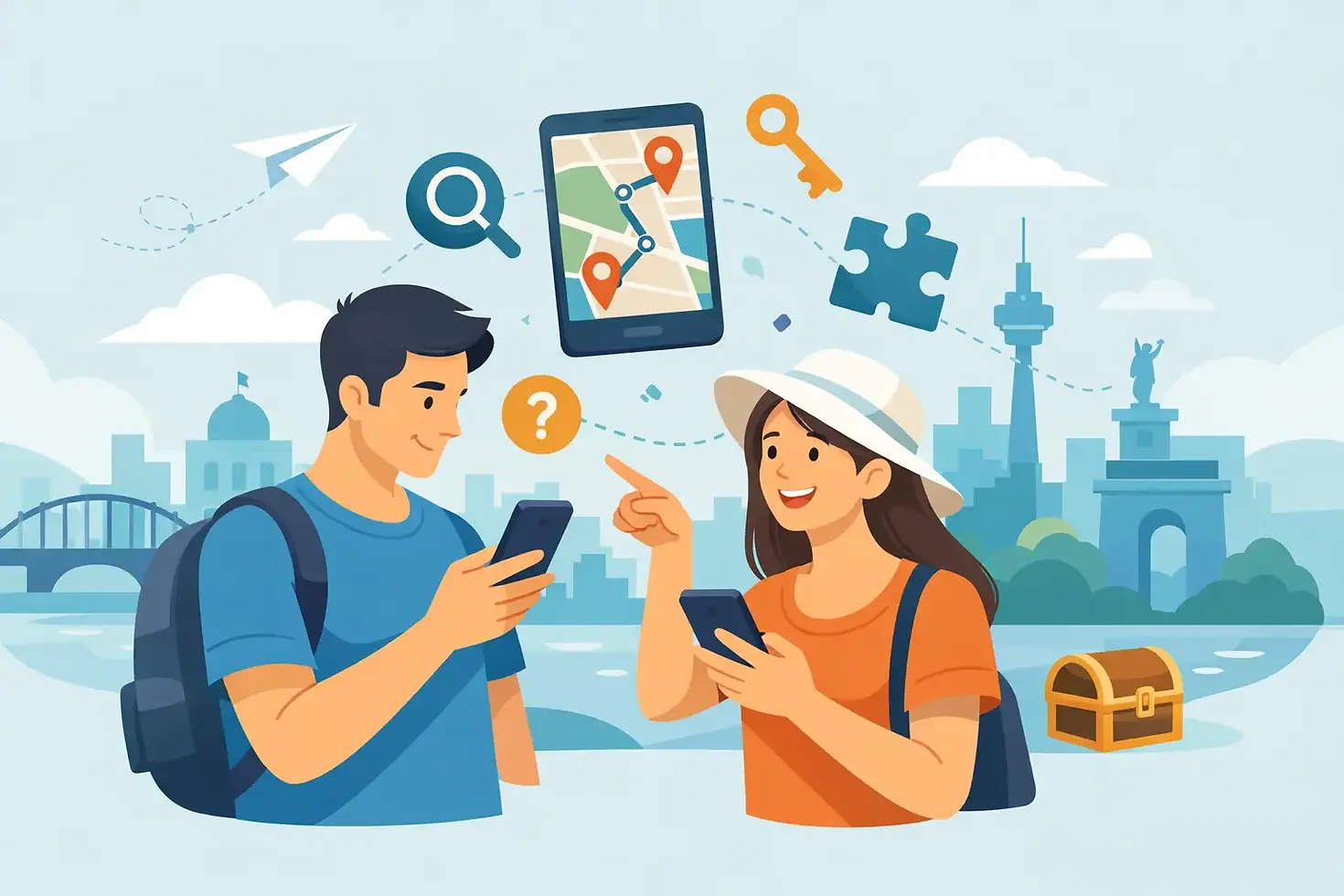
You’re standing in a city square with your phone in hand. No umbrella-following tour group. No fixed start time. No awkward pressure to keep pace with strangers. Instead, your next move appears on screen: solve a clue, head to a landmark, spot a hidden detail, and trigger the next chapter. That is how self guided city games work - they turn walking through a place into an interactive mission powered by location, story, and smart mobile design.
For travelers, that means more freedom and more involvement. For tour creators, destinations, and cultural organizations, it means a new format that can hold attention far better than a static route with a block of text and a pin on a map. The appeal is simple: people do not just want to see a city anymore. They want to play it.
How self guided city games work in practice
At the core, a self-guided city game is a mobile experience that combines navigation, storytelling, and game mechanics. A player starts the experience on their phone, follows prompts through a real urban environment, and progresses by completing actions. Those actions might include answering a question, solving a puzzle, reaching a GPS checkpoint, collecting virtual items, or unlocking a scene tied to a real location.
The technology matters, but the structure matters more. Good city games are built like playable journeys. They have a beginning that sets the mission, a middle that builds momentum, and an ending that delivers a payoff. That payoff could be a solved mystery, a completed challenge route, a leaderboard score, or simply the feeling that the city revealed itself in a more active way.
This is why the format works so well for modern travel. It fits the way people already move through destinations - phone-first, independent, curious, and ready to choose their own pace.
The four layers behind the experience
Most self-guided city games run on four connected layers: place, story, interaction, and progression.
Place is the foundation. The experience is anchored in real streets, landmarks, parks, museums, neighborhoods, or hidden corners that most visitors would walk past without noticing. The city is not just the backdrop. It is part of the gameplay system.
Story gives the route purpose. Instead of telling players to walk from point A to point B, the game frames movement as a mission. Maybe you are tracking a missing artifact, uncovering a local legend, decoding street art, or following a historical figure’s trail. Even a light narrative changes behavior. People pay closer attention when they feel they are inside a sequence rather than just consuming information.
Interaction is what separates a city game from a digital brochure. Players are asked to do something: observe, decide, solve, scan, search, compare, photograph, or answer. This creates participation, and participation creates memory.
Progression keeps the experience moving. The player completes one task, unlocks the next, and sees that their actions matter. Progress bars, points, badges, collected objects, timed segments, and branching paths all help here, but they should support the journey rather than distract from it.
What the phone is actually doing
When people ask how self guided city games work, they often imagine something highly technical. In reality, the best experiences feel simple on the surface because the technology is doing quiet work in the background.
GPS is usually the engine. It confirms that a player has reached a location and can trigger the next piece of content. Sometimes this is enough on its own. In other cases, the experience may also use QR codes, image recognition, AR-style overlays, audio cues, or manual answer checks.
The phone also acts as the interface for pacing. It delivers clues at the right moment, shows maps only when needed, and controls how much information the player gets before arriving at the next point. That pacing is critical. Too much guidance and it feels passive. Too little and players get frustrated.
There is also a practical advantage here: no live guide is required for every departure. That makes the format scalable for operators and flexible for travelers. A well-built game can be started at different times, used by solo players or groups, and repeated across many bookings without changing the core delivery model.
Why game mechanics change sightseeing behavior
Traditional tours often ask people to listen. City games ask them to notice.
That difference is bigger than it sounds. Once there is a challenge attached to a location, a traveler pays more attention to architecture, signs, textures, statues, inscriptions, storefronts, and street patterns. A clue can make a familiar square feel fresh. A timed decision can make a short walk feel dramatic. A collectible system can encourage players to continue farther than they otherwise would.
This does not mean every experience needs heavy competition. In fact, not all players want to race. Some want to wander, absorb the atmosphere, and solve at their own speed. The strongest self-guided city games are designed with that in mind. They create momentum without forcing pressure.
That is one of the key trade-offs in the format. If the game leans too far into pure challenge, it can overpower the destination. If it leans too far into passive interpretation, it stops feeling like a game. The sweet spot depends on the audience. Couples on a weekend trip want something different from a school group, a corporate team event, or a tourism board activation.
The role of storytelling and local knowledge
A city game does not become memorable just because it has puzzles. It becomes memorable when the tasks reveal something meaningful about the place.
That is where local storytelling makes the format powerful. A good mission is not a generic scavenger hunt pasted onto a map. It is built from the city’s own texture - its myths, characters, conflicts, art, architecture, food culture, or overlooked history. The challenge and the location should feel connected.
For creators and destination partners, this is a major opportunity. Local knowledge that might feel static in a printed guide can become dynamic inside a mission-based experience. A mural becomes a clue source. A public square becomes the stage for a historical turning point. A hidden alley becomes a reward for paying attention.
This is also why creator tools matter. The future of this category is not one-size-fits-all content. It is scalable infrastructure that lets guides, tourism professionals, and organizations publish experiences that reflect their own stories, formats, and audiences. Platforms like Leplace are built around that shift, combining consumer-ready exploration with the tools needed to create and sell playable city experiences.
Who self guided city games are best for
The short answer is: more people than you might think.
They are a natural fit for solo travelers who want structure without losing independence. They work well for couples who want a date experience with more energy than a standard walk. Friend groups often like the shared problem-solving element, especially when there are points, roles, or choices involved.
They also make strong sense for destinations and businesses. A city game can extend visitor dwell time, guide traffic toward lesser-known areas, and package local stories in a format people are more likely to finish. For event organizers and cultural institutions, it can turn attendance into participation.
Still, it depends on context. Not every traveler wants to look at a screen for two hours. Not every historic district benefits from a fast-paced challenge format. Some locations are better suited to reflective audio-led routes, while others are perfect for high-energy missions. The best operators know when to use game mechanics lightly and when to build the whole experience around them.
What makes a city game actually good
A strong self-guided city game feels intuitive within minutes. The mission is clear. The first win comes early. Navigation is simple enough that players stay in the world rather than wrestling with the interface.
After that, quality comes down to balance. The route should be walkable and rewarding. The clues should be solvable without feeling obvious. The story should add energy without becoming cheesy. And the tech should support the experience instead of calling attention to itself.
Good design also respects real-world unpredictability. Cities are messy. Streets get crowded, weather changes, landmarks go under renovation, GPS drifts, and players get distracted. That is why flexible structure matters. Alternative triggers, clear hints, and thoughtful pacing can keep the experience enjoyable even when conditions are not perfect.
The category is moving fast because it answers a real shift in traveler behavior. People want exploration with agency. They want stories they can step into. They want digital experiences that feel grounded in the real world, not detached from it.
That is the real promise behind self-guided city games. They do not replace the city with a screen. They give the screen a better job: helping people look up, move with purpose, and discover more than they would have found on their own. The best ones leave you with a rare feeling after the final checkpoint - that you did not just visit a place, you activated it.



Comments